

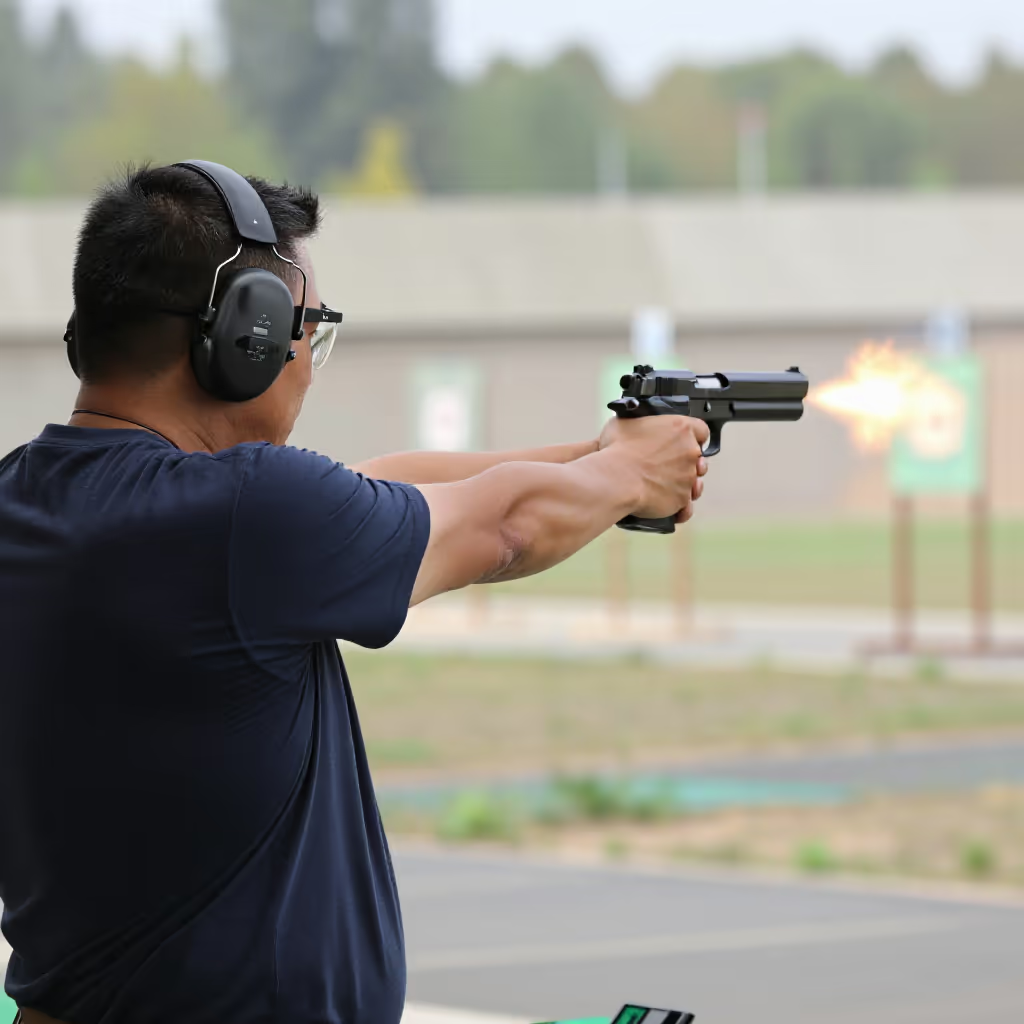
abdrücken
to pull the trigger
To operate the trigger of a firearm in order to fire a shot.
EXAMPLE
Der Jäger zielte und drückte im richtigen Moment ab.
The hunter aimed and pulled the trigger at the right moment.
to pull the trigger / press / push off
Loading your saved state.
to pull the trigger
To operate the trigger of a firearm in order to fire a shot.
Der Jäger zielte und drückte im richtigen Moment ab.
The hunter aimed and pulled the trigger at the right moment.

to press the shutter
Colloquial for releasing a camera shutter in order to take a photo.
Warte, bis alle lächeln, und dann drück ab!
Wait until everyone is smiling, and then press the shutter!

to push off
To push yourself away from a solid surface with force in order to gain momentum, for example when swimming from the pool wall.
Nach der Wende drückte sich die Schwimmerin kräftig vom Beckenrand ab.
After the turn, the swimmer pushed off powerfully from the edge of the pool.

to cough up
Colloquial and disparaging for handing over part of something, usually money, often reluctantly.
Von seinem Lottogewinn musste er dem Finanzamt einen großen Teil abdrücken.
He had to cough up a large part of his lottery winnings to the tax office.
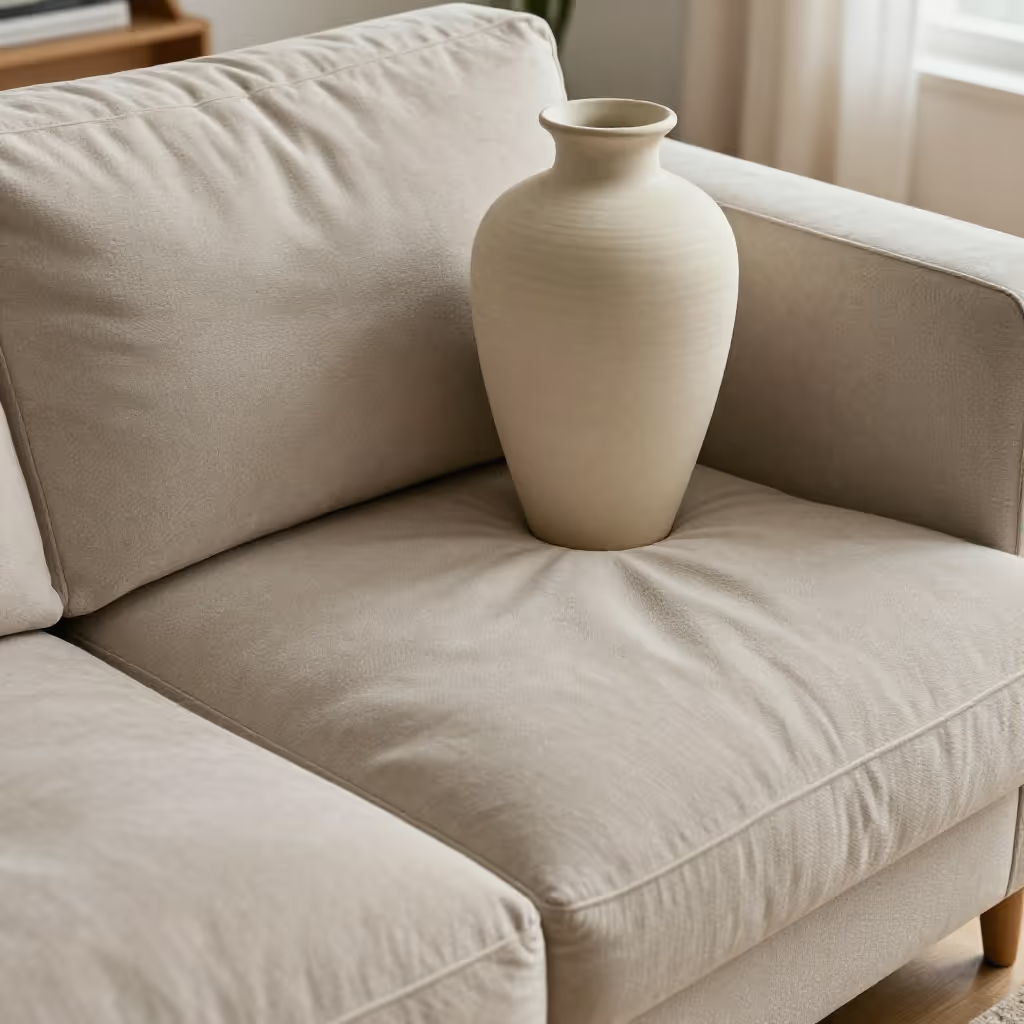
to leave an imprint
When an object leaves a visible mark or pattern on a surface through pressure.
Das Gitter des Kuchens hat sich auf der Tischdecke abgedrückt.
The cake rack left an imprint on the tablecloth.
'Abdrücken' (to pull the trigger / press / push off) is a separable verb. In a main clause, the prefix 'ab' goes to the end of the sentence. In subordinate clauses and in the infinitive with 'zu', the verb stays together.
Er drückte im entscheidenden Moment ab.
He pulled the trigger at the decisive moment.
When the verb is used reflexively as 'sich abdrücken', it means either to push off from a surface (e.g. when swimming) or that something leaves an imprint.
Beim Start drückt sich der Sprinter kraftvoll vom Startblock ab.
At the start, the sprinter pushes off powerfully from the starting block.
In photography, 'abdrücken' (to press the shutter) is a very common, colloquial alternative to 'den Auslöser drücken' (to press the shutter button). You often hear it as a direct instruction.
Alle schauen in die Kamera. Perfekt, jetzt drück ab!
Everyone look at the camera. Perfect, now press the shutter!
When you push off from a surface, that surface is almost always introduced with the preposition 'von' and the dative. You push off 'von der Wand' (from the wall), 'vom Boden' (from the floor), or 'vom Beckenrand' (from the edge of the pool).
Um aus dem Liegestuhl aufzustehen, musste er sich mit den Händen von den Lehnen abdrücken.
To get up from the deck chair, he had to push off from the armrests with his hands.
This meaning is colloquial and negative. It describes giving money reluctantly. The structure is: 'jemandem (Dativ) etwas (Akkusativ) abdrücken' (to cough something up to someone).
Jedes Jahr muss ich dem Staat einen Haufen Steuern abdrücken.
Every year I have to cough up a ton of taxes to the state.
When something leaves an imprint, the pattern or object is the subject. The surface on which the imprint appears is often named with 'auf' and the dative.
Der Schlüssel hat sich in meiner Handfläche abgedrückt.
The key left an imprint in the palm of my hand.
to press / hug
When taking photographs, drücken refers to the physical movement of pressing the shutter button. In this context, Abdrücken is a colloquial way to say that you release the camera shutter and thereby take a photo. Use drücken when you mean the movement; abdrücken can be used when you mean taking the photo.
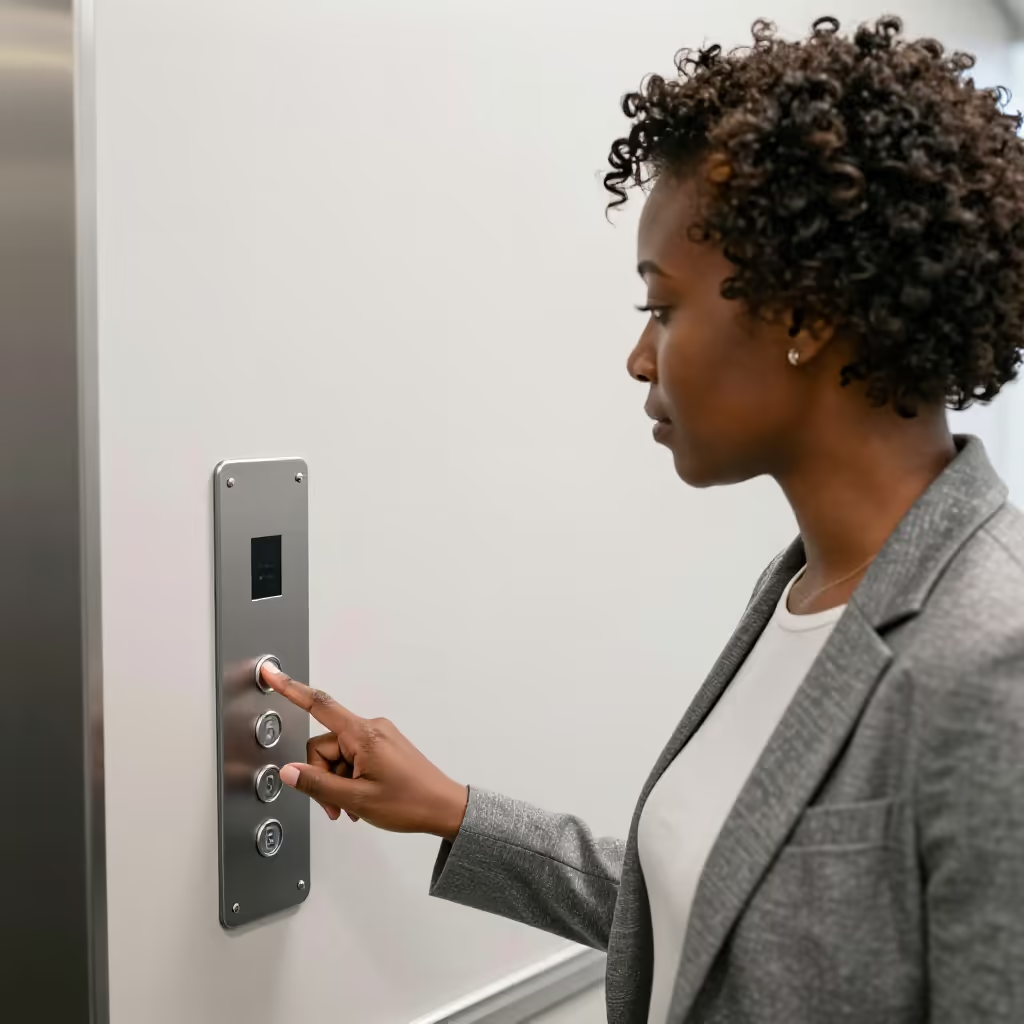
Für das Foto drückt Mia im richtigen Moment ab.
For the photo, Mia presses the shutter at just the right moment.
Für das Foto drückt Mia vorsichtig den Auslöser der Kamera.
For the photo, Mia carefully presses the camera's shutter button.