

ablöschen
to extinguish
To put out a fire, blaze, or flames.
EXAMPLE
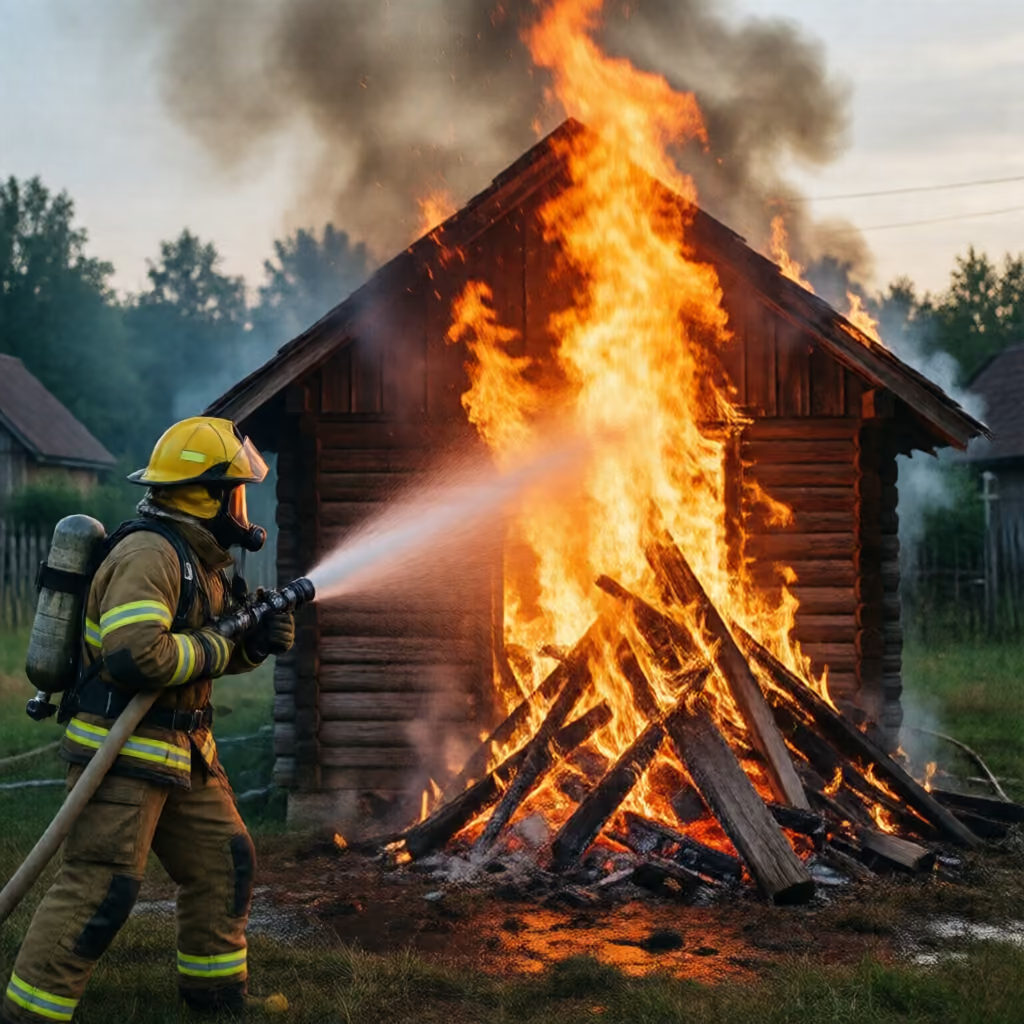
Die Feuerwehr löschte den brennenden Schuppen ab.
The fire department put out the burning shed.
to extinguish / deglaze
ablöschen – löschte ab – hat abgelöscht
Loading your saved state.
to extinguish
To put out a fire, blaze, or flames.
Die Feuerwehr löschte den brennenden Schuppen ab.
The fire department put out the burning shed.

to deglaze
When cooking, to pour liquid over a hot pan or the browned bits left from frying so that they dissolve and form a sauce.
Ich lösche den Bratensatz mit etwas Rotwein ab.
I deglaze the pan with a little red wine.
| ich | lösche ab |
|---|---|
| du | löschst ab löscht ab |
| er/sie/es | löscht ab |
| wir | löschen ab |
| ihr | löscht ab |
| sie | löschen ab |
| ich | löschte ab |
|---|---|
| du | löschtest ab |
| er/sie/es | löschte ab |
| wir | löschten ab |
| ihr | löschtet ab |
| sie | löschten ab |
| ich | habe abgelöscht |
|---|---|
| du | hast abgelöscht |
| er/sie/es | hat abgelöscht |
| wir | haben abgelöscht |
| ihr | habt abgelöscht |
| sie | haben abgelöscht |
| du | lösch ab! lösche ab! |
|---|---|
| ihr | löscht ab! |
| Sie | löschen Sie ab! |
| ich | hatte abgelöscht |
|---|---|
| du | hattest abgelöscht |
| er/sie/es | hatte abgelöscht |
| wir | hatten abgelöscht |
| ihr | hattet abgelöscht |
| sie | hatten abgelöscht |
| ich | werde ablöschen |
|---|---|
| du | wirst ablöschen |
| er/sie/es | wird ablöschen |
| wir | werden ablöschen |
| ihr | werdet ablöschen |
| sie | werden ablöschen |
| ich | lösche ab |
|---|---|
| du | löschest ab |
| er/sie/es | lösche ab |
| wir | löschen ab |
| ihr | löschet ab |
| sie | löschen ab |
Used for reported speech.
| ich | löschte ab |
|---|---|
| du | löschtest ab |
| er/sie/es | löschte ab |
| wir | löschten ab |
| ihr | löschtet ab |
| sie | löschten ab |
Used for wishes and “would”.
| infinitive | ablöschen |
|---|---|
| with zu | abzulöschen |
| present participle | ablöschend |
| past participle | abgelöscht |
'Ablöschen' (to extinguish / deglaze) is a separable verb: In a main clause, 'ab' (off) appears at the end of the sentence, while in a subordinate clause the verb remains together. In the infinitive with 'zu' (to), 'zu' comes between the prefix and the verb.
Die Feuerwehr löscht den Brand schnell ab.
The fire department puts out the fire quickly.
Die Feuerwehr bleibt, bis sie den Brand ablöscht.
The fire department stays until it puts out the fire.
Es ist wichtig, die Flammen sofort abzulöschen.
It is important to put out the flames immediately.
Words from the area of fire, such as 'Flamme' (flame) or 'Brand' (fire), usually indicate the meaning related to extinguishing. Words from the kitchen, such as 'Bratensatz' (browned bits left from frying) or 'Pfanne' (pan), point to its use in cooking.
Die Einsatzkräfte löschten die Flammen ab.
The emergency responders put out the flames.
Nach dem Anbraten löschte der Koch den Bratensatz ab.
After browning the food, the chef deglazed the pan.
In the meaning related to fire, 'ablöschen' (to extinguish) frequently appears with 'Feuer' (fire), 'Flammen' (flames), 'Brand' (blaze), or 'Glut' (embers). The combination with 'mit Wasser' (with water) is also very common in this context.
Die Feuerwehr löschte den Brand mit Wasser ab.
The fire department put out the fire with water.
When cooking, the liquid is introduced with 'mit' (with), followed by the dative. Typical liquids are 'Brühe' (broth), 'Wein' (wine), or 'Wasser' (water), which are added to the browned bits left from frying.
Sie löschte den Bratensatz mit heißer Brühe ab.
She deglazed the pan with hot broth.