

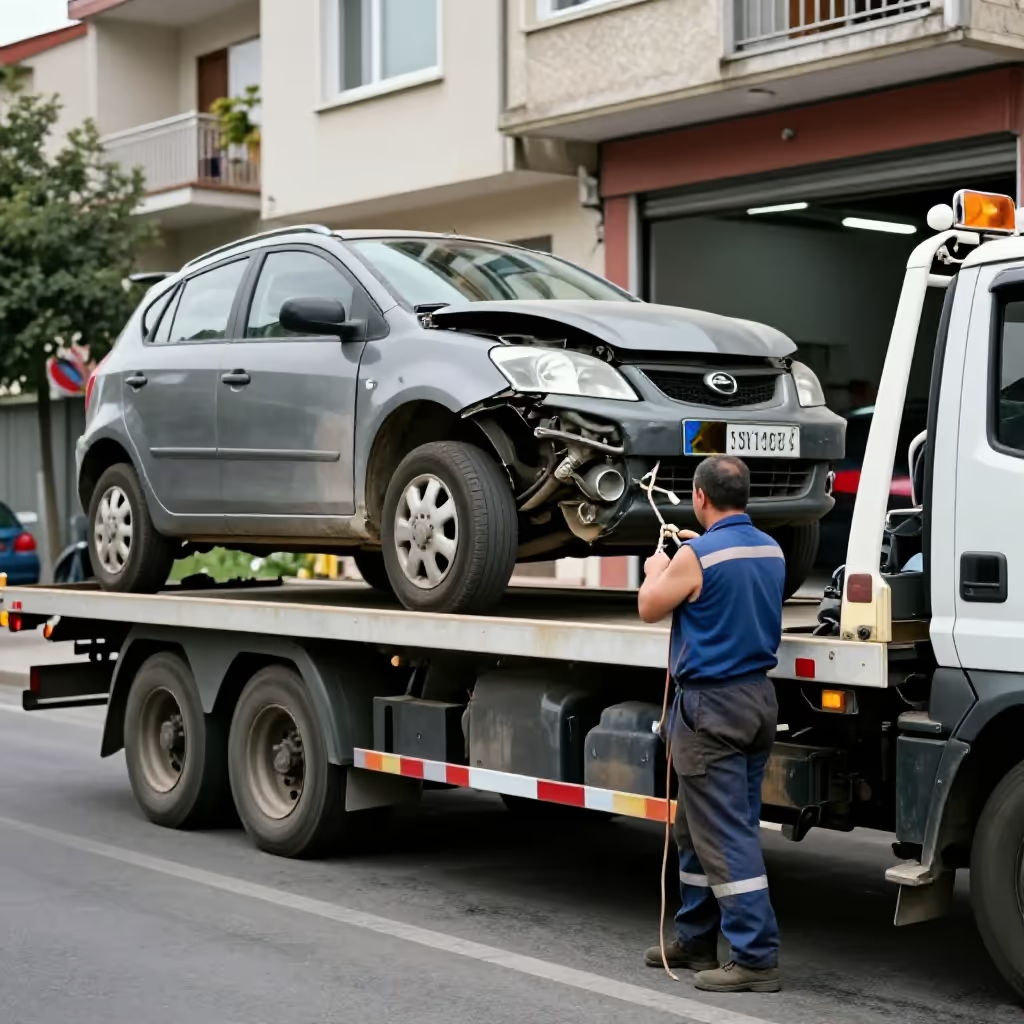
abschleppen
to tow away
To pull a vehicle that is no longer roadworthy to another place with another vehicle, usually to a repair shop.
EXAMPLE
Mein Auto hatte eine Panne und musste abgeschleppt werden.
My car broke down and had to be towed away.
to tow away / pick up
Loading your saved state.
to tow away
To pull a vehicle that is no longer roadworthy to another place with another vehicle, usually to a repair shop.
Mein Auto hatte eine Panne und musste abgeschleppt werden.
My car broke down and had to be towed away.

to pick up
Colloquial for successfully approaching someone with the aim of starting a sexual or romantic relationship for one night.
Er geht oft in Clubs, um jemanden abzuschleppen.
He often goes to clubs to pick someone up.

to lug around
To struggle a lot with carrying something heavy.
Ich habe mich mit den schweren Einkaufstüten bis in den vierten Stock abgeschleppt.
I lugged the heavy shopping bags all the way up to the fourth floor.
'Abschleppen' (to tow away / pick up) is a separable verb. The prefix 'ab-' comes at the end of the main clause; in subordinate clauses the verb stays together, and in the infinitive with 'zu', 'zu' comes between 'ab' and 'schleppen'.
Der Pannendienst schleppt das kaputte Auto ab.
The breakdown service tows the broken-down car away.
The verb consists of the prefix 'ab-' and the base verb 'schleppen' (to drag or carry something heavy). The prefix reinforces the idea of transporting away or removing, which can be recognized in all meanings.
Wir mussten die alten Möbel aus dem Keller schleppen.
We had to carry the old furniture out of the basement.
When it is about vehicles, 'abschleppen' (to tow away) is often combined with places or reasons. Typical phrases are 'in die Werkstatt abschleppen' (to tow to the repair shop), 'von der Autobahn abschleppen' (to tow off the highway), or 'wegen Falschparkens abschleppen' (to tow away for illegal parking).
Das falsch geparkte Auto wurde abgeschleppt.
The illegally parked car was towed away.
This meaning is used exclusively in informal colloquial language. You would not use this expression in formal contexts.
Auf der Party hat er versucht, eine Frau abzuschleppen.
At the party, he tried to pick up a woman.
In the meaning 'sich abmühen' (to struggle), the verb is always used reflexively with 'sich' and the preposition 'mit' + dative. The structure is: 'sich mit etwas (Schwerem) abschleppen' (to lug something heavy around / to struggle carrying something heavy).
Sie hat sich mit den schweren Koffern zum Bahnhof abgeschleppt.
She lugged the heavy suitcases to the train station.
to pull / move
Both words can mean that one vehicle is used to move another. „Ziehen“ describes the general pulling motion, while „abschleppen“ specifically refers to taking away a vehicle that is no longer roadworthy. In the case of a breakdown, „abschleppen“ is therefore usually the appropriate word; for a general pulling motion, use „ziehen“.

Der Pannendienst schleppte das kaputte Auto in die Werkstatt ab.
The roadside assistance service towed the broken-down car to the repair shop.
Der Traktor zog den leeren Anhänger langsam über den Hof.
The tractor slowly pulled the empty trailer across the yard.