


aufreißen
to tear open
To open something quickly with force and energy, often in a way that damages it.
EXAMPLE
Er hat den Briefumschlag ungeduldig aufgerissen.
He impatiently tore open the envelope.
to tear open
Loading your saved state.
to tear open
To open something quickly with force and energy, often in a way that damages it.
Er hat den Briefumschlag ungeduldig aufgerissen.
He impatiently tore open the envelope.

to split open
When a surface, such as skin or the ground, develops cracks and opens up.
Bei der Kälte ist meine Haut an den Händen aufgerissen.
In the cold, the skin on my hands split open.
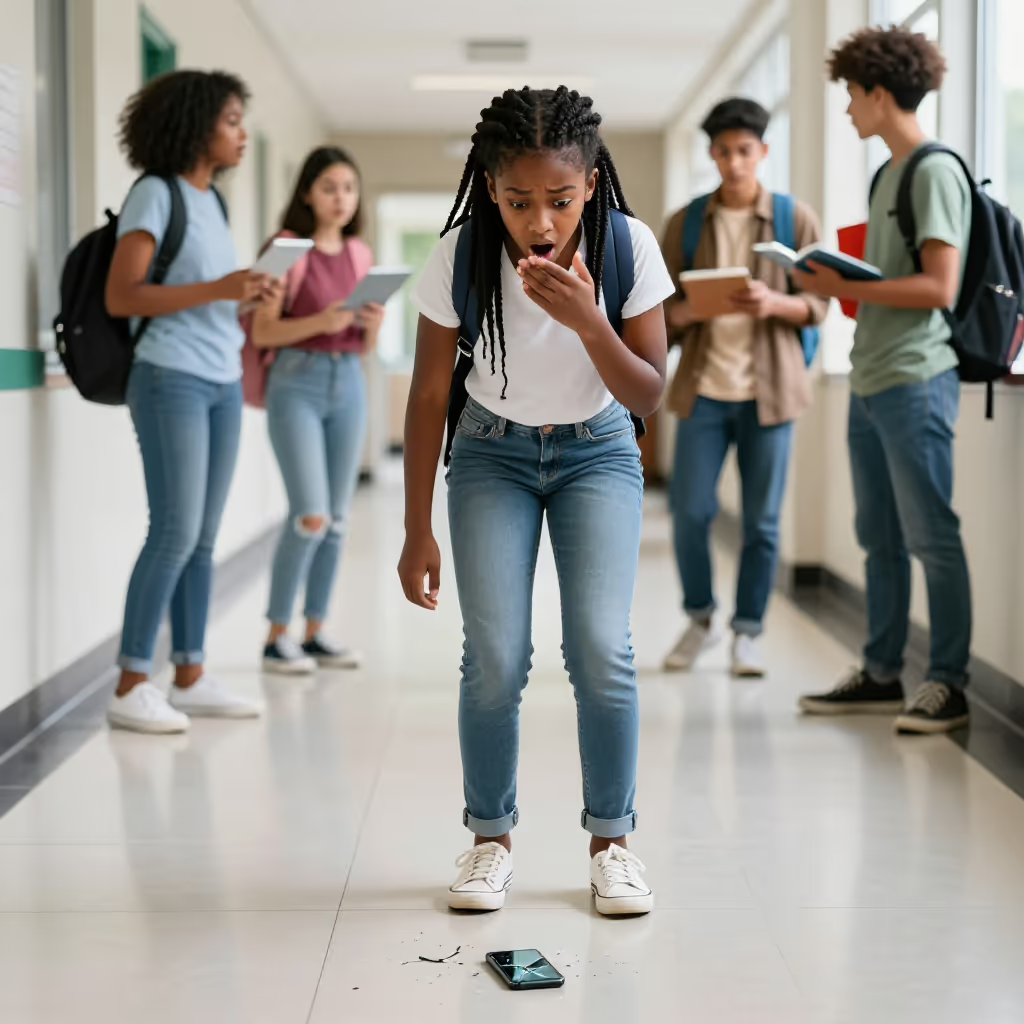
to open wide
To open your eyes or mouth wide as a reaction to surprise or shock.
Sie riss die Augen auf, als sie das unerwartete Geschenk sah.
She opened her eyes wide when she saw the unexpected gift.

to clear up
When a closed layer of clouds opens up and the sky becomes visible.
Nach dem langen Regen riss der Himmel endlich auf.
After the long rain, the sky finally cleared up.

to pick someone up
Colloquial for trying to get to know someone in order to start a romantic or sexual relationship.
Er geht jeden Samstag in die Bar, um Frauen aufzureißen.
He goes to the bar every Saturday to pick up women.
'Aufreißen' (to tear open) is a separable verb. The prefix 'auf-' comes at the end in main clauses. In subordinate clauses and in the infinitive with 'zu', the verb stays together.
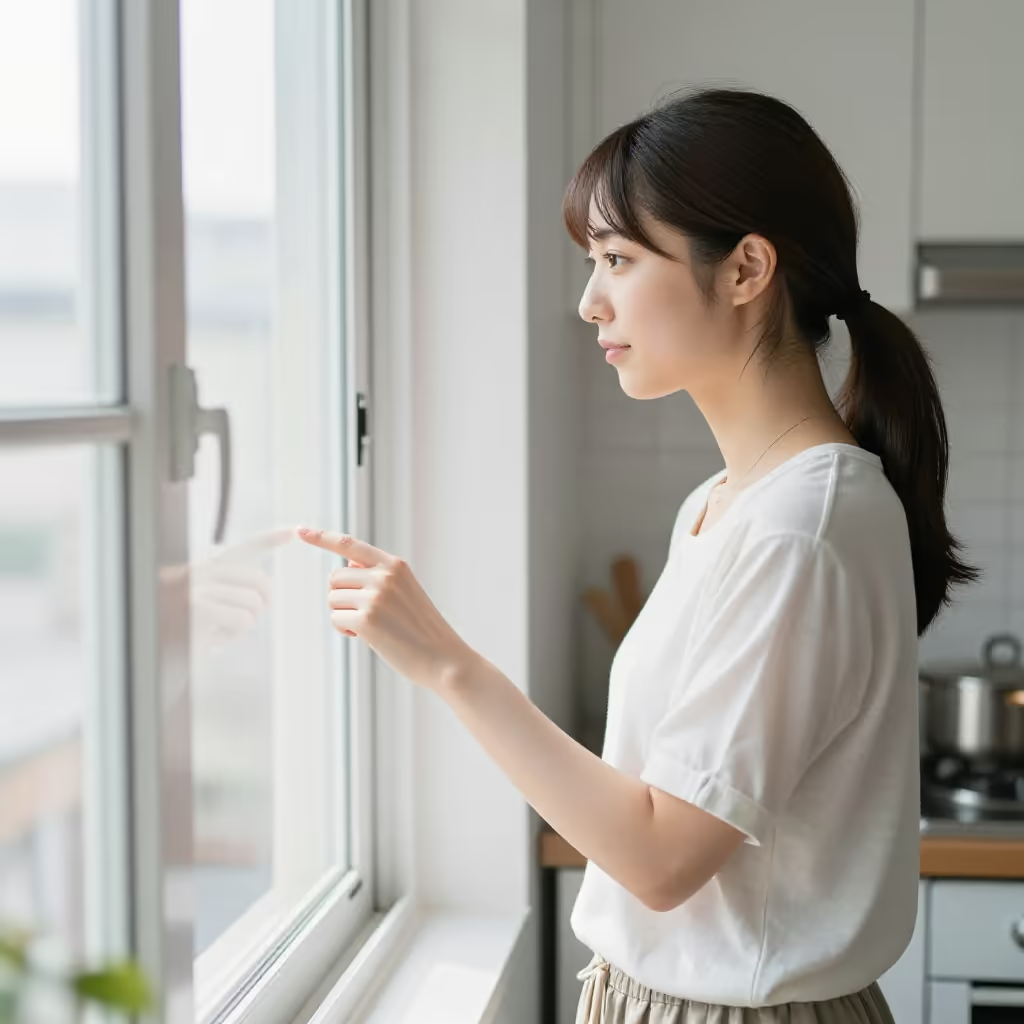
Er reißt das Fenster mit einem Ruck auf.
He tears the window open with one sudden pull.
The verb consists of the prefix 'auf' (which often means 'open') and 'reißen' (to tear). The literal meaning of 'aufreißen' (to tear open) helps you understand many uses where something is opened quickly or suddenly.
Die alte Wunde ist beim Sport wieder aufgerissen.
The old wound split open again during sports.
In the meaning 'to open with force', the verb is often used with objects such as 'einen Brief' (a letter), 'eine Packung' (a package), or 'ein Geschenk' (a present).
Die Kinder rissen ihre Geschenke ungeduldig auf.
The children impatiently tore open their presents.
When skin, a wound, or the ground 'aufreißt' (splits open), the verb is used without an object, i.e. intransitively. The subject is the thing that develops cracks by itself.
Durch die Trockenheit ist der Erdboden aufgerissen.
Because of the dryness, the ground has split open.
As a reaction to surprise or shock, 'aufreißen' (to open wide) is almost always used in the fixed expressions 'die Augen aufreißen' (to open one's eyes wide) or 'den Mund aufreißen' (to open one's mouth wide).
Er riss den Mund auf, als er den Preis hörte.
He opened his mouth wide when he heard the price.
The meaning 'to approach someone in order to start a relationship' is very colloquial. In this use, the verb always needs an accusative object.
Er hat versucht, sie auf der Party aufzureißen.
He tried to pick her up at the party.
to open
Öffnen and aufreißen can both mean making something closed accessible. Aufreißen, however, emphasizes a quick, forceful action that is often damaging, while öffnen remains neutral. Use öffnen when handling something carefully and aufreißen when the forcefulness or possible damage is important.
Er riss den Umschlag hastig auf, weil er die Nachricht sofort lesen wollte.
He hurriedly tore open the envelope because he wanted to read the message immediately.
Sie öffnete den Umschlag vorsichtig mit einem Messer.
She carefully opened the envelope with a knife.