


abwerfen
to yield
To produce a profit, return, or result.
EXAMPLE
Die Solaranlage auf dem Dach wirft genug Strom für die ganze Familie ab.
The solar system on the roof yields enough electricity for the whole family.
to yield / to drop / to shed
Loading your saved state.
to yield
To produce a profit, return, or result.
Die Solaranlage auf dem Dach wirft genug Strom für die ganze Familie ab.
The solar system on the roof yields enough electricity for the whole family.
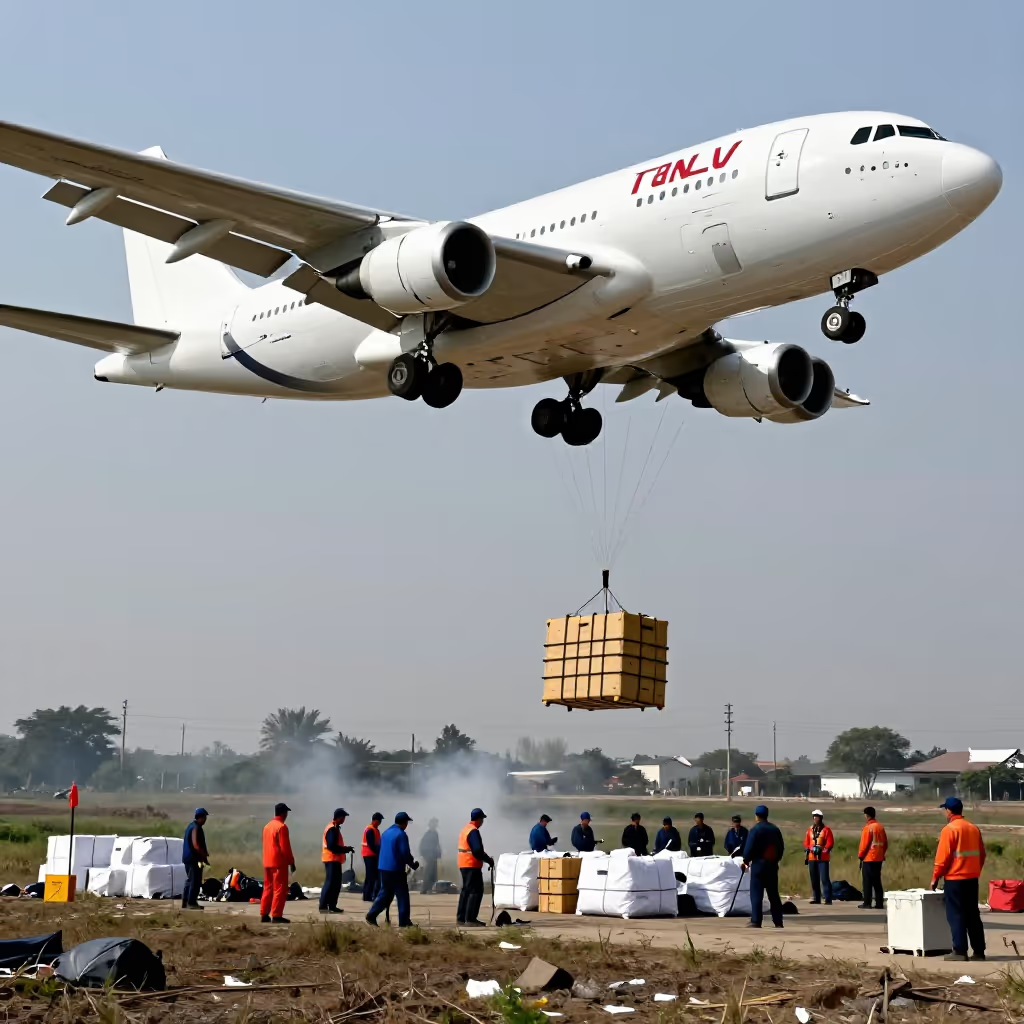
to drop
To deliberately let something fall from a height, especially from an airplane.
Das Flugzeug hat Hilfspakete über dem Katastrophengebiet abgeworfen.
The airplane dropped aid packages over the disaster area.
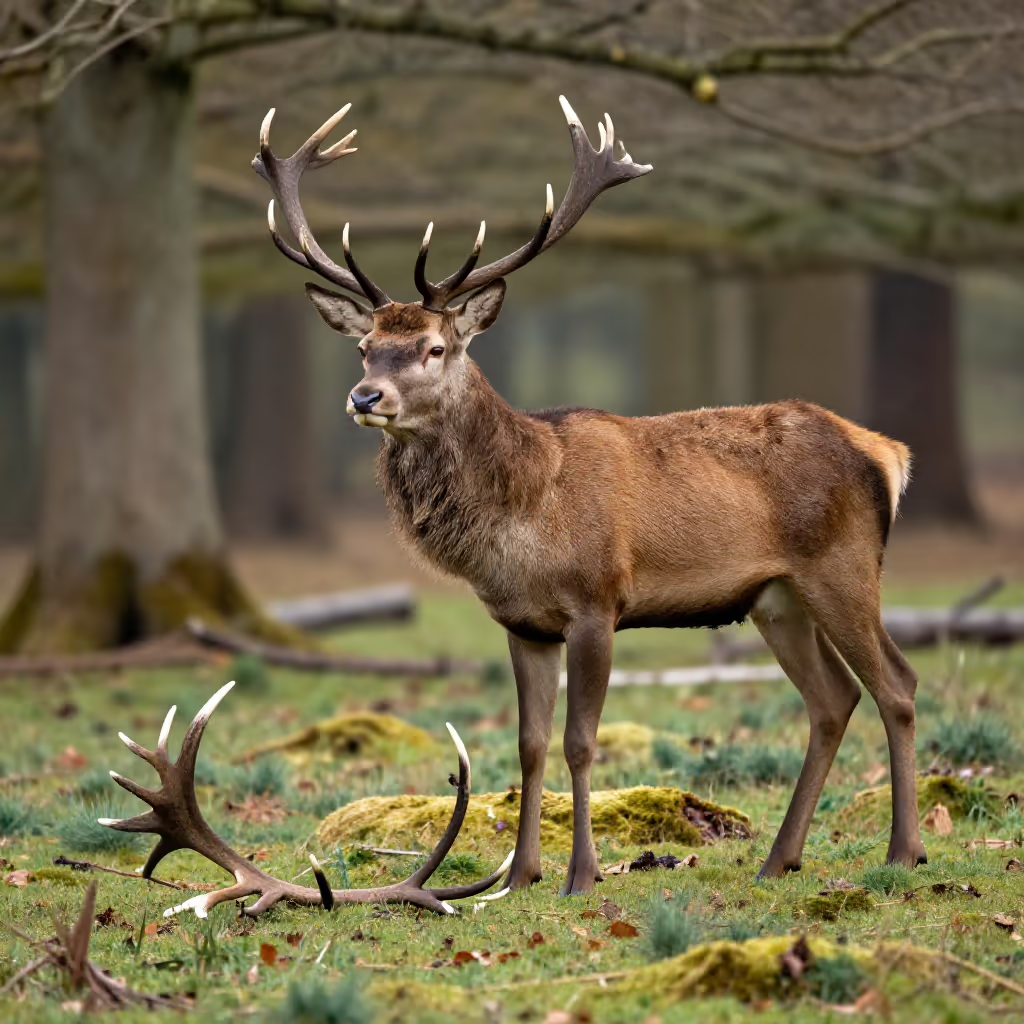
to shed
To lose body parts or growth such as leaves, antlers, or skin as part of a natural cycle.
Im Herbst werfen die Laubbäume ihre Blätter ab.
In autumn, deciduous trees shed their leaves.

to throw off
To throw a rider off the back of a riding animal, usually a horse, through a sudden, violent movement.
Das junge Pferd wurde unruhig und hat seine Reiterin abgeworfen.
The young horse became restless and threw off its rider.
'Abwerfen' (to yield / to drop / to shed) is a separable verb. The prefix 'ab-' often means 'downward' or 'away from oneself' here and comes at the end in a main clause.
Im Herbst werfen die Bäume ihre Blätter ab.
In autumn, the trees shed their leaves.
The subject of the sentence is a strong clue to the meaning: an investment yields profit, a tree sheds leaves, an airplane drops packages, and a horse throws off a rider.
Die neue Geschäftsidee warf schnell einen hohen Gewinn ab.
The new business idea quickly yielded a high profit.
In a financial or economic context, 'abwerfen' is often combined with words such as 'Gewinn' (profit), 'Profit' (profit), 'Ertrag' (return), or 'Zinsen' (interest).
Seine Aktien warfen dieses Jahr eine gute Rendite ab.
His stocks yielded a good return this year.
When something is dropped from the air, the objects are often 'Bomben' (bombs), 'Hilfsgüter' (relief supplies), 'Flugblätter' (leaflets), or 'Ballast' (ballast).
Über dem Krisengebiet warfen die Helikopter Lebensmittel ab.
The helicopters dropped food over the crisis area.
In nature, trees shed 'Laub' (foliage) or 'Blätter' (leaves), deer shed their 'Geweih' (antlers), and snakes shed their 'Haut' (skin). It describes a natural process of losing something.
Die Schlange hat gerade ihre alte Haut abgeworfen.
The snake has just shed its old skin.
to lose
Verlieren generally describes an animal no longer having a body part or growth, and it can also be used after an accident. Abwerfen, on the other hand, describes a natural process that occurs regularly. That is why abwerfen is more appropriate when a deer sheds its antlers.

Der Hirsch wirft im Frühjahr sein Geweih ab.
The deer sheds its antlers in the spring.
Der Hirsch verlor bei einem Unfall eine Geweihstange.
The deer lost an antler tine in an accident.