


verlieren
to lose
To no longer have something because you no longer know where it is; to misplace something.
EXAMPLE
Ich glaube, ich habe meinen Regenschirm im Zug verloren.
I think I lost my umbrella on the train.
to lose
Loading your saved state.
to lose
To no longer have something because you no longer know where it is; to misplace something.
Ich glaube, ich habe meinen Regenschirm im Zug verloren.
I think I lost my umbrella on the train.
to lose
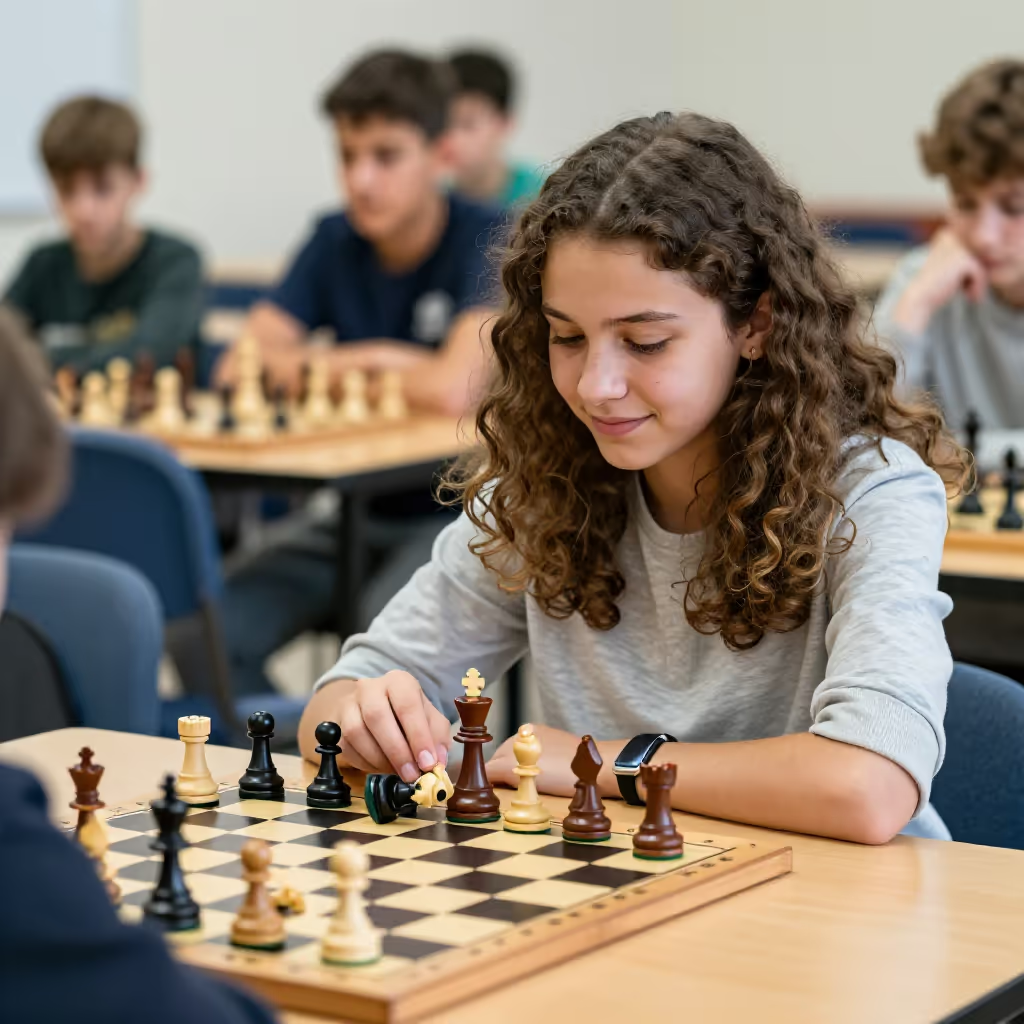
To be defeated in a game, competition, or fight; not to win.
Unsere Mannschaft hat das Finale leider mit 1:2 verloren.
Unfortunately, our team lost the final 2–1.

to lose
To lose something abstract such as a job, a right, one's life, or consciousness.
Durch die Umstrukturierung hat er seine Stelle verloren.
He lost his job because of the restructuring.

to lose
To no longer have a quality, feeling, or ability.
Auch in schwierigen Zeiten hat sie nie die Hoffnung verloren.
Even in difficult times, she never lost hope.
to get lost
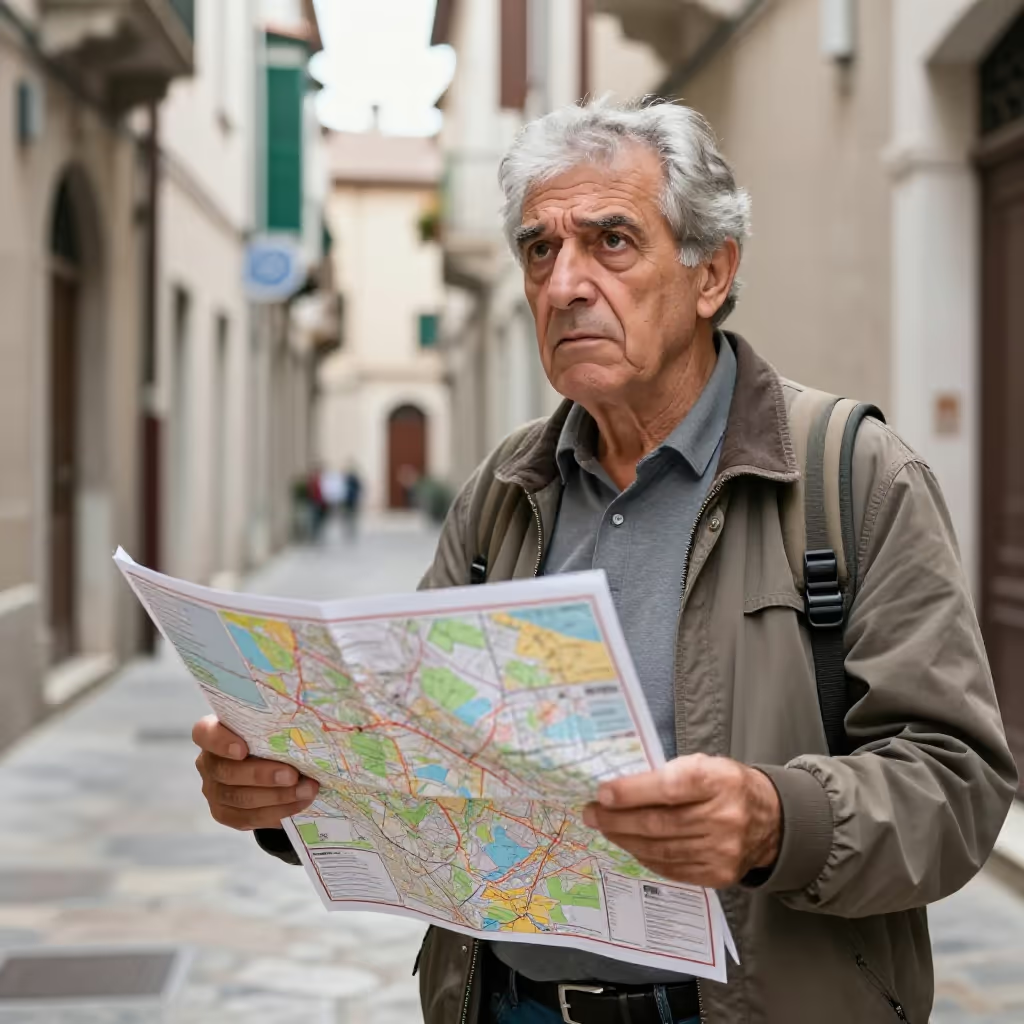
To lose one's orientation and no longer know where one is; to get lost.
Wir haben uns im dichten Wald komplett verloren.
We got completely lost in the dense forest.

to lose
To decrease in quantity, weight, or intensity.
Der Autoreifen verliert langsam Luft.
The car tire is slowly losing air.

to lose oneself in
To concentrate very intensely on something and forget one's surroundings.
Er kann sich stundenlang in den Details seiner Modelleisenbahn verlieren.
He can lose himself for hours in the details of his model railway.
'Verlieren' (to lose) is an inseparable verb. The prefix 'ver-' remains firmly attached to the verb stem in all tenses and sentence constructions. This prefix often suggests a loss or a negative result.
Ich hoffe, dass ich meinen Job nicht verliere.
I hope I don't lose my job.
The perfect tense of 'verlieren' (to lose) is always formed with the auxiliary verb 'haben' (to have), even when it describes a change or a loss. So it is always 'ich habe verloren' (I have lost / I lost).
Er hat gestern seine Brieftasche verloren.
He lost his wallet yesterday.
The corresponding noun for the verb 'verlieren' (to lose) is 'der Verlust' (loss). When you lose something, you suffer a loss.
Der Verlust seines Arbeitsplatzes war ein schwerer Schlag für ihn.
The loss of his job was a heavy blow for him.
When 'verlieren' (to lose) describes the loss of an abstract quality, it is often combined with certain nouns. Common phrases are: 'die Geduld verlieren' (to lose patience), 'die Hoffnung verlieren' (to lose hope), 'den Mut verlieren' (to lose courage), or 'das Interesse verlieren' (to lose interest).
Nach einer Stunde Wartezeit verlor er die Geduld.
After waiting for an hour, he lost patience.
The form 'sich verlieren' (to get lost) is reflexive and means that one loses one's orientation or gets lost. The reflexive pronoun (sich, mich, dich, etc.) is necessary here.
Ohne Karte hätten wir uns im Gebirge sicher verloren.
Without a map, we would surely have gotten lost in the mountains.
When something decreases in quantity, value, or intensity, 'verlieren' (to lose) is often used with the preposition 'an' and a dative object. Examples are 'an Gewicht verlieren' (to lose weight) or 'an Bedeutung verlieren' (to lose importance).
Seit der Krise hat die Währung stark an Wert verloren.
Since the crisis, the currency has lost a lot of value.
The phrase 'sich in etwas verlieren' (to lose oneself in something) means to focus so intensely on something that you forget everything around you. The preposition 'in' requires the accusative here.
Sie kann sich stundenlang in einem guten Buch verlieren.
She can lose herself in a good book for hours.
to miss
Verlieren describes no longer having an object because you misplaced it or no longer know where it is. Vermissen, by contrast, states that the object is missing from its expected place. When the loss is the focus, Verlieren fits; when the current absence is the focus, Vermissen is appropriate.
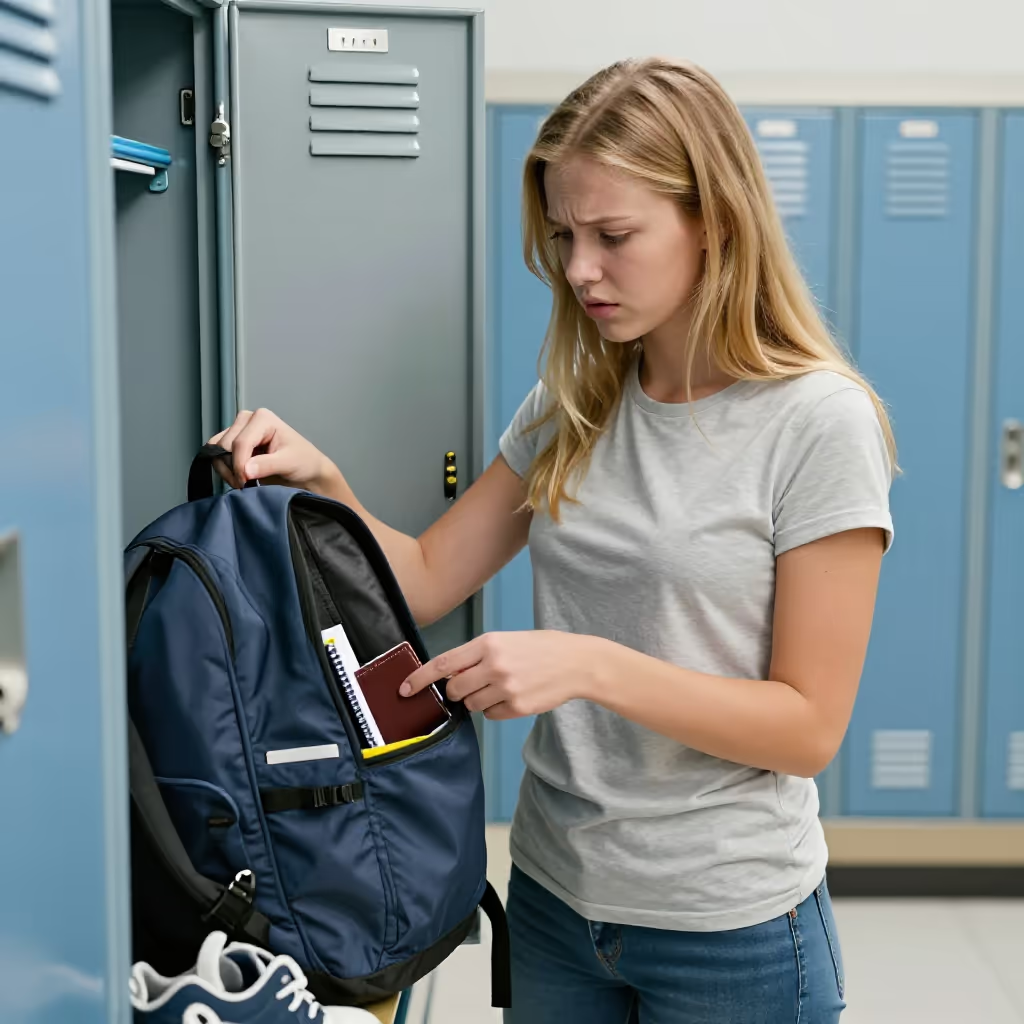
Ich habe meinen Schlüssel auf dem Weg zur Arbeit verloren.
I lost my key on the way to work.
Ich vermisse meinen Schlüssel seit dem Morgen und suche ihn überall.
I have been missing my key since this morning and am looking for it everywhere.