


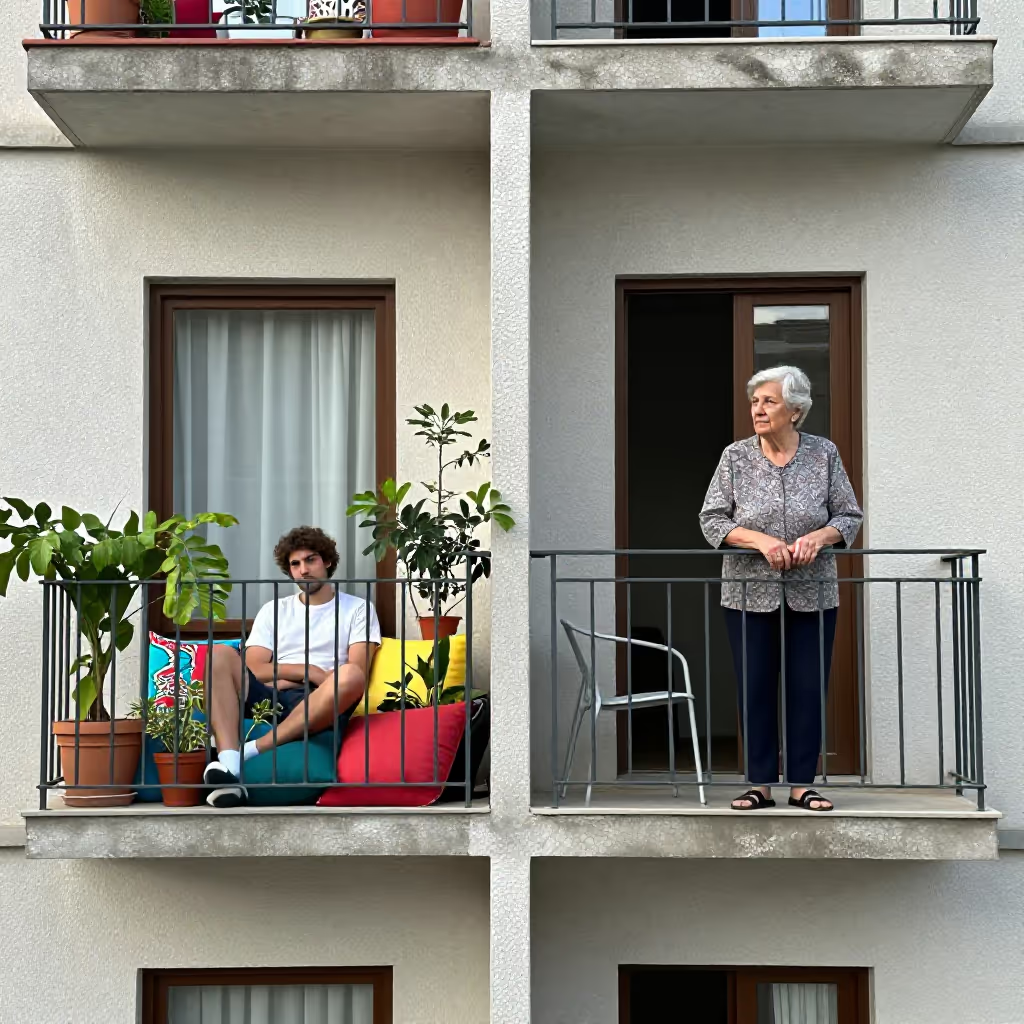
Introduces a contrast or another side of a situation. It is often used together with 'einerseits' (on the one hand), but it can also stand alone.
example
Einerseits möchte ich in den Urlaub fahren, andererseits muss ich für eine wichtige Prüfung lernen.
On the one hand, I would like to go on vacation; on the other hand, I have to study for an important exam.
Usage tips
Word structure
The word is easy to understand if you break it down: it consists of 'anderer' (other) and 'seits' (an old form of 'Seite', meaning side). So it literally means 'on the other side.'
EXAMPLE
Einerseits ist das Wetter schön, andererseits habe ich viel zu tun.
On the one hand, the weather is nice; on the other hand, I have a lot to do.
Word order
When 'andererseits' (on the other hand) is at the beginning of the sentence (position 1), the verb follows directly after it (position 2). This rearrangement is called inversion.
EXAMPLE
Die Wohnung ist teuer. Andererseits liegt sie sehr zentral.
The apartment is expensive. On the other hand, it is very centrally located.
Usage pattern
'Andererseits' (on the other hand) is very often used together with 'einerseits' (on the one hand) to present two sides of a matter or argument. But 'andererseits' can also stand alone to introduce a contrast.
EXAMPLE
Einerseits freue ich mich auf die Party, andererseits bin ich sehr müde.
On the one hand, I'm looking forward to the party; on the other hand, I'm very tired.
Compare with
near_synonym · confusable
andererseits vs aber
but
'aber' and 'andererseits' both show a contrast. 'aber' connects two statements directly and is very common in everyday language. It fits when you want to limit something or set another piece of information against it. 'andererseits' is used when you look at a second side of something. It sounds more considered and fits especially well when weighing advantages and disadvantages. Learners may confuse the words because both introduce a contrast. In practice: for a simple contrast, you usually use 'aber'; for 'another side of the matter', 'andererseits' fits better.
andererseits
Der neue Job ist anstrengend, andererseits lerne ich dort sehr viel.
The new job is demanding; on the other hand, I learn a lot there.
aber
Das Hotel ist teuer, aber die Lage ist sehr gut.
The hotel is expensive, but the location is very good.