

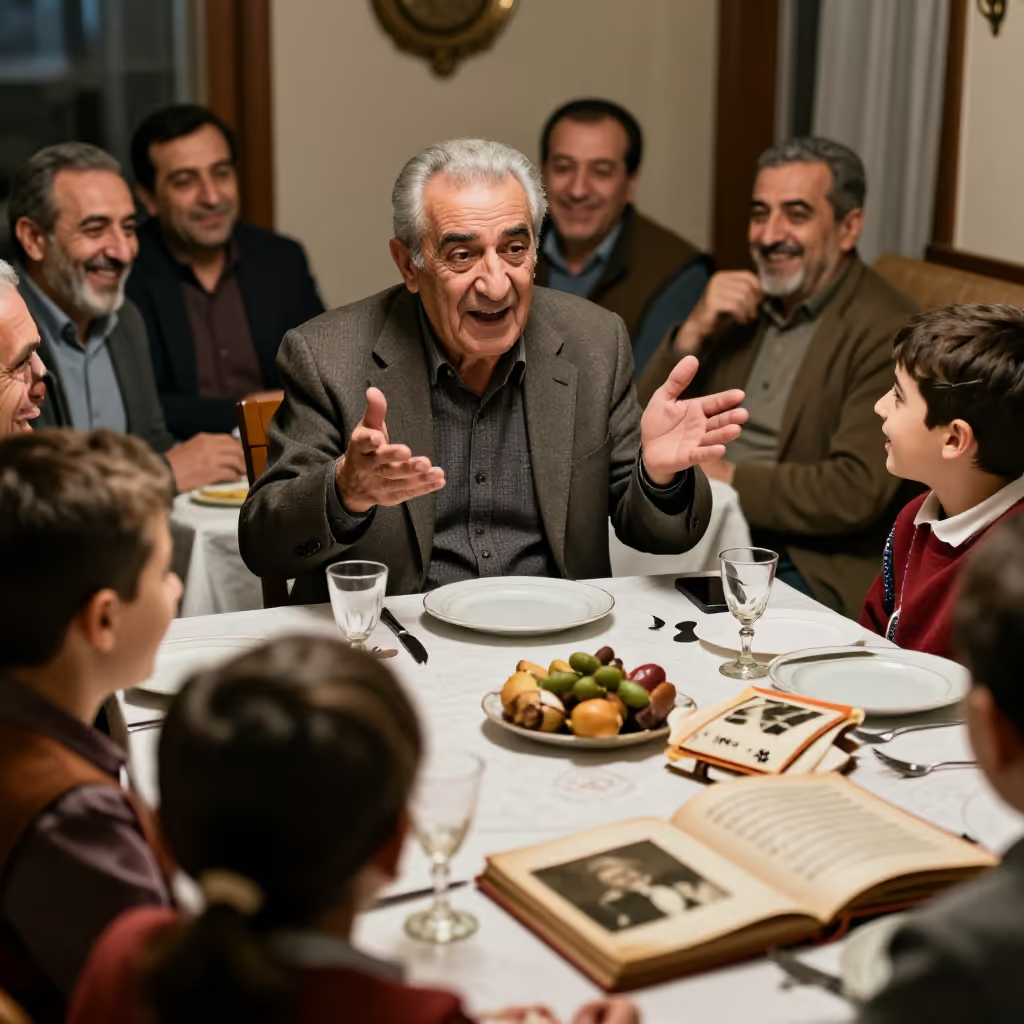
A short, often entertaining or remarkable story about a person or event, usually based on a true incident.
example
Der Professor lockerte seinen Vortrag mit einer persönlichen Anekdote auf.
The professor livened up his lecture with a personal anecdote.

Usage tips
Typical verbs
An anecdote is usually 'erzählt' (told). A slightly more elevated expression is 'eine Anekdote zum Besten geben' (to tell/share an anecdote).
EXAMPLE
Mein Großvater erzählt gerne Anekdoten aus seiner Jugend.
My grandfather likes telling anecdotes from his youth.
Correct preposition
To name the subject of the anecdote, you use the preposition 'über' (about) with the accusative, or less commonly 'von' (of/about) with the dative.
EXAMPLE
Er erzählte eine interessante Anekdote über einen berühmten Wissenschaftler.
He told an interesting anecdote about a famous scientist.
Typical adjectives
Common adjectives that describe an anecdote are 'lustig' (funny), 'persönlich' (personal), 'kurz' (short), 'interessant' (interesting), or 'amüsant' (amusing).
EXAMPLE
Sie begann ihre Rede mit einer kurzen persönlichen Anekdote.
She began her speech with a short personal anecdote.
Compare with
near_synonym · confusable
Anekdote vs Geschichte
story / history
'die Geschichte' and 'die Anekdote' can both be a short story about an event. 'Geschichte' is the more general word and can be very short, long, invented, or true. 'Anekdote' usually means a short, true or believable story about a person or a special situation. It is often funny, interesting, or surprising. The words can be confused when someone is telling about an experience. If you only want to make clear that something is being told, 'Geschichte' fits. If the story is short and has a point, 'Anekdote' fits better.
Anekdote
Nach dem Vortrag erzählte der Lehrer eine kurze Anekdote aus seinem ersten Schultag.
After the lecture, the teacher told a short anecdote from his first day at school.
Geschichte
Maria hat im Zug eine spannende Geschichte gelesen.