


anlaufen
to start
To begin or start. Often used for programs, films, projects, or machines.
EXAMPLE
Die neue Produktion soll im Herbst anlaufen.
The new production is supposed to start in the fall.
to start / fog up / tarnish
Loading your saved state.
to start
To begin or start. Often used for programs, films, projects, or machines.
Die neue Produktion soll im Herbst anlaufen.
The new production is supposed to start in the fall.

to fog up
A surface, usually made of glass or metal, becomes cloudy or opaque because of moisture condensing on it.
Als ich aus der Kälte ins Warme kam, lief meine Brille sofort an.
When I came inside from the cold into the warmth, my glasses immediately fogged up.
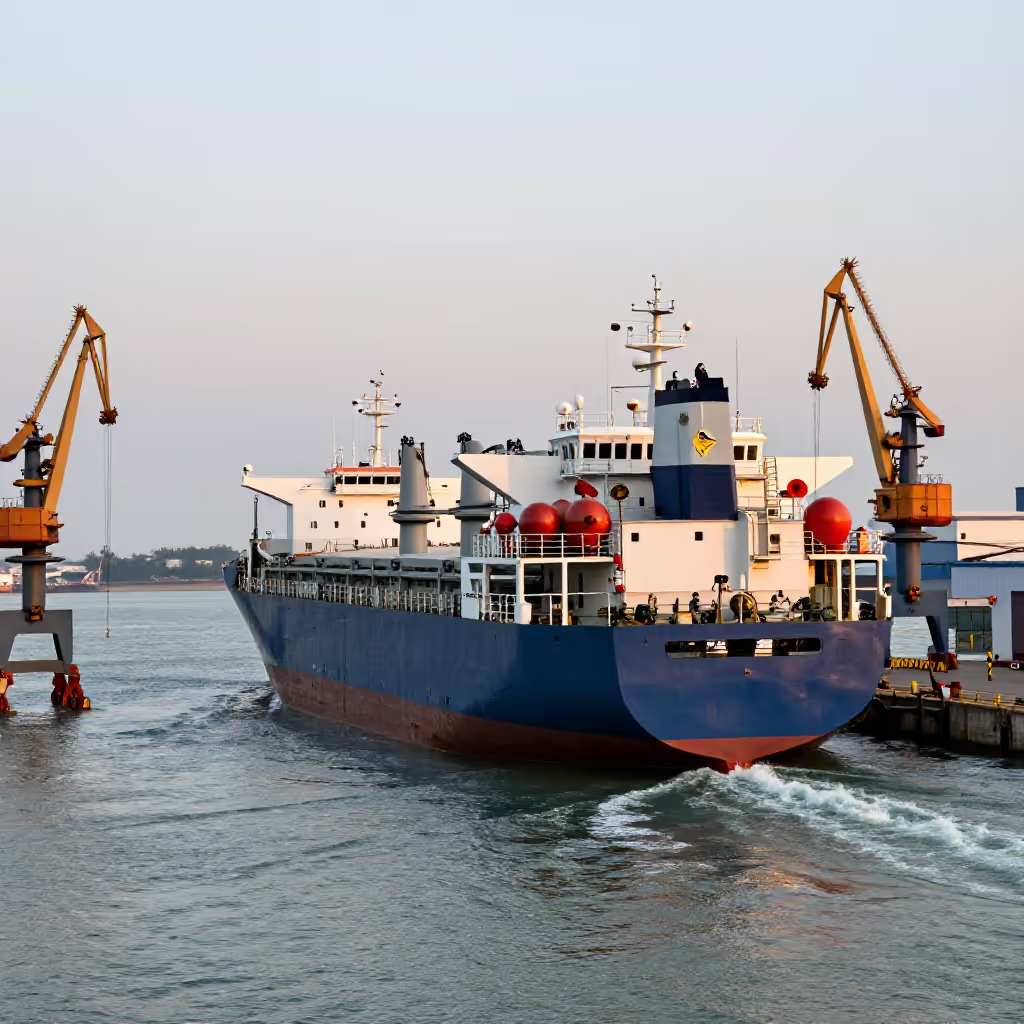
to call at
To head for a specific place, especially a port, with a ship or boat.
Das Kreuzfahrtschiff wird morgen den Hafen von Hamburg anlaufen.
The cruise ship will call at the port of Hamburg tomorrow.

to tarnish
The surface of metals, especially silver, changes color and becomes dark through a chemical reaction with the air.
Das alte Silberbesteck ist über die Jahre schwarz angelaufen.
The old silver cutlery has tarnished black over the years.

to accrue
To accumulate or arise over a period of time, usually with reference to costs, debts, or interest.
Während des langen Rechtsstreits sind erhebliche Anwaltskosten angelaufen.
During the long legal dispute, substantial legal fees accrued.

to run up against
To try to overcome an obstacle or resistance, often without success.
Mit ihren Reformvorschlägen ist sie gegen eine Wand der Ablehnung angelaufen.
With her reform proposals, she ran up against a wall of rejection.
'Anlaufen' (to start / fog up / tarnish) is a separable verb. The prefix 'an-' goes at the end in a main clause, while in a subordinate clause and in the infinitive it remains attached to the verb.
Der neue Film läuft am Freitag an.
The new film starts on Friday.
The perfect tense of 'anlaufen' is always formed with the auxiliary verb 'sein' (to be). This is because the verb describes a change of state or a movement.
Meine Brille ist sofort angelaufen.
My glasses fogged up immediately.
In the meaning 'start', 'anlaufen' is often used for abstract things. Typical combinations are: ein Projekt läuft an (a project starts), ein Film läuft an (a film starts), die Produktion läuft an (production starts), or ein Programm läuft an (a program starts).
Der neue Kurs läuft nächsten Montag an.
The new course starts next Monday.
You can recognize this meaning from the context of glass or reflective surfaces. Typical subjects are 'die Brille' (the glasses), 'das Fenster' (the window), or 'der Spiegel' (the mirror), which become cloudy because of moisture or temperature differences.
Die Fensterscheiben sind im Winter oft angelaufen.
The window panes often fog up in winter.
When 'anlaufen' is used in the context of shipping, it means 'ansteuern' (to head for / call at). The subject is always a watercraft such as 'ein Schiff' (a ship) or 'eine Fähre' (a ferry), and the destination is often 'ein Hafen' (a port) or 'eine Küste' (a coast).
Welche Häfen wird das Schiff auf seiner Reise anlaufen?
Which ports will the ship call at on its journey?
In the meaning 'to fight against resistance', 'anlaufen' is always used with the preposition 'gegen' and an accusative object. The expression often conveys that the efforts are unsuccessful.
Die Mannschaft lief immer wieder gegen die starke Abwehr des Gegners an.
The team kept running up against the opponent's strong defense.
to start
Starten and anlaufen can both refer to the beginning of a project. Starten focuses more on the निर्धारित start time, while anlaufen emphasizes the process getting underway and gradually gaining momentum. Use starten for a scheduled date and anlaufen more for a process that develops over time.

Das neue Projekt läuft nach den ersten Besprechungen langsam an.
The new project is slowly getting underway after the first few meetings.
Das neue Projekt startet am Montag mit einer Besprechung.
The new project starts on Monday with a meeting.