

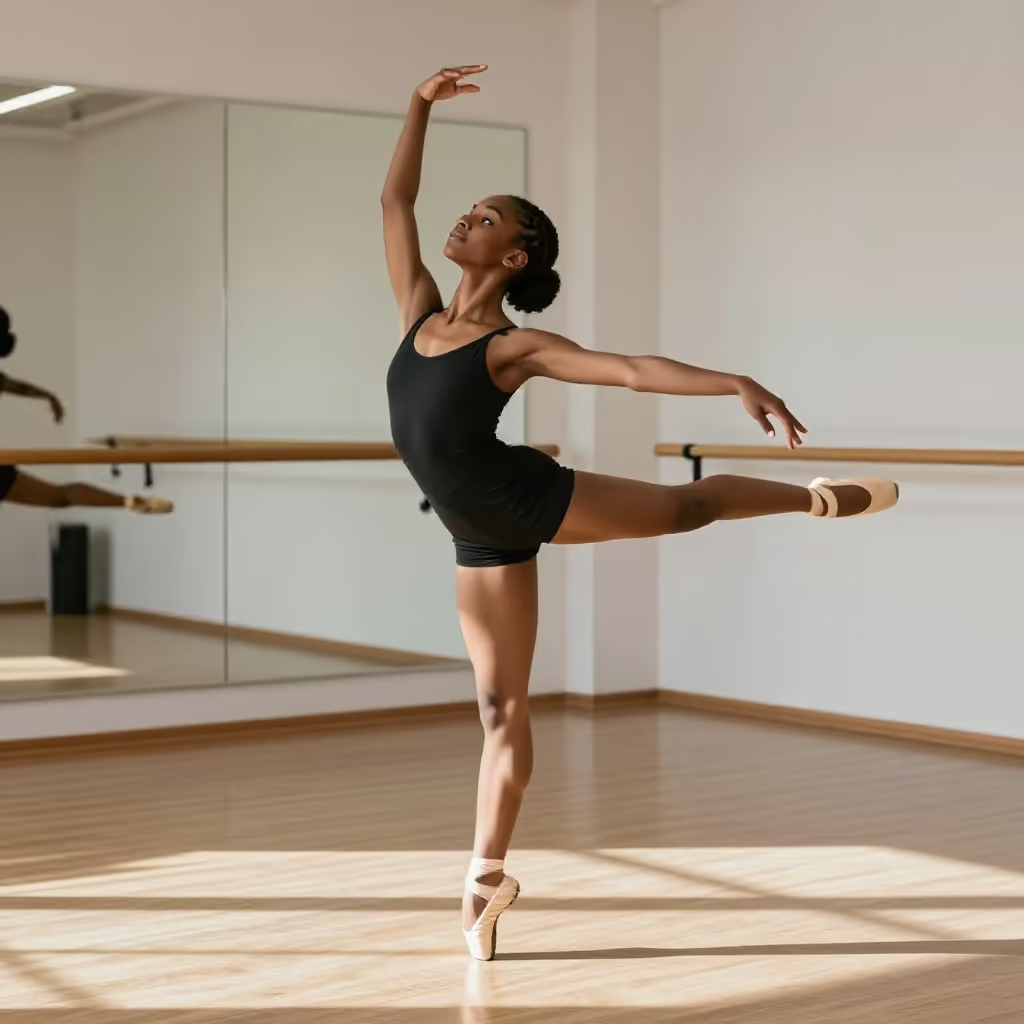
die Anmut
grace
A harmonious, elegant, and aesthetically pleasing manner of movement, posture, or appearance.
EXAMPLE
Die Tänzerin bewegte sich mit einer unglaublichen Anmut über die Bühne.
The dancer moved across the stage with incredible grace.
grace
Loading your saved state.
grace
A harmonious, elegant, and aesthetically pleasing manner of movement, posture, or appearance.
Die Tänzerin bewegte sich mit einer unglaublichen Anmut über die Bühne.
The dancer moved across the stage with incredible grace.
'Anmut' (grace) is a word of elevated language and is often used in literary, poetic, or very descriptive contexts. It is rather rare in everyday usage.
Ihre Bewegungen waren von einer seltenen Anmut.
Her movements had a rare grace.
'Anmut' (grace) is often combined with verbs such as 'besitzen' (to possess) or 'sich bewegen mit' (to move with). Typical adjectives are 'natürliche' (natural), 'besondere' (special), or 'grazile' (graceful) Anmut.
Die Katze bewegte sich mit natürlicher Anmut durch den Garten.
The cat moved through the garden with natural grace.
The adjective for this noun is 'anmutig' (graceful). If you want to describe a person or a movement as elegant, you can use 'anmutig' (graceful).
Die Tänzerin hatte eine sehr anmutige Ausstrahlung.
The dancer had a very graceful presence.
elegance
Eleganz and Anmut both describe an appealing, harmonious appearance or movement. “Anmut” places more emphasis on natural grace and lightness, while “Eleganz” also conveys stylish and cultivated refinement. “Anmut” is more suitable for an effortless movement, while “Eleganz” is more suitable for clothing or an overall refined style.
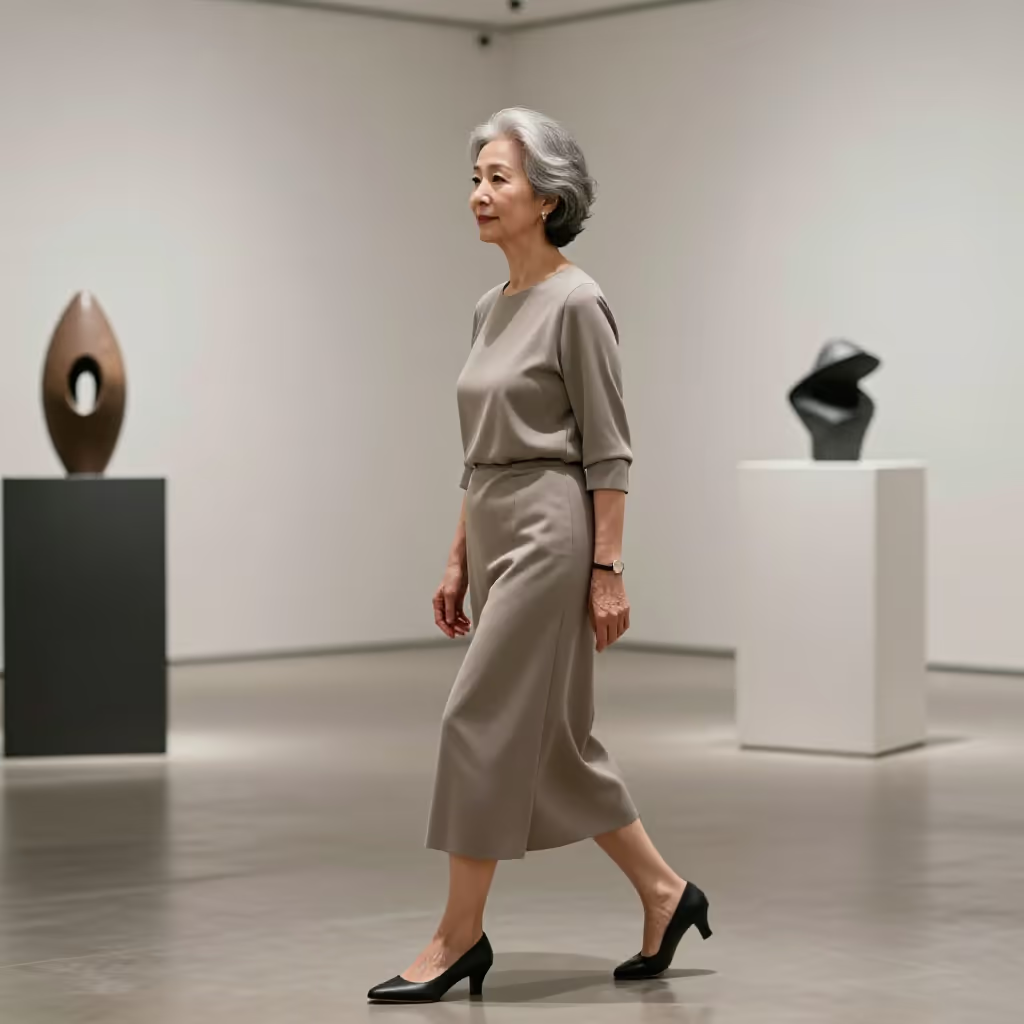
Die Anmut ihrer Bewegungen fällt besonders auf, weil sie leicht und ganz natürlich tanzt.
The grace of her movements is particularly striking because she dances lightly and completely naturally.
Die Eleganz ihres Auftritts zeigt sich in der stilvollen Kleidung und ihrer ruhigen Haltung.
The elegance of her appearance can be seen in her stylish clothing and calm posture.