

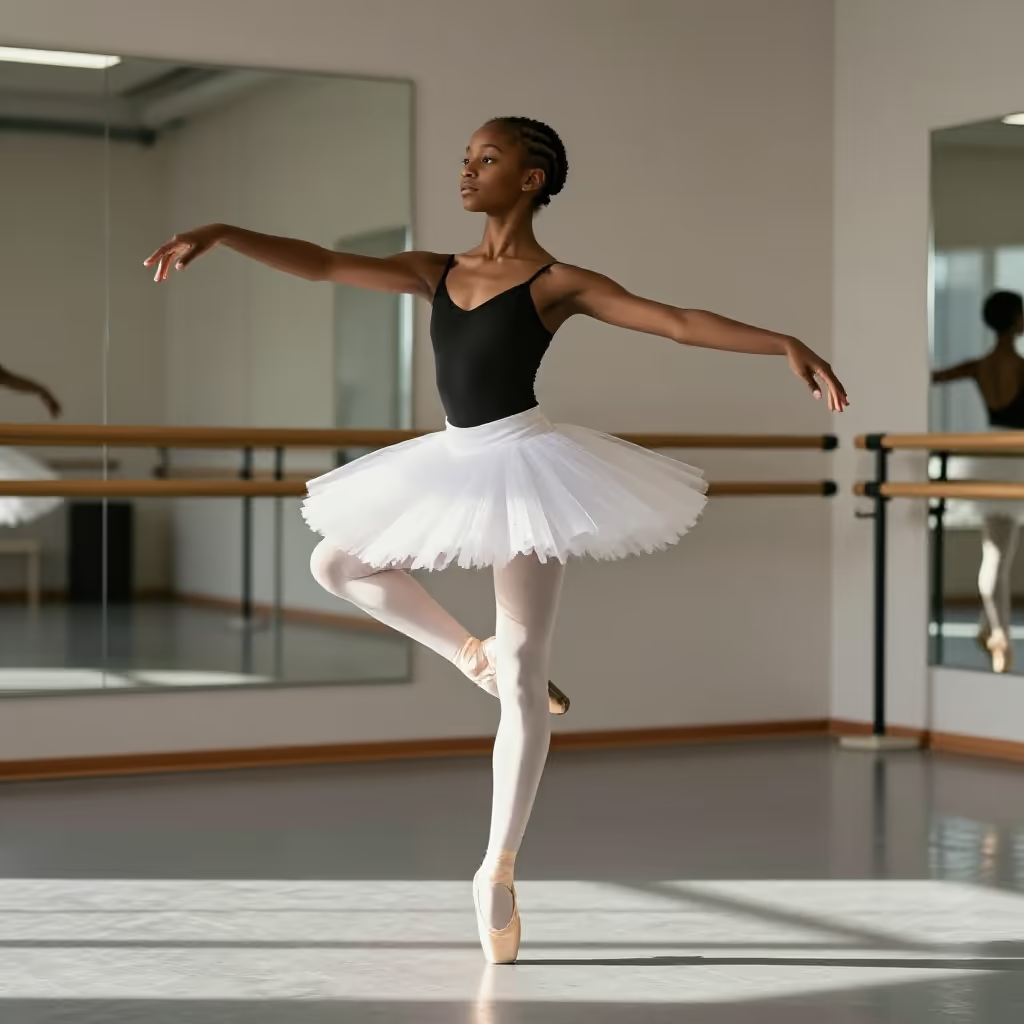
die Grazie
grace
A special gracefulness and elegance in a person's movement or appearance.
EXAMPLE
Die Tänzerin bewegte sich mit einer unglaublichen Grazie über die Bühne.
The dancer moved across the stage with incredible grace.
grace
Loading your saved state.
grace
A special gracefulness and elegance in a person's movement or appearance.
Die Tänzerin bewegte sich mit einer unglaublichen Grazie über die Bühne.
The dancer moved across the stage with incredible grace.
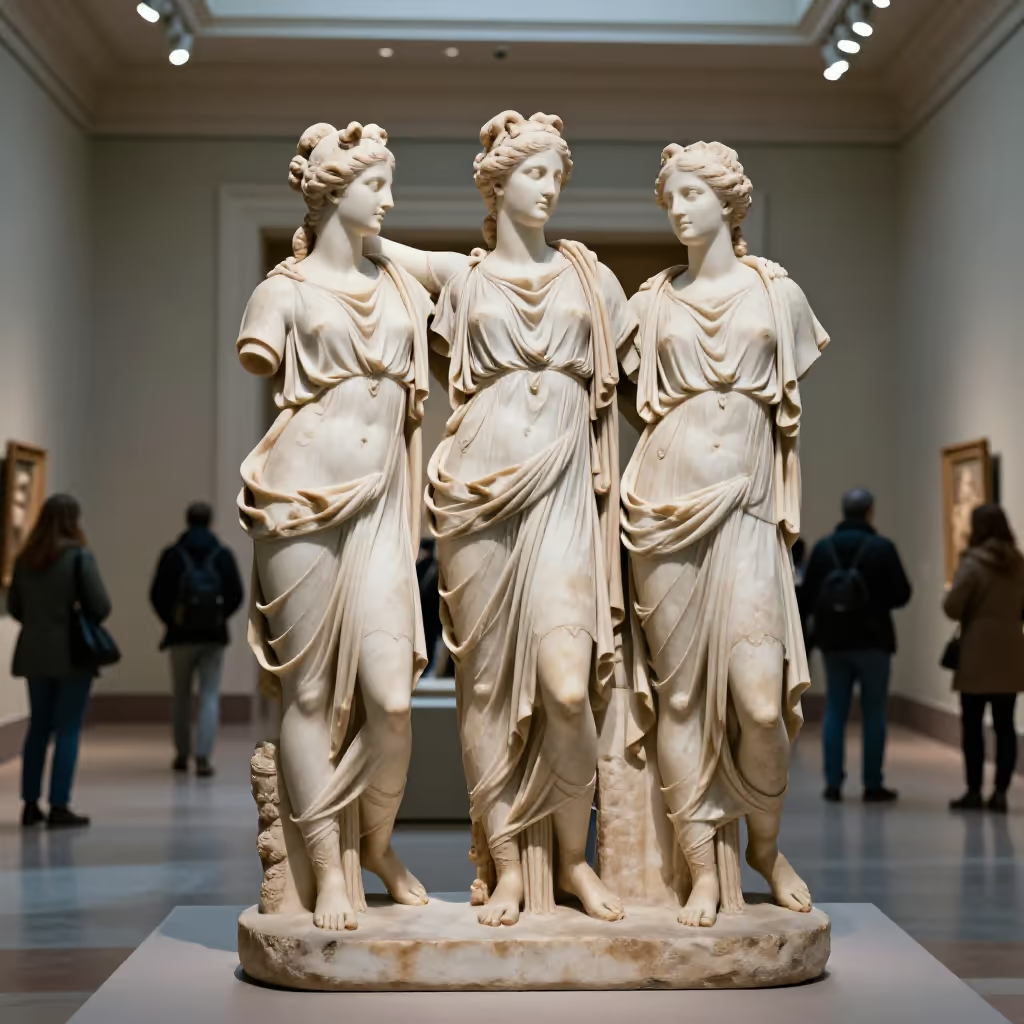
Grace
In Roman mythology, one of the three goddesses of grace, beauty, and joy in life. Usually used in the plural, 'die Grazien' (the Graces).
Das berühmte Gemälde von Rubens zeigt die drei Grazien.
The famous painting by Rubens shows the Three Graces.
The form of the word gives a strong clue to its meaning. In the singular ('die Grazie'), it almost always means gracefulness and elegance. In the plural ('die Grazien'), it usually refers to the three goddesses from mythology.
Sie hat eine natürliche Grazie in all ihren Bewegungen.
She has a natural grace in all her movements.
In the meaning 'Anmut' (gracefulness), 'Grazie' (grace) is an elevated, almost poetic word. It is rarely used in everyday colloquial speech.
Die Eiskunstläuferin beeindruckte das Publikum mit ihrer Grazie.
The figure skater impressed the audience with her grace.
'Grazie' (grace) is often used with the preposition 'mit' (with) to describe the manner of a movement. Typical phrases are 'sich mit Grazie bewegen' (to move with grace) or 'etwas mit Grazie tun' (to do something with grace).
Selbst als sie stolperte, stand sie mit einer gewissen Grazie wieder auf.
Even when she stumbled, she got back up with a certain grace.
In a mythological context, the combination 'die drei Grazien' (the Three Graces) is a fixed expression. It refers to the goddesses of grace, beauty, and joy.
Der Brunnen in der Mitte des Parks stellt die drei Grazien dar.
The fountain in the middle of the park depicts the Three Graces.
elegance
Eleganz and Grazie both describe a stylish and appealing appearance. “Grazie” places more emphasis on a person’s special, effortless grace in movement, while “Eleganz” also encompasses clothing, form, and overall style. “Grazie” is therefore more suitable for an exceptionally light movement, while “Eleganz” is more suitable for overall style.
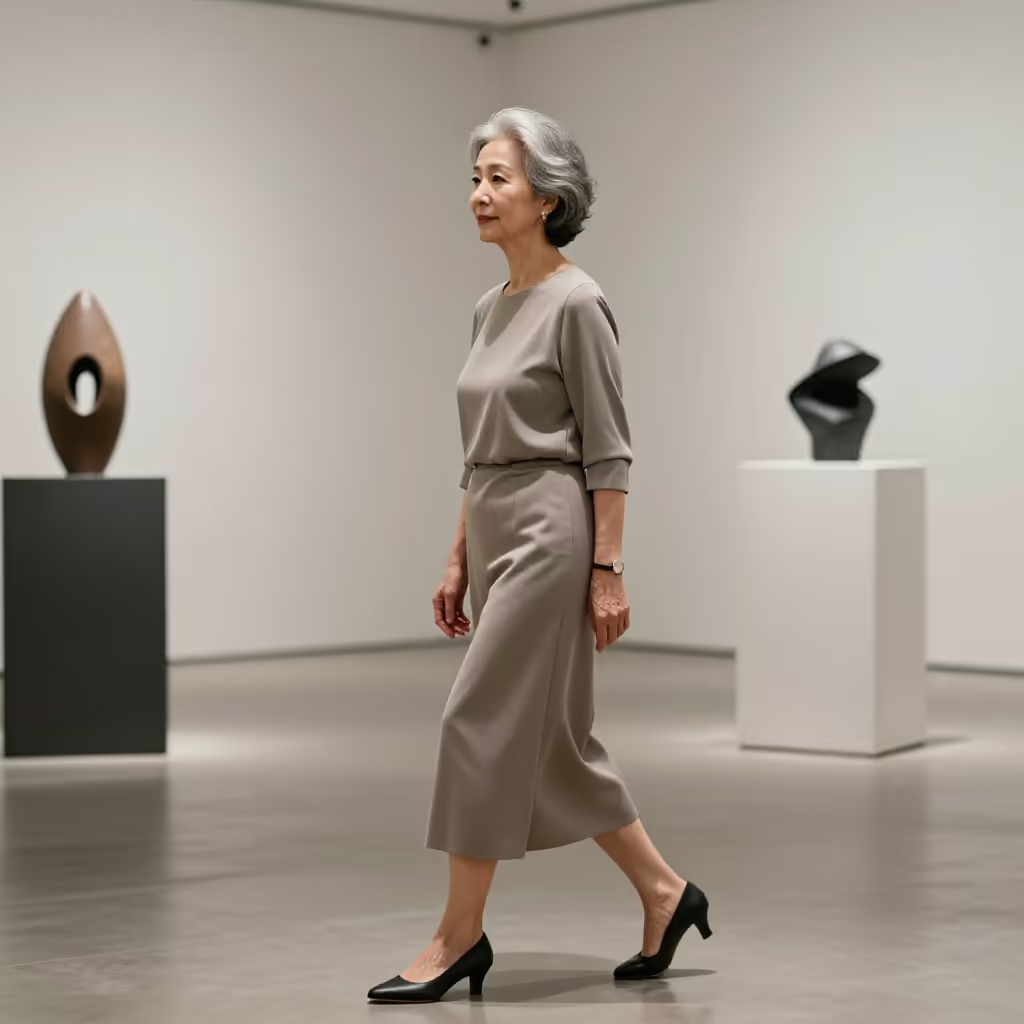
Die Grazie ihrer Bewegungen beeindruckt das Publikum, als sie leicht über die Bühne tanzt.
The grace of her movements impresses the audience as she dances lightly across the stage.
Die Eleganz ihres Auftritts entsteht durch das schlichte Kleid und ihre sichere Haltung.
The elegance of her appearance comes from the simple dress and her confident posture.