


anpacken
to tackle
To begin dealing with a task or problem decisively and energetically.
EXAMPLE
Statt nur zu reden, sollten wir die Sache jetzt endlich anpacken.
Instead of just talking, we should finally tackle the matter now.
to tackle / to grab
Loading your saved state.
to tackle
To begin dealing with a task or problem decisively and energetically.
Statt nur zu reden, sollten wir die Sache jetzt endlich anpacken.
Instead of just talking, we should finally tackle the matter now.
to grab
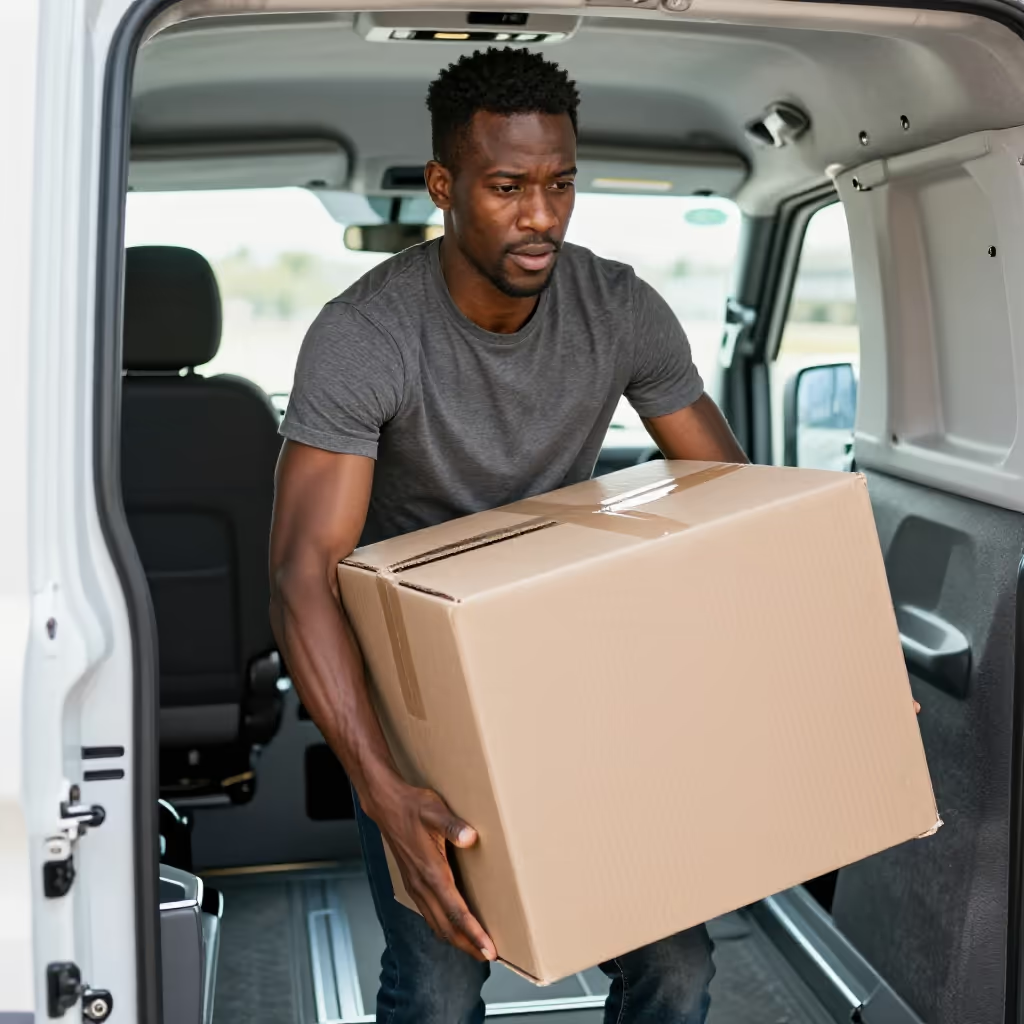
To physically take hold of something and hold it firmly, often in order to move or lift it.
Er packte den schweren Koffer an und wuchtete ihn in den Zug.
He grabbed the heavy suitcase and heaved it onto the train.
to pitch in
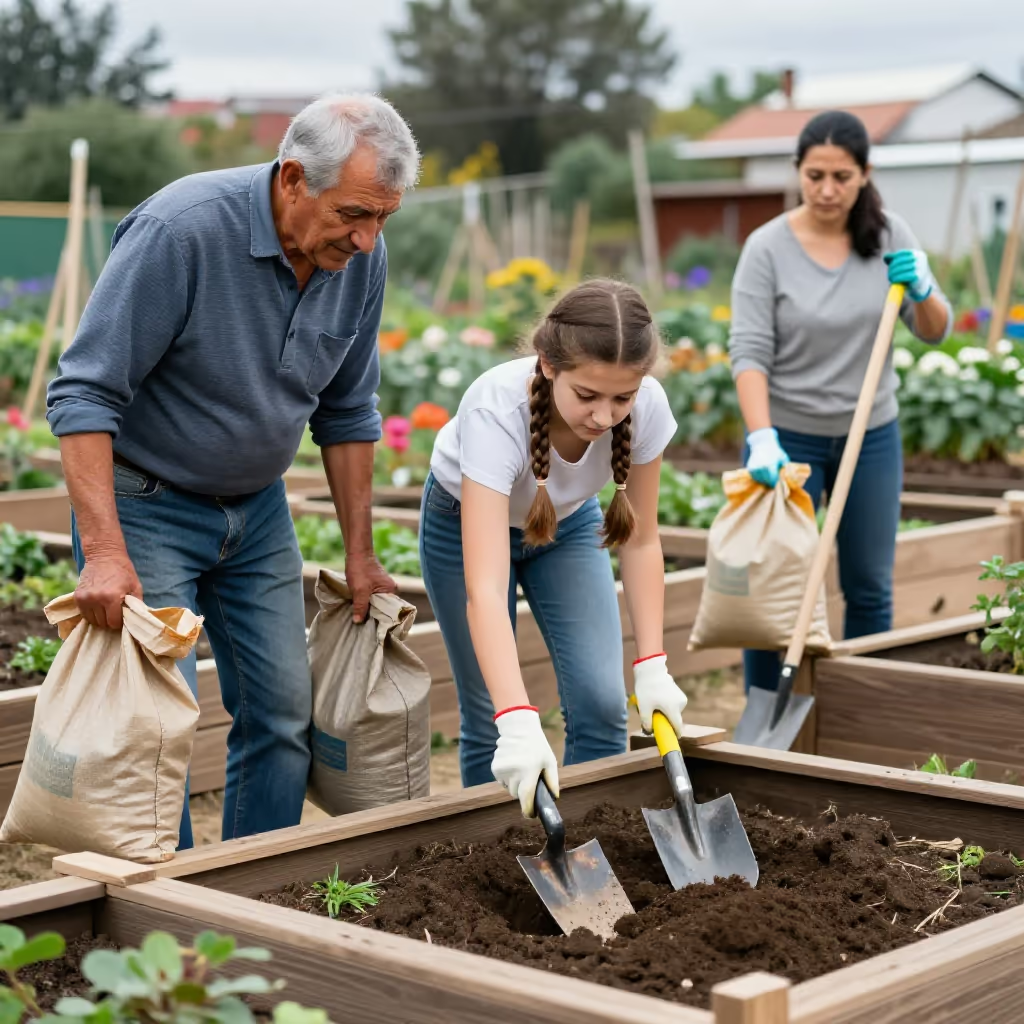
To actively help with a shared activity.
Beim Umzug haben alle Freunde mit angepackt, sodass wir schnell fertig waren.
During the move, all our friends pitched in, so we finished quickly.
'Anpacken' (to tackle / to grab) is a separable verb. In a main clause, the prefix 'an' comes at the end. In a subordinate clause and in the infinitive with 'zu', the verb stays together.
Wir packen die Renovierung nächstes Wochenende an.
We are tackling the renovation next weekend.
You can recognize the meaning from the object: an abstract object ('Problem' (problem), 'Aufgabe' (task)) means 'to begin dealing with'. A concrete, physical object ('Koffer' (suitcase), 'Möbelstück' (piece of furniture)) means 'to grab'. The expression 'mit anpacken' means 'to pitch in/help'.
Lass uns die Gartenarbeit anpacken, bevor es regnet.
Let's tackle the gardening before it rains.
The construction 'mit anpacken' always means 'to help with physical work'. The 'mit' emphasizes the shared aspect.
Wenn alle mit anpacken, sind wir mit dem Aufbau schnell fertig.
If everyone pitches in, we'll finish setting it up quickly.
to concern / turn on / tackle
“Angehen” and “anpacken” can both refer to starting work on a problem. “Angehen” remains neutral, while “anpacken” emphasizes a determined and energetic approach. If the main point is to stress strong commitment, choose “anpacken”.
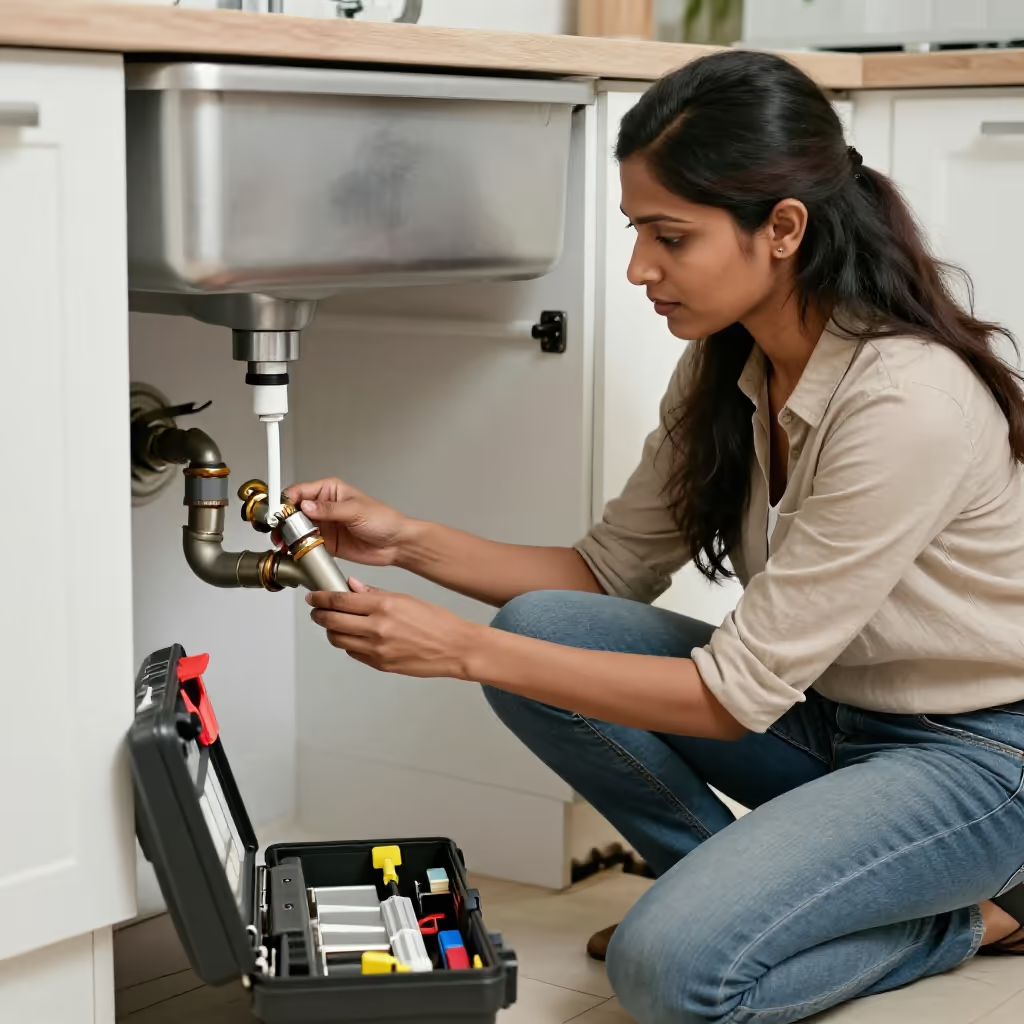
Wir packen das Problem morgen gemeinsam und entschlossen an.
We’ll tackle the problem together and decisively tomorrow.
Wir gehen das Problem morgen Schritt für Schritt an.
We’ll tackle the problem step by step tomorrow.