


anrühren
to mix
To mix a powder, paste, or concentrate with a liquid in order to produce a usable mixture.
EXAMPLE
Ich muss noch schnell den Zement für die Reparatur anrühren.
I still have to quickly mix the cement for the repair.
to mix / to touch
Loading your saved state.
to mix
To mix a powder, paste, or concentrate with a liquid in order to produce a usable mixture.
Ich muss noch schnell den Zement für die Reparatur anrühren.
I still have to quickly mix the cement for the repair.
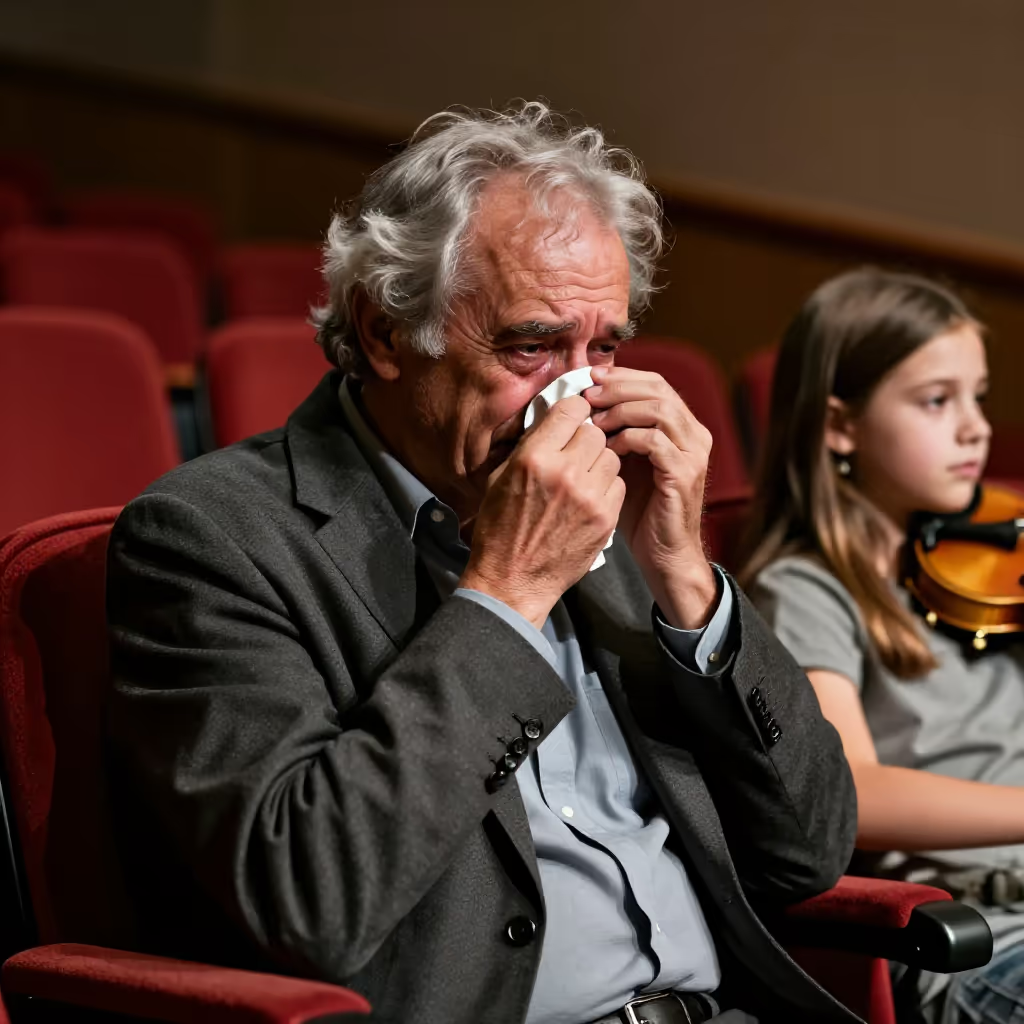
to move
To touch or move someone emotionally; to evoke feelings such as pity, sadness, or emotion in someone.
Die traurige Geschichte des Flüchtlings hat mich tief angerührt.
The refugee's sad story deeply moved me.
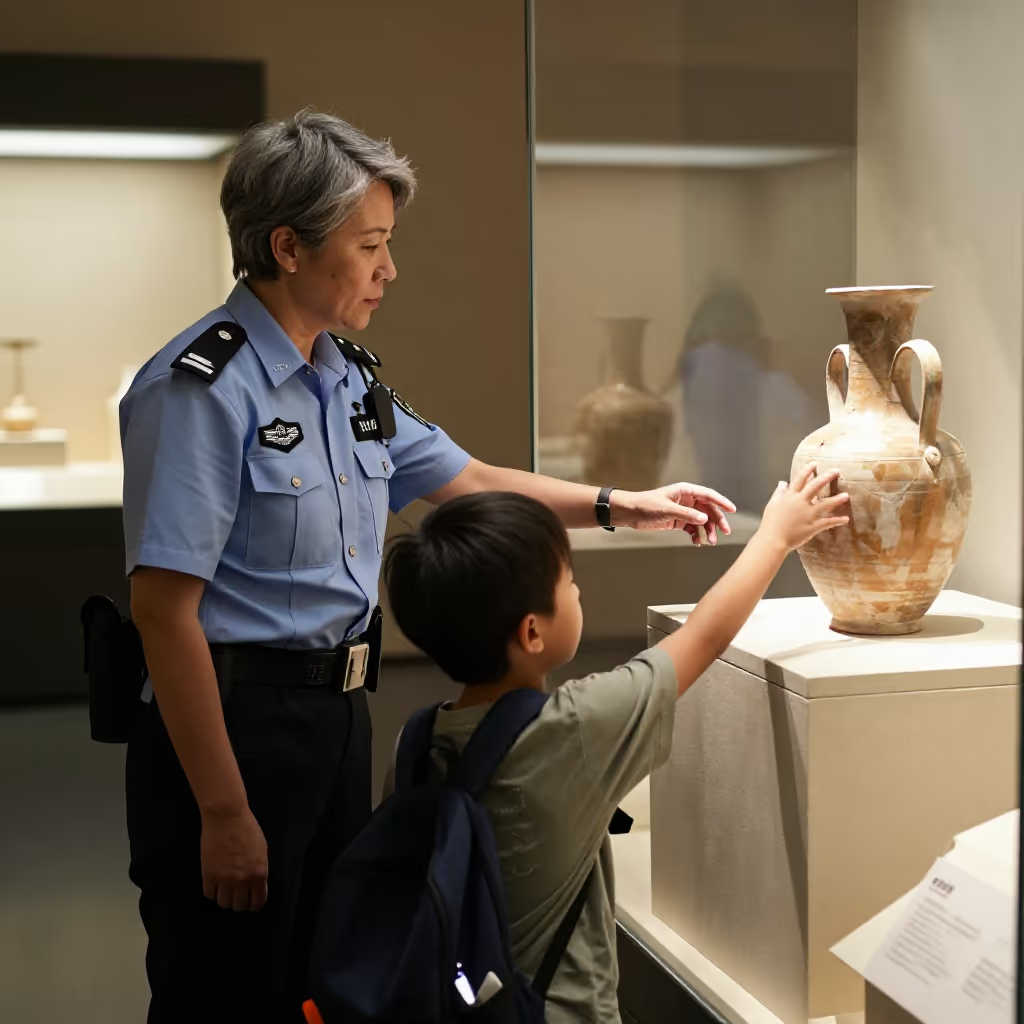
to touch
To physically touch something or someone. This meaning is often used in prohibitions or warnings.
Rühr das Kunstwerk im Museum bitte nicht an!
Please don't touch the artwork in the museum!
'Anrühren' (to mix/to move/to touch) is a separable verb. In a main clause, the prefix 'an-' moves to the end of the sentence. In subordinate clauses or in the infinitive with 'zu', the verb stays together.
Er rührt den Beton mit Wasser an.
He mixes the concrete with water.
The three meanings can be recognized well from the object. If it is about powder and liquid, 'mischen' (to mix) is meant. If the object is a person and the context is emotional, it is about feelings. If it is a prohibition, 'berühren' (to touch) is meant.
Für den Kuchen rühre ich das Puddingpulver mit Milch an.
For the cake, I mix the pudding powder with milk.
In the kitchen or in DIY work, 'anrühren' (to mix) is often used with powders that are mixed with a liquid. Typical examples are: 'eine Soße anrühren' (to mix a sauce), 'einen Teig anrühren' (to mix a batter/dough), 'Gips anrühren' (to mix plaster), or 'Zement anrühren' (to mix cement).
Kannst du bitte schon mal das Salatdressing anrühren?
Could you please go ahead and mix the salad dressing?
The emotional meaning of 'anrühren' (to move/touch emotionally) belongs more to elevated or literary language. It sounds more poetic and formal.
Das Gedicht war so schön, es hat mich sehr angerührt.
The poem was so beautiful; it moved me deeply.
In the meaning 'physically touch', 'anrühren' (to touch) is very often used in prohibitions and warnings in the imperative or with 'dürfen nicht' (must not / may not).
Warnung! Elektrischer Zaun. Nicht anrühren!
Warning! Electric fence. Do not touch!
to move
Bewegen and anrühren can both describe an emotional effect. Bewegen is more general and can evoke feelings of varying intensity or lead to prolonged reflection. Anrühren usually emphasizes an emotional effect, such as being moved, feeling pity, or sadness.
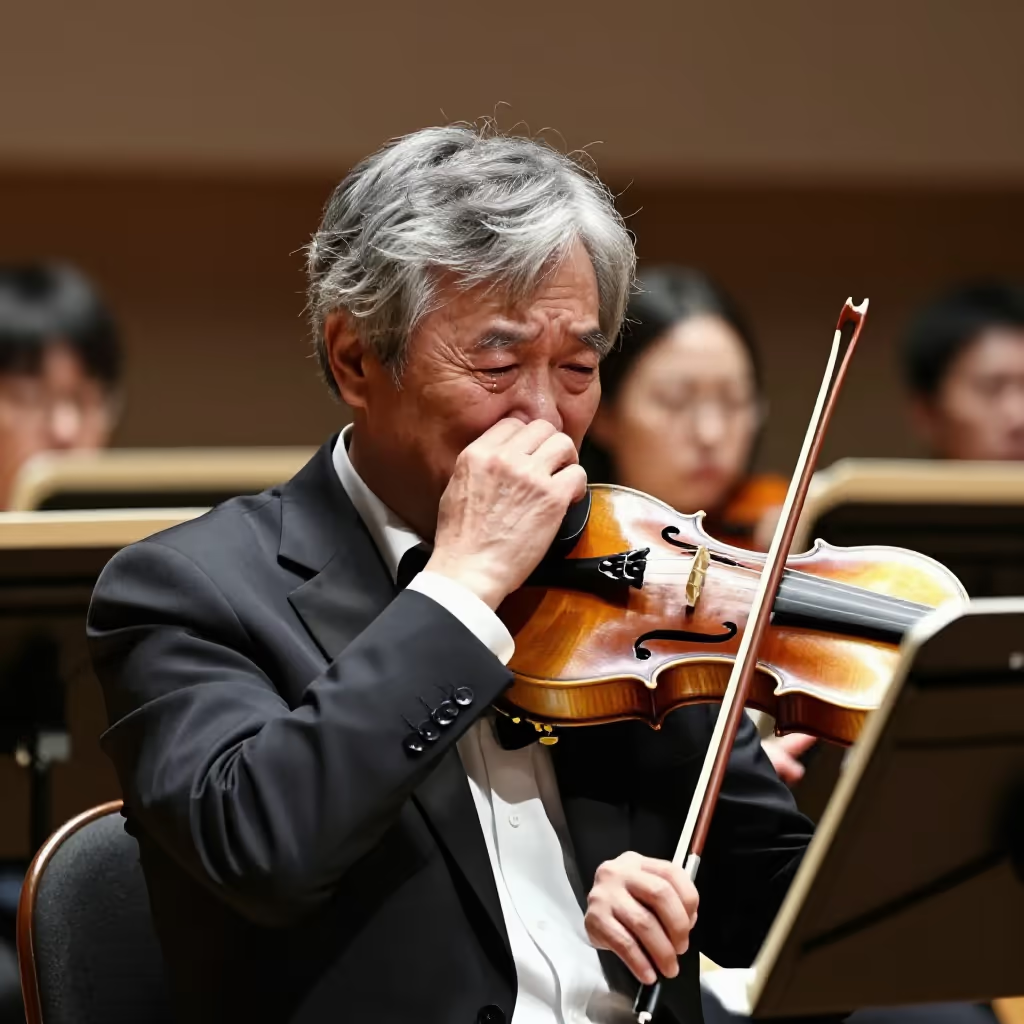
Die Tränen des alten Mannes rührten sie tief an.
The old man's tears deeply moved her.
Die Geschichte des alten Mannes bewegte sie noch lange.
The old man's story moved her for a long time.