


bewegen
to move
To change the position or location of something or yourself; to perform a physical movement. (weak verb)
EXAMPLE
Könntest du bitte den Tisch ein Stück nach links bewegen?
Could you please move the table a little to the left?
to move
Loading your saved state.
to move
To change the position or location of something or yourself; to perform a physical movement. (weak verb)
Könntest du bitte den Tisch ein Stück nach links bewegen?
Could you please move the table a little to the left?
to move
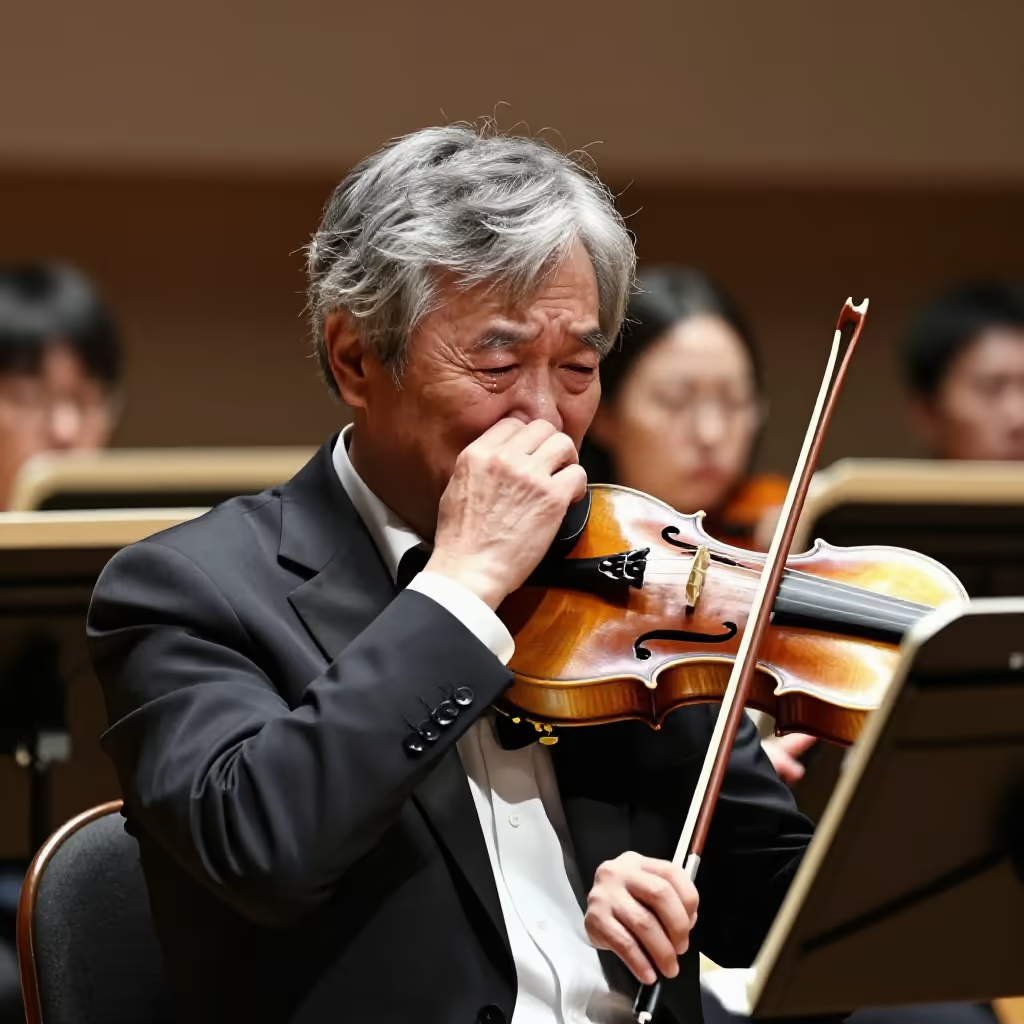
To touch someone emotionally or affect them inwardly. (strong verb: bewog, bewogen)
Seine traurige Lebensgeschichte hat mich tief bewogen.
His sad life story deeply moved me.

to move someone to something
To cause, motivate, or persuade someone to do something. (strong verb: bewog, bewogen)
Was hat dich dazu bewogen, deinen Job zu kündigen?
What moved you to quit your job?
This verb has two conjugations, depending on the meaning. For physical movement, it is a weak verb (bewegte, hat bewegt). For the emotional or motivating meaning, it is a strong verb (bewog, hat bewogen).
Er hat den schweren Stein zur Seite bewegt.
He moved the heavy stone to the side.
The prefix 'be-' is inseparable. It remains firmly attached to the verb stem in all tenses and sentence constructions.
Ich kann meinen Arm nach der Verletzung kaum bewegen.
I can hardly move my arm after the injury.
In the physical meaning, 'bewegen' (to move) is very often used reflexively: 'sich bewegen' (to move oneself / to exercise). This means that a person or living being moves their own body.
Ärzte empfehlen, sich jeden Tag mindestens 30 Minuten zu bewegen.
Doctors recommend moving for at least 30 minutes every day.
When you persuade or motivate someone to do something, you use the structure 'jemanden (Akkusativ) zu etwas (Dativ) bewegen' (to move someone to something).
Ihre Argumente haben ihn zu einem Umdenken bewogen.
Her arguments moved him to rethink things.
to touch
Bewegen and berühren can express that something evokes feelings. Bewegen often emphasizes a stronger inner effect, while berühren also works for a subtler emotional response. Choose bewegen for a profound effect and berühren when you want to express the emotional impact more gently.
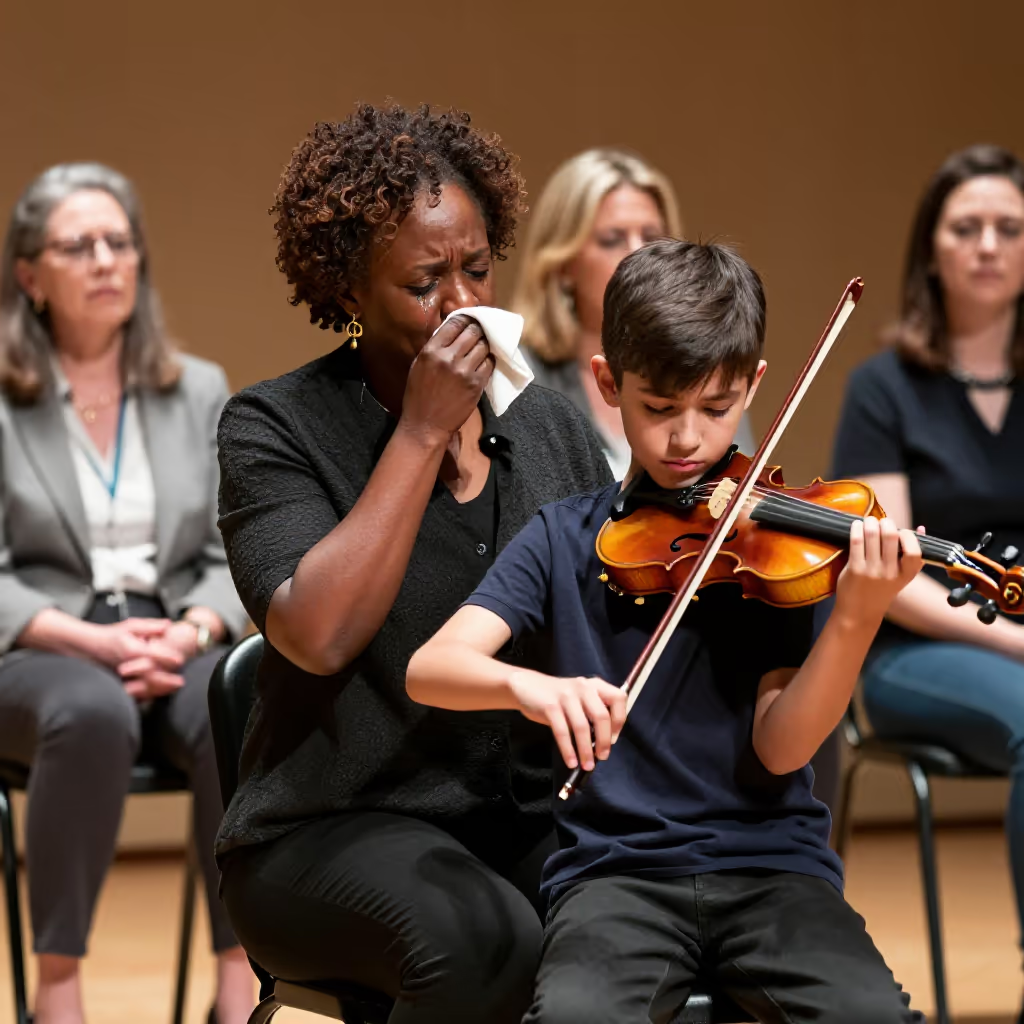
Die Geschichte der alten Frau bewegte mich tief.
The old woman's story moved me deeply.
Die freundlichen Worte der alten Frau berührten mich sehr.
The old woman's kind words touched me deeply.