

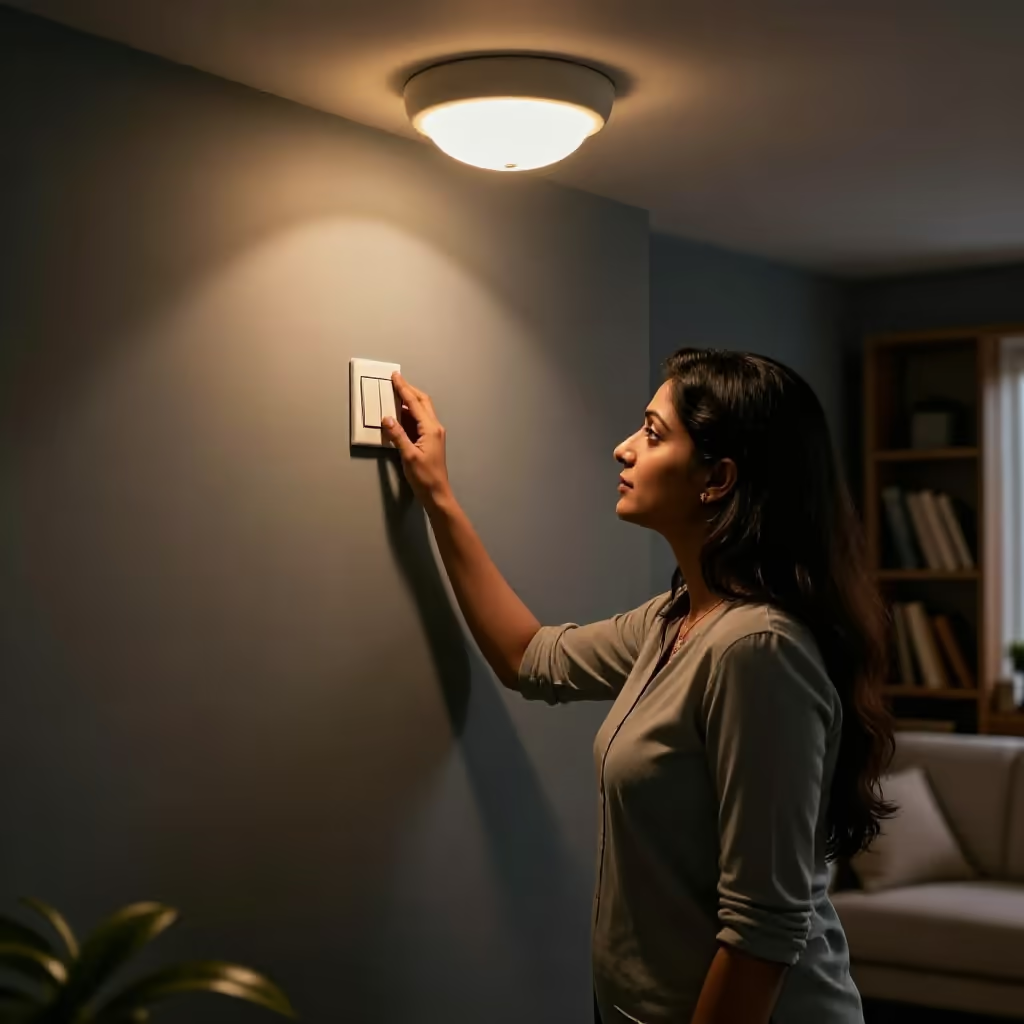
anmachen
to turn on
To switch on a device, a machine, or a light.
EXAMPLE
Es wird dunkel, kannst du bitte das Licht anmachen?
It's getting dark; could you please turn on the light?
to turn on / hit on / dress
Loading your saved state.
to turn on
To switch on a device, a machine, or a light.
Es wird dunkel, kannst du bitte das Licht anmachen?
It's getting dark; could you please turn on the light?

to hit on
Colloquial: to approach a person in order to flirt with them or initiate a sexual relationship.
Er wurde in der Bar ständig von fremden Leuten angemacht.
He was constantly being hit on by strangers in the bar.
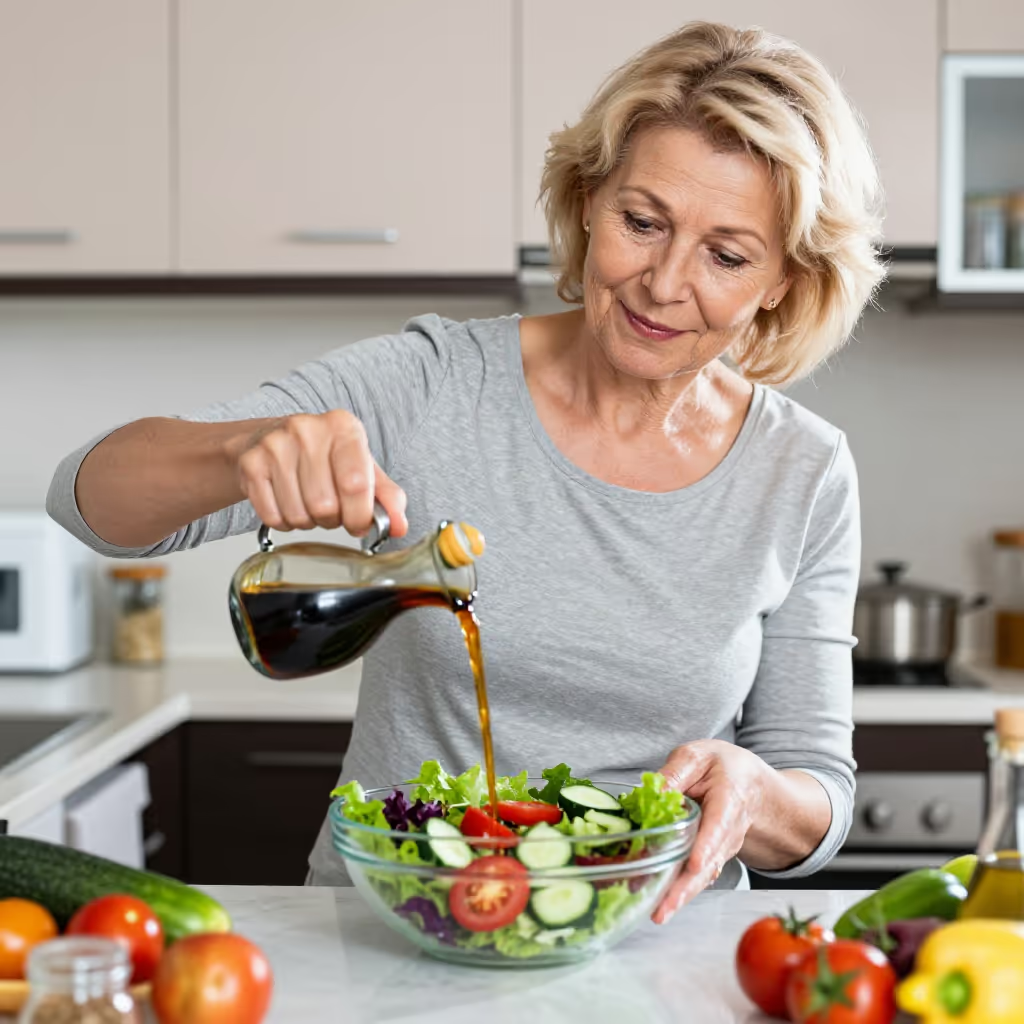
to dress
To prepare a salad with a sauce (dressing).
Soll ich den Salat mit Essig und Öl oder mit Joghurt-Dressing anmachen?
Should I dress the salad with vinegar and oil or with yogurt dressing?

to hassle
Colloquial: to provoke, harass, or verbally attack someone.
Lass dich von ihm nicht anmachen, ignoriere ihn einfach.
Don't let him hassle you; just ignore him.
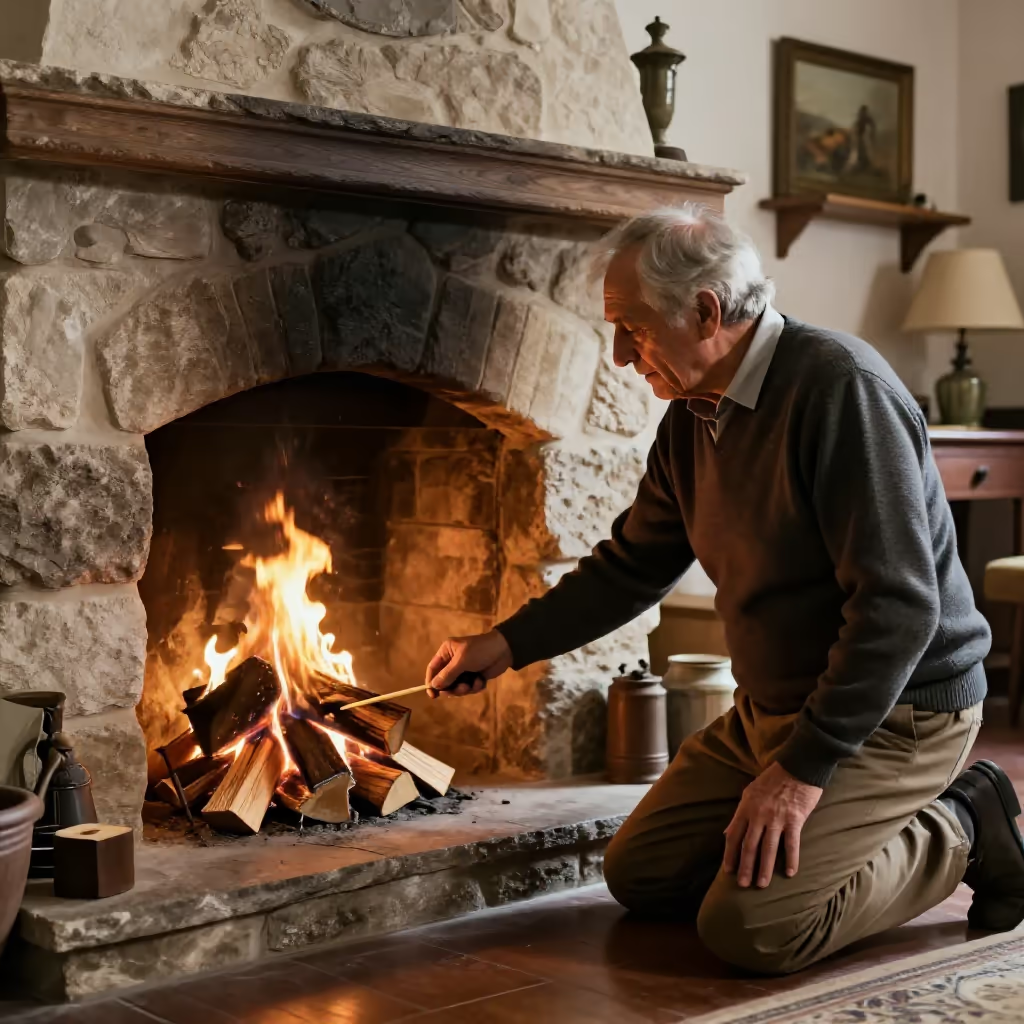
to light
To light a fire or a cigarette.
Wir sollten langsam das Lagerfeuer anmachen, bevor es komplett dunkel ist.
We should slowly get the campfire lit before it gets completely dark.
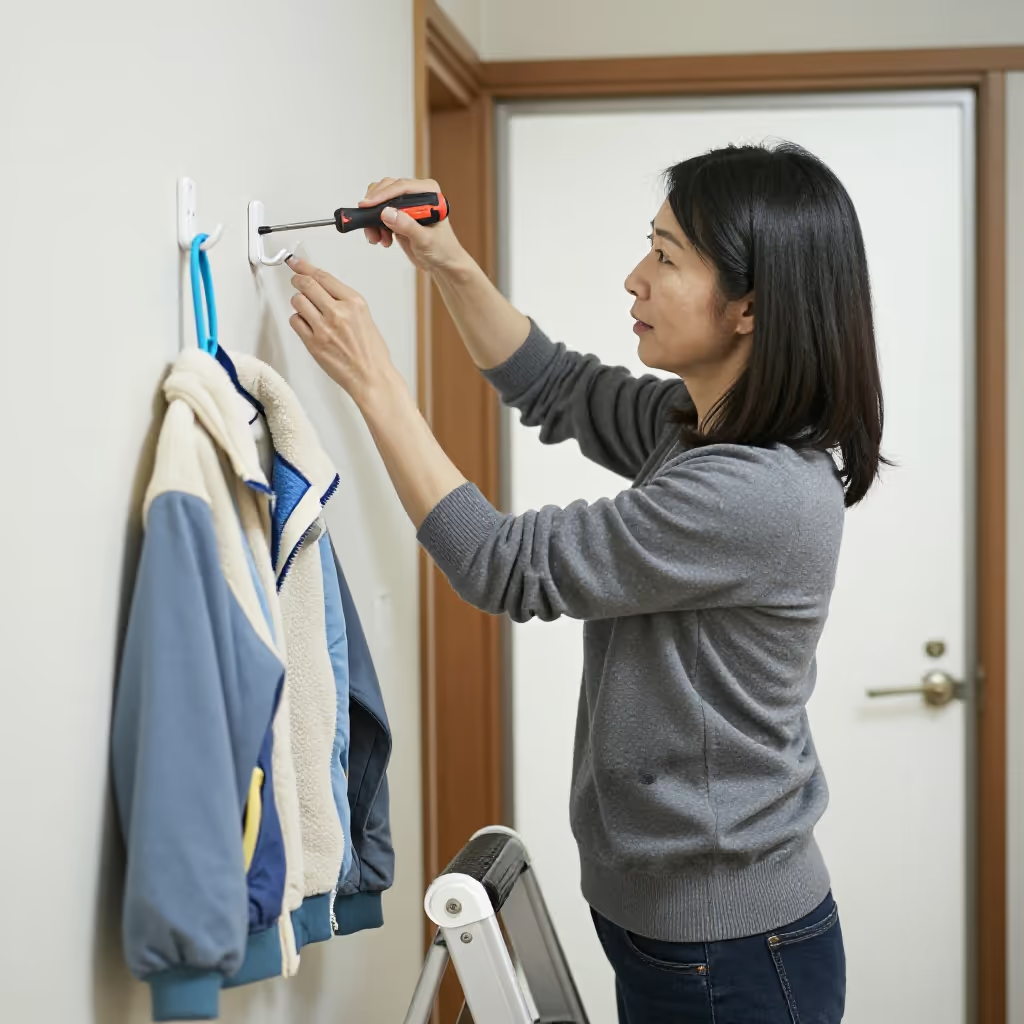
to attach
To attach something to a surface.
Der Handwerker hat das neue Schild an der Hauswand angemacht.
The handyman attached the new sign to the wall of the house.
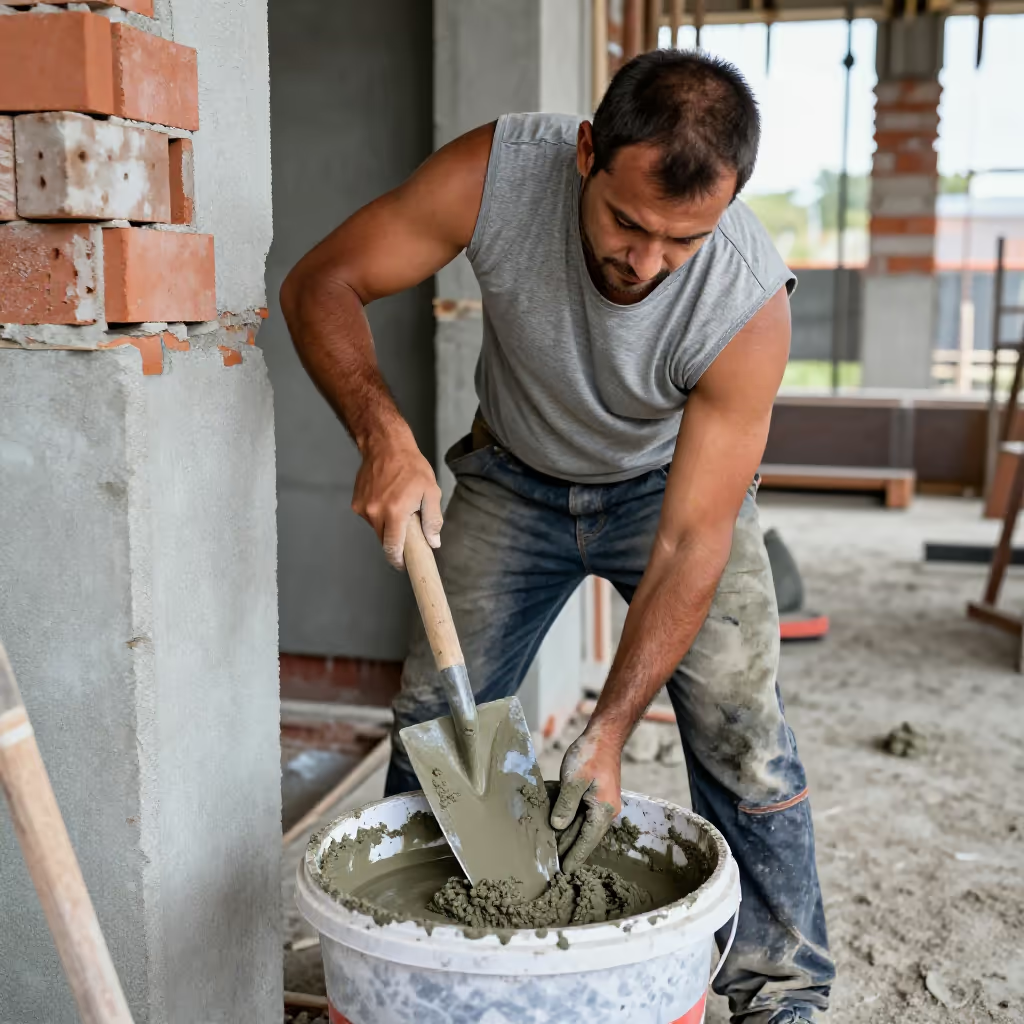
to mix
To make a mushy or dough-like mass by mixing ingredients, for example mortar or dough.
Der Maurer muss noch den Zement für die Wand anmachen.
The bricklayer still has to mix the cement for the wall.
'Anmachen' is a separable verb. In main clauses, the prefix 'an' separates from the verb; in subordinate clauses, the verb stays together; and in the infinitive with 'zu', 'zu' stands between the prefix and the stem.
Machst du bitte die Heizung an?
Could you please turn the heating on?
The meaning of 'anmachen' depends strongly on the object. 'Das Licht anmachen' means to turn on the light, 'den Salat anmachen' means to dress the salad, and 'jemanden anmachen' means to flirt with or provoke someone.
Kannst du den Fernseher anmachen? Der Film beginnt gleich.
Can you turn on the TV? The film is about to start.
Many meanings of 'anmachen' are colloquial. Turning on devices, flirting, and provoking someone are especially typical of spoken language.
Mach mal die Musik leiser, die Nachbarn beschweren sich schon.
Turn the music down a bit; the neighbors are already complaining.
When the object is a person ('jemanden anmachen'), it can mean two things: to flirt with someone or to provoke someone. Only the context and tone of voice make clear what is meant.
Ein Mann hat sie an der Bar angemacht und ihr einen Drink angeboten.
A man hit on her at the bar and offered her a drink.
In the context of food, 'anmachen' almost always means to mix a salad with a sauce. The object here is typically 'der Salat' (the salad).
Den Gurkensalat mache ich immer mit Dill und Sahne an.
I always dress the cucumber salad with dill and cream.
In combination with 'Feuer' (fire), 'Kamin' (fireplace), 'Kerze' (candle), or 'Zigarette' (cigarette), 'anmachen' means the same as 'anzünden' (to light).
Es ist romantisch, abends den Kamin anzumachen.
It's romantic to light the fireplace in the evening.
When 'anmachen' means 'befestigen' (to attach), it is often followed by a location with the preposition 'an' and the dative. You attach something to a wall, to a door, etc.
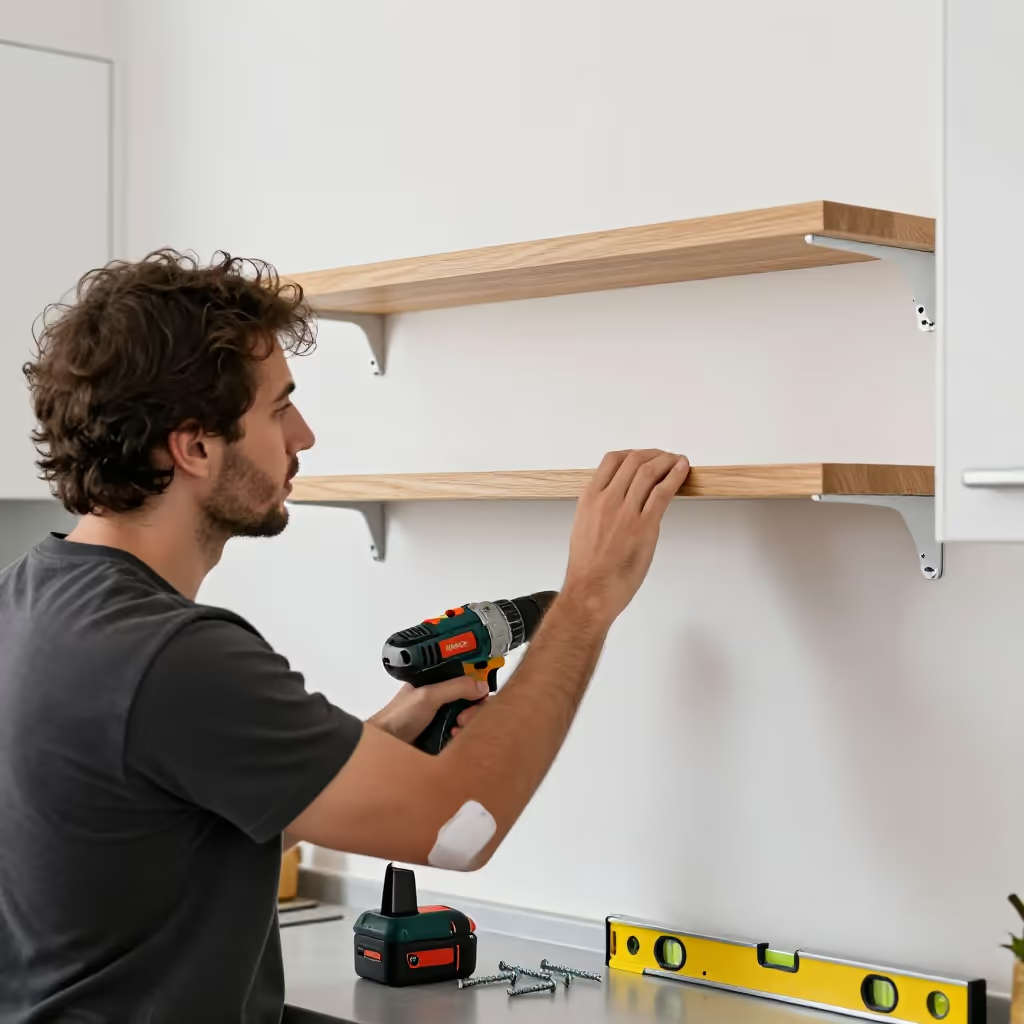
Der Hausmeister hat das neue Regal an der Wand angemacht.
The caretaker attached the new shelf to the wall.
to attach / bring up
Both verbs can refer to attaching something to a surface. “Anbringen” is the precise standard-language choice and can also refer to deliberate mounting. “Anmachen” sounds colloquial in this meaning and gives less precise information about how something is attached.
Mach bitte das Poster mit Klebestreifen an die Wand.
Please stick the poster to the wall with strips of tape.
Bitte bringen Sie das Poster mit Klebestreifen an der Wand an.
Please attach the poster to the wall with strips of tape.