

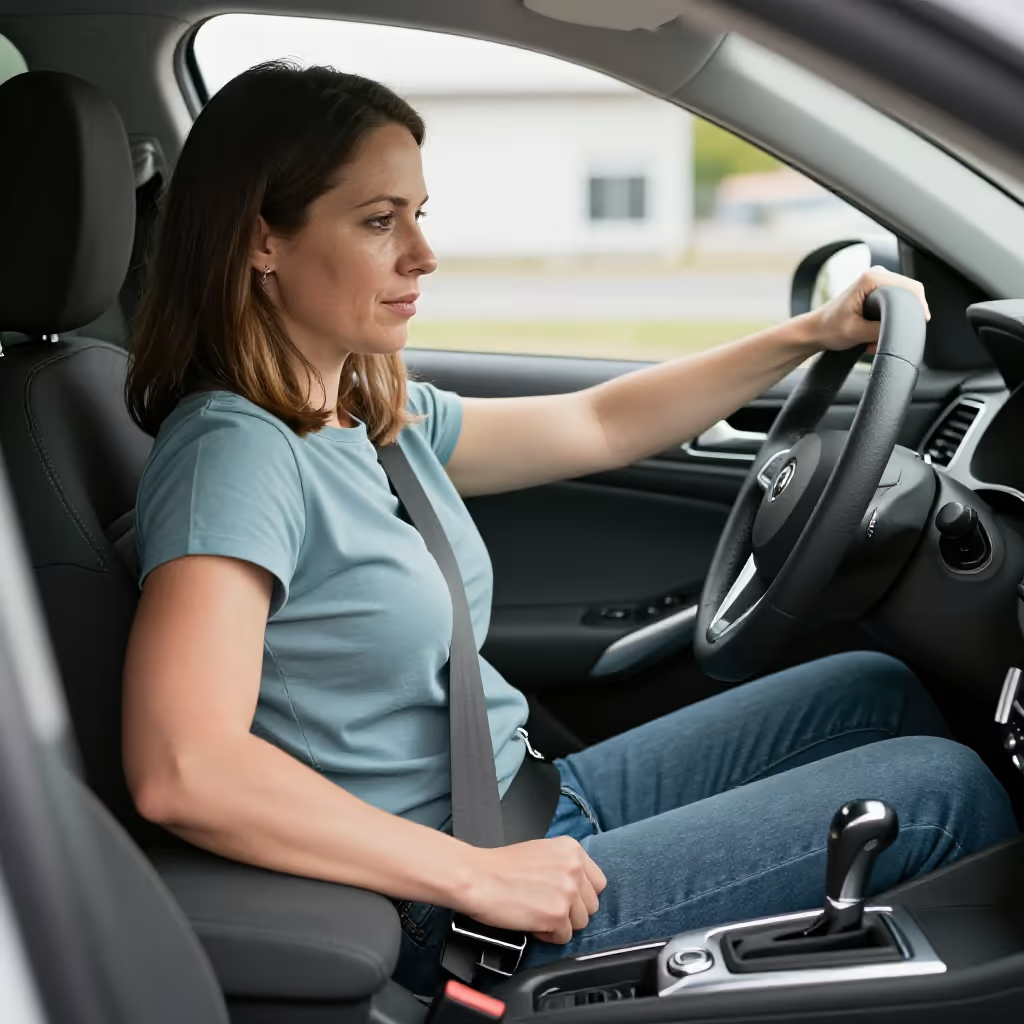
sich anschnallen
to buckle up
To put on and fasten the seat belt in a vehicle, such as a car or airplane.
EXAMPLE
Vor der Fahrt müssen sich alle Passagiere anschnallen.
Before the trip, all passengers must buckle up.
to buckle up
Loading your saved state.
to buckle up
To put on and fasten the seat belt in a vehicle, such as a car or airplane.
Vor der Fahrt müssen sich alle Passagiere anschnallen.
Before the trip, all passengers must buckle up.
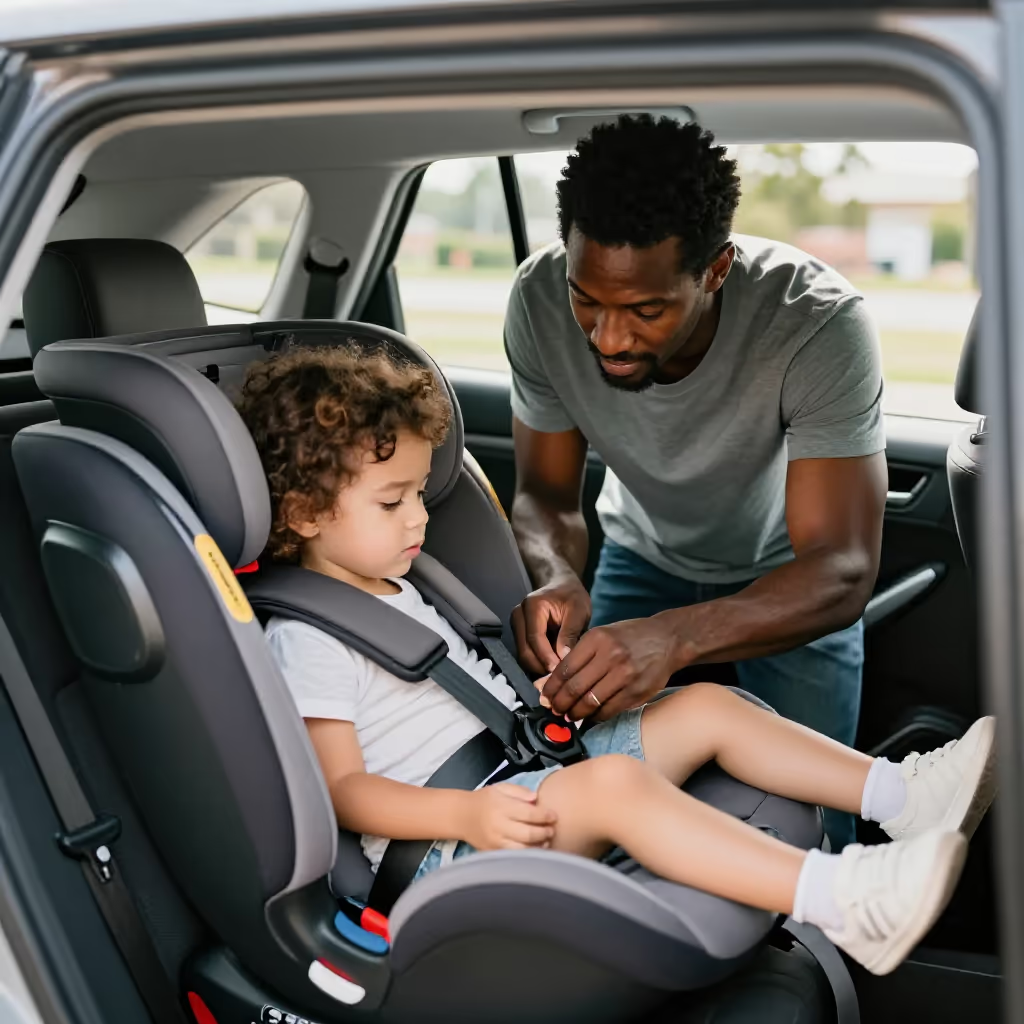
to strap in
To secure a person or object with a belt or strap so that they or it do not slip or fall down.
Die Mutter schnallte ihr Kind sorgfältig im Kindersitz an.
The mother carefully strapped her child into the child seat.
'Anschnallen' (to buckle up) is a separable verb. The prefix 'an-' comes at the end of the sentence in a main clause. In a subordinate clause or infinitive with 'zu', the verb is not separated.
Bitte schnallen Sie sich an.
Please buckle up.
The verb is used in different ways: 'sich anschnallen' means that you fasten your own seat belt. 'Jemanden oder etwas anschnallen' means that you secure another person or an object.
Ich schnalle mich vor jeder Fahrt an.
I buckle up before every trip.
When you fasten your own seat belt, you must use the appropriate reflexive pronoun (mich, dich, sich, uns, euch). A sentence like 'Ich schnalle an' is incomplete.
Schnallst du dich bitte an?
Will you please buckle up?
The request to buckle up is very often expressed in the imperative. The most common form is 'Schnall dich an!' (Buckle up!) or, in the polite form, 'Schnallen Sie sich bitte an!' (Please buckle up!).
Kinder, schnallt euch an, wir fahren los!
Kids, buckle up, we're leaving!
to invest / create / dock
When referring to a seat belt, anlegen and sich anschnallen describe the same basic action. With anlegen, the belt is the object: one puts on the belt. Anschnallen is used reflexively here with the person being secured as its subject: one buckles oneself up.

Anna schnallt sich vor der Fahrt an.
Anna buckles up before the journey.
Anna legt vor der Fahrt den Sicherheitsgurt an.
Anna puts on her seat belt before the journey.