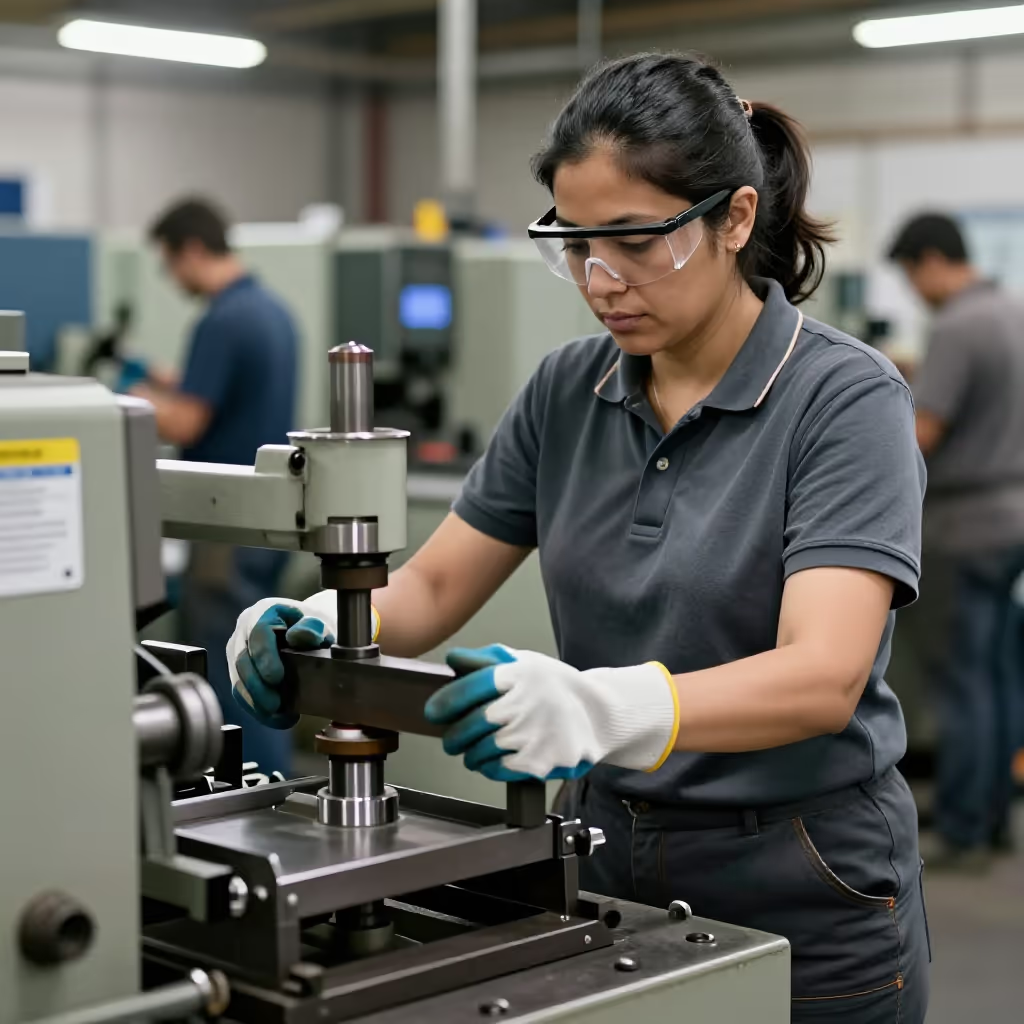
A woman who does physical or manual work and receives wages for it. The term is often used in the context of factories, construction sites, or skilled trades.
example
Die Arbeiterin am Fließband kontrollierte jedes einzelne Produkt.
The female worker on the assembly line checked every single product.
Usage tips
Word structure
The word 'Arbeiterin' (female worker) is the feminine form of 'der Arbeiter' (the worker). It is derived from the verb 'arbeiten' (to work) and formed with the typical feminine ending '-in'. This pattern is very common in German for professions and roles.
EXAMPLE
Die Lehrerin erklärt die Grammatik.
The teacher explains the grammar.
Typical collocations
In the meaning of a woman who does manual work, 'Arbeiterin' (female worker) is often combined with the workplace or industry. Typical examples are 'Fabrikarbeiterin' (female factory worker), 'Bauarbeiterin' (female construction worker), or 'Hafenarbeiterin' (female dock worker).
EXAMPLE
Als Fabrikarbeiterin kennt sie die Maschinen sehr gut.
As a factory worker, she knows the machines very well.
Context clue
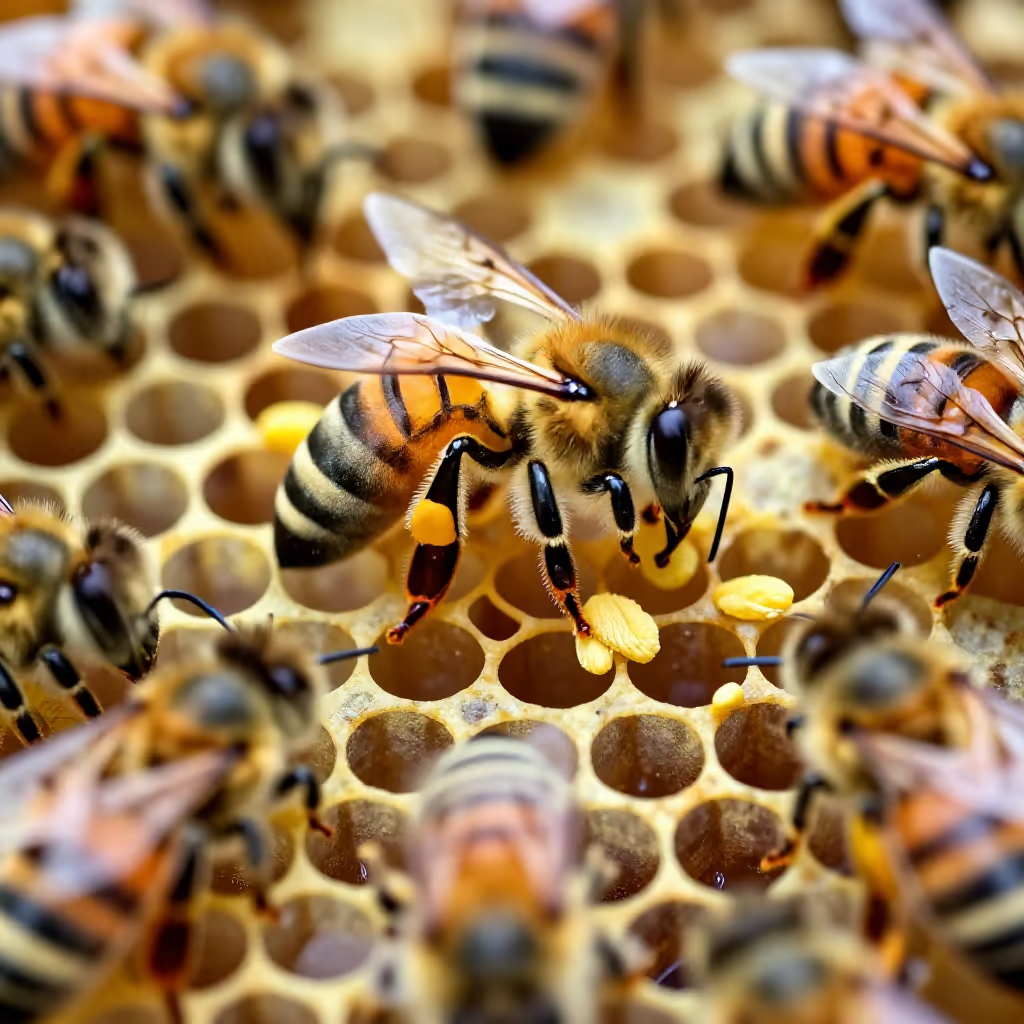
You can recognize the biological meaning from the context. When animals such as 'Bienen' (bees), 'Ameisen' (ants), or an 'Insektenstaat' (insect colony) are mentioned, the worker is an animal and not a human person.
EXAMPLE
Die fleißigen Arbeiterinnen sammeln Nektar für den Bienenstock.
The hardworking workers collect nectar for the beehive.
Sociological context
When 'Arbeiterin' (female worker) describes social belonging, words such as 'Klasse' (class), 'Schicht' (stratum/class), 'Bewegung' (movement), or 'Milieu' (milieu) often appear in the sentence. Here it is about social position, not the specific profession.
EXAMPLE
Der Film porträtiert das Leben einer Arbeiterin im frühen 20. Jahrhundert.
The film portrays the life of a working-class woman in the early 20th century.
Compare with
synonym · confusable
Arbeiterin vs Arbeiter
worker
'der Arbeiter' and 'die Arbeiterin' mean almost the same thing in terms of content: a person who does physical or manual work and receives wages for it. The difference is grammatical and natural gender. 'der Arbeiter' is used for a man, or sometimes generally for the occupational group. 'die Arbeiterin' is used when a woman is specifically meant. The words can be confused because the activity is the same. So pay particular attention to whether you are talking about a man, a woman, or a group in general.
Arbeiterin
Die Arbeiterin zieht ihre Schutzbrille an, bevor sie die Maschine startet.
The worker puts on her safety goggles before starting the machine.
Arbeiter
Der Arbeiter kommt jeden Morgen früh zur Fabrik.
The worker comes to the factory early every morning.