

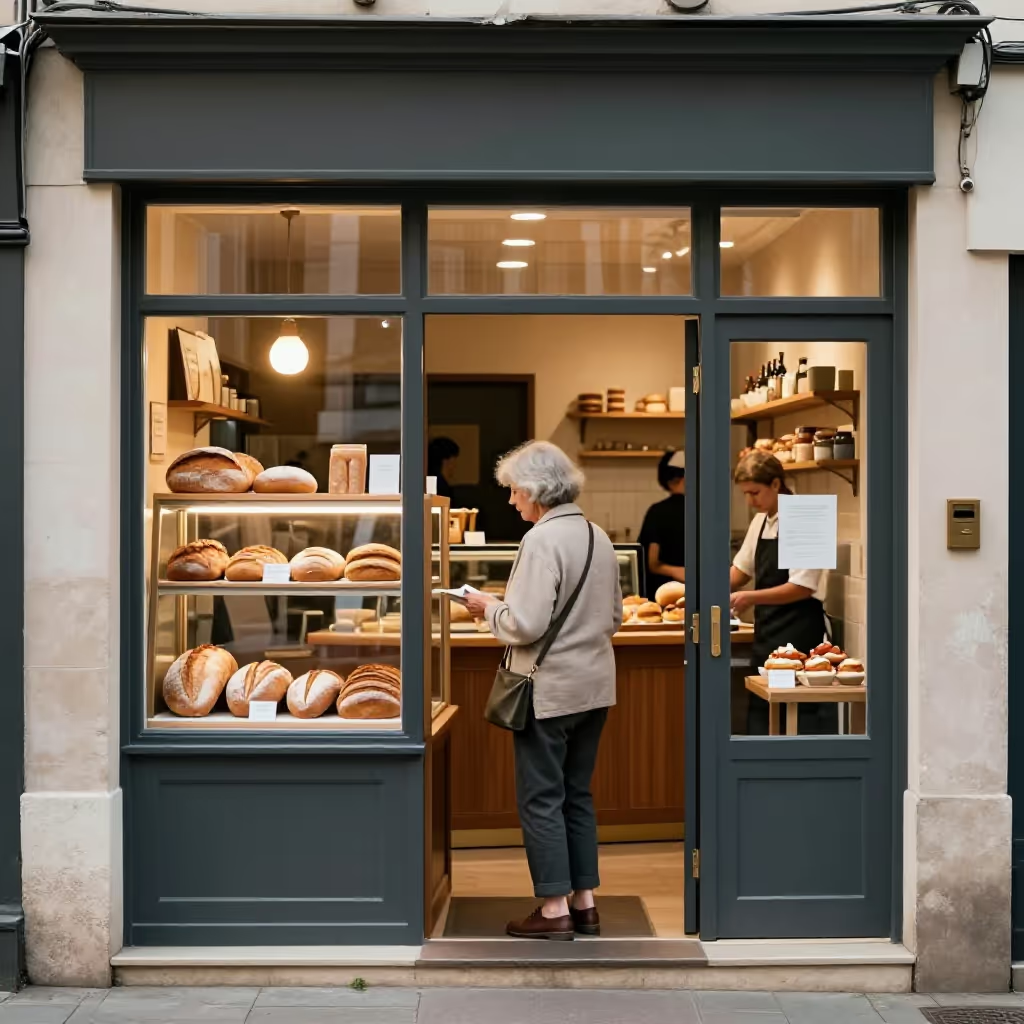
geöffnet
open
Not closed; accessible or in operation. Refers to the state of doors, windows, shops, or institutions.
Das Museum ist täglich von 10 bis 18 Uhr für Besucher geöffnet.
The museum is open to visitors daily from 10 a.m. to 6 p.m.
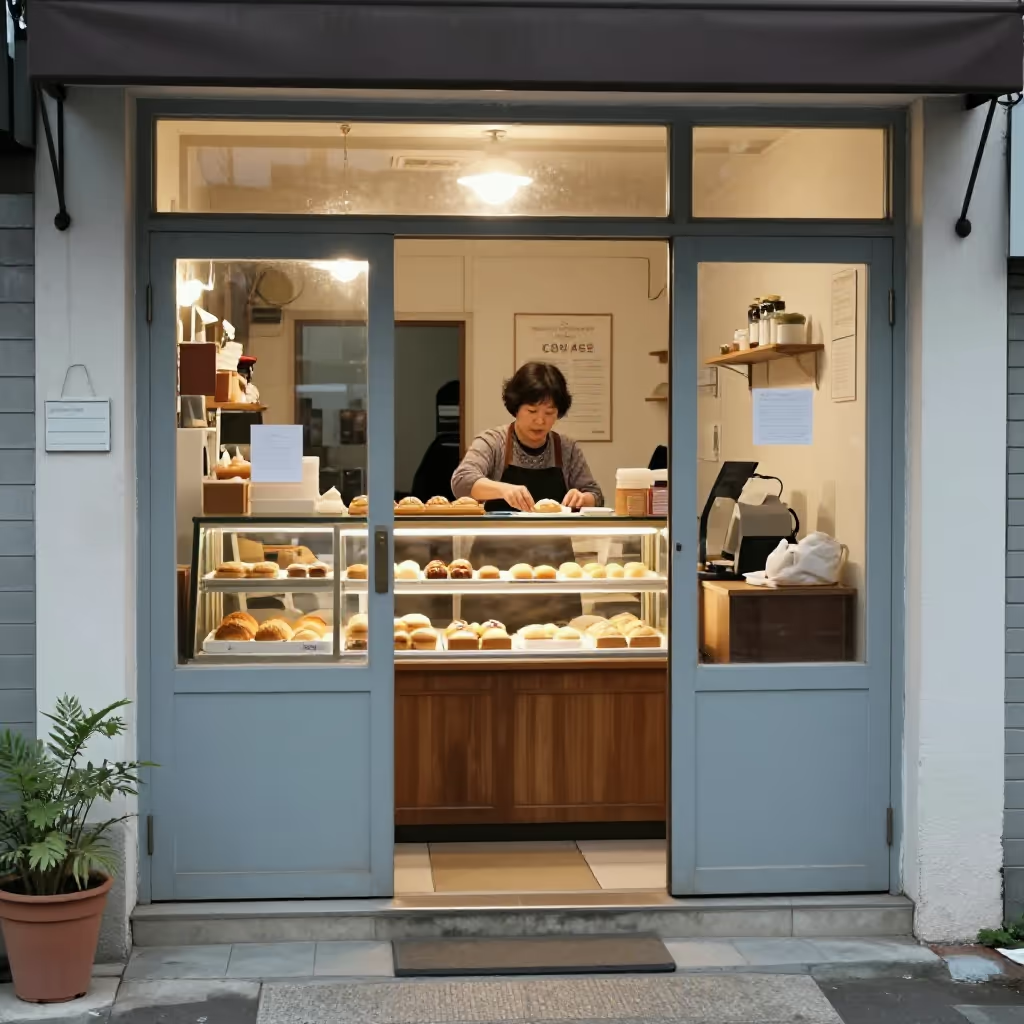
open
Loading your saved state.
open
Not closed; accessible or in operation. Refers to the state of doors, windows, shops, or institutions.
Das Museum ist täglich von 10 bis 18 Uhr für Besucher geöffnet.
The museum is open to visitors daily from 10 a.m. to 6 p.m.

'Geöffnet' (open) is the past participle of the verb 'öffnen' (to open). Here it is used like an adjective to describe the state that results from the action 'öffnen' (to open).
Bitte lassen Sie das Fenster geöffnet, um zu lüften.
Please leave the window open to air the room.
This word is used for things that have a mechanism for opening and closing. Typical examples are shops, museums, doors, windows, or bottles.
Als wir ankamen, war die Schranke bereits geöffnet.
When we arrived, the barrier was already open.
To give opening hours, the structure 'von [Zeit] bis [Zeit] geöffnet sein' (to be open from [time] to [time]) is used very frequently. This is a fixed and useful formulation.
Die Bibliothek ist am Wochenende nur von 10 bis 14 Uhr geöffnet.
The library is open on weekends only from 10 a.m. to 2 p.m.
on / onto / open
'auf' and 'geöffnet' can both say that something is not closed. 'auf' is very everyday and short, especially with doors and windows. 'geöffnet' sounds a little more formal or factual and works well for shops, museums, offices, or official information. You can say: 'Die Tür ist auf' (the door is open) or 'Die Tür ist geöffnet' (the door is open). But for opening hours, 'Das Museum ist geöffnet' (the museum is open) sounds more natural than 'Das Museum ist auf'.

Die Bibliothek ist morgen bis 18 Uhr geöffnet.
The library is open until 6 p.m. tomorrow.
Heute Morgen war das Küchenfenster schon auf.
This morning, the kitchen window was already open.