

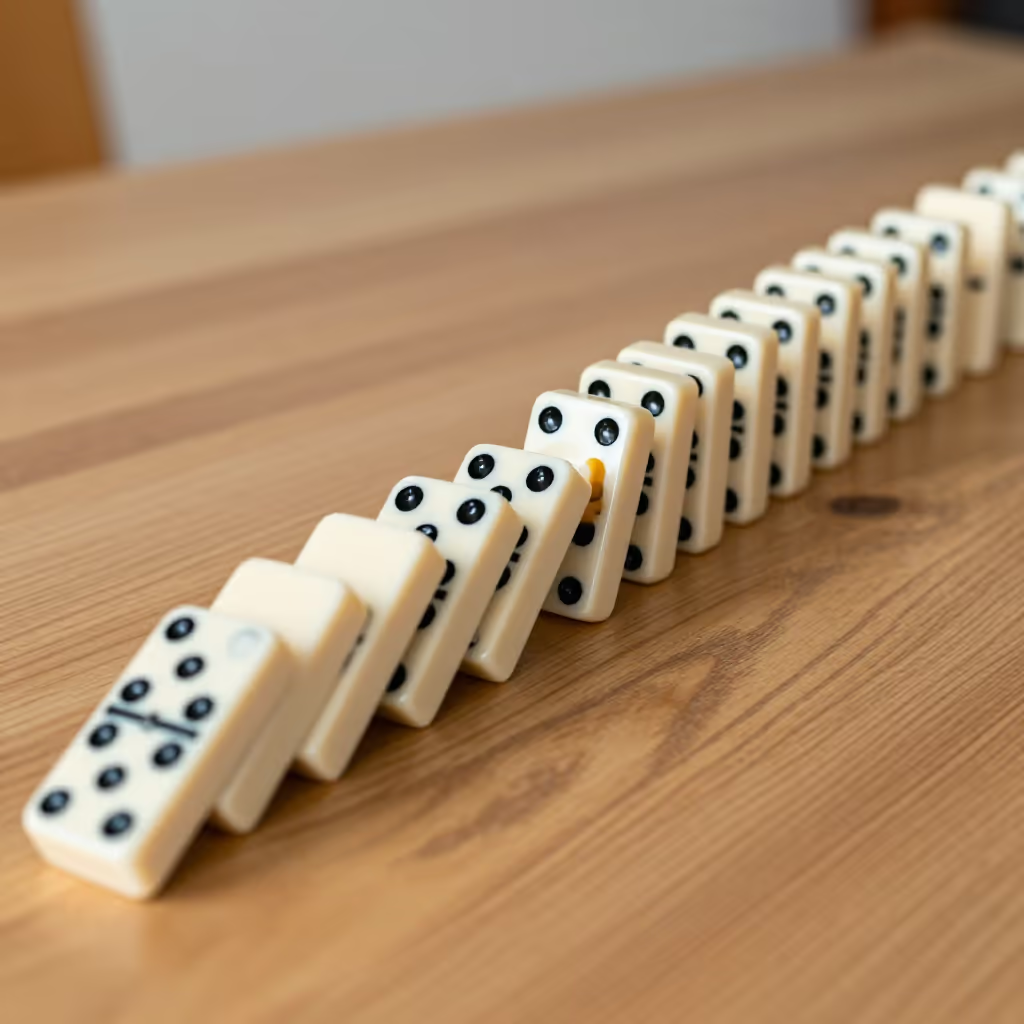
aufeinanderfolgend
consecutive
In an uninterrupted sequence; coming directly one after another.
EXAMPLE
Das Team hat an drei aufeinanderfolgenden Wochenenden gewonnen.
The team won on three consecutive weekends.
consecutive
Loading your saved state.
consecutive
In an uninterrupted sequence; coming directly one after another.
Das Team hat an drei aufeinanderfolgenden Wochenenden gewonnen.
The team won on three consecutive weekends.
The word is made up of three parts: 'auf' + 'einander' + 'folgend'. So it literally means 'following one another' and is always written as one single word.
Die beiden Termine sind aufeinanderfolgend, wir haben keine Pause dazwischen.
The two appointments are consecutive; we have no break in between.
As an adjective, 'aufeinanderfolgend' (consecutive) stands before a noun and is declined like any other adjective. It describes an uninterrupted series.
Wir haben zwei aufeinanderfolgende Feiertage im Mai.
We have two consecutive public holidays in May.
This adjective is especially often combined with units of time or countable events. Typical examples are 'aufeinanderfolgende Tage' (consecutive days), 'Wochenenden' (weekends), 'Jahre' (years), or 'Generationen' (generations).
An zwei aufeinanderfolgenden Tagen fiel der Strom aus.
The power went out on two consecutive days.
following
„Folgend“ only says that something comes later in a sequence or in time. „Aufeinanderfolgend“ additionally emphasizes that the elements come directly one after another without interruption. Choose „folgend“ for a general reference to time and „aufeinanderfolgend“ when the unbroken sequence is important.
An drei aufeinanderfolgenden Tagen regnete es ohne Pause.
It rained nonstop for three consecutive days.
In den folgenden Tagen regnete es immer wieder.
It rained on and off over the following days.