

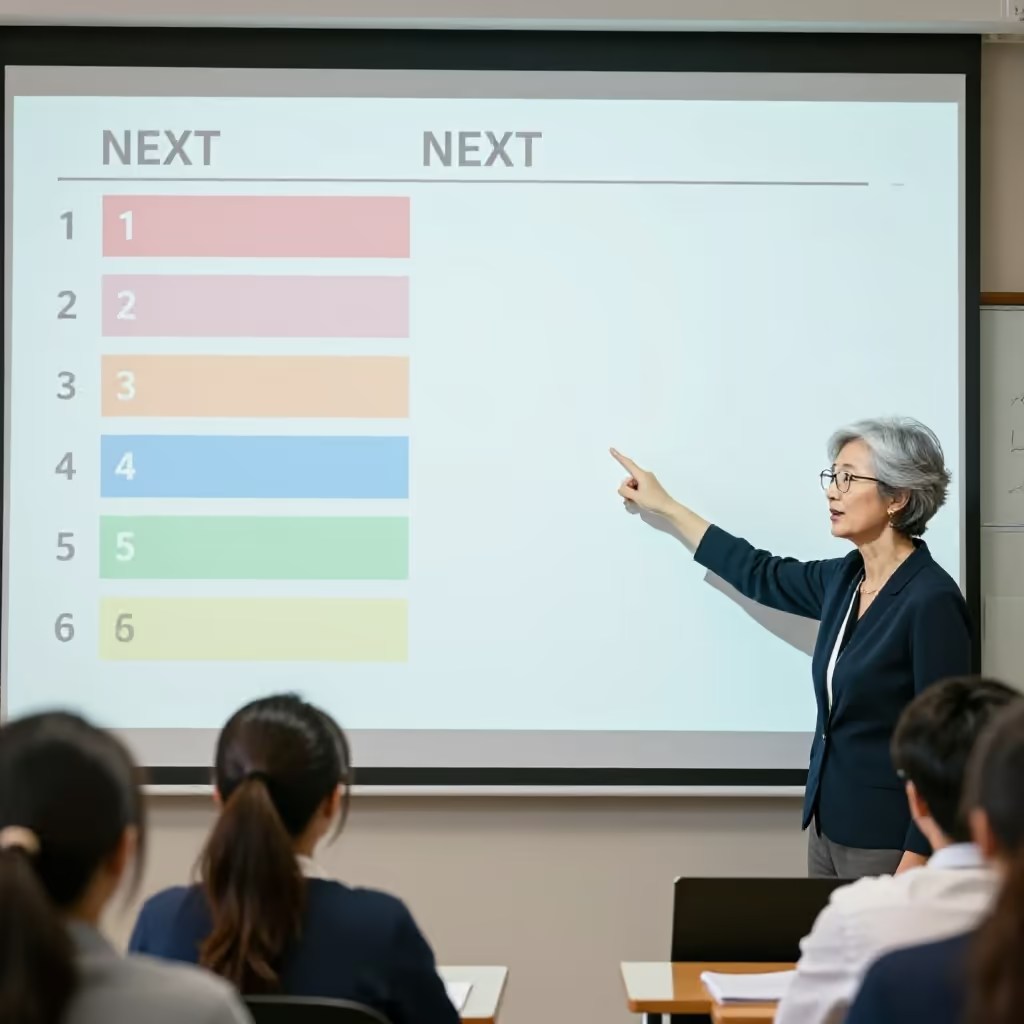
folgend
following
Describes something that comes next in an order, a time sequence, or a list.
EXAMPLE
Bitte lesen Sie den folgenden Textabschnitt aufmerksam durch.
Please read the following section of text carefully.
following
Loading your saved state.
following
Describes something that comes next in an order, a time sequence, or a list.
Bitte lesen Sie den folgenden Textabschnitt aufmerksam durch.
Please read the following section of text carefully.
'Folgend' (following) is the present participle form of the verb 'folgen' (to follow). It is used like a normal adjective before a noun and is declined accordingly.
Auf der folgenden Seite finden Sie weitere Informationen.
On the following page, you will find more information.
The word is often nominalized and capitalized to refer to information or a list that follows. It then usually appears with a colon.
Bitte bringen Sie Folgendes mit: einen Stift und Papier.
Please bring the following: a pen and paper.
The expression 'wie folgt' (as follows) is often used to introduce an explanation or list. It often stands at the end of the main clause, directly before a colon.
Der Plan für morgen sieht wie folgt aus: Zuerst besuchen wir das Museum, danach gehen wir essen.
The plan for tomorrow is as follows: First we visit the museum, then we go out to eat.
next / nearest
Nächst and folgend can both refer to the immediately following period of time. “Nächste Woche” is usually understood from the current time of speaking. “In der folgenden Woche,” by contrast, typically refers to a point in time mentioned earlier and is particularly common in reports.
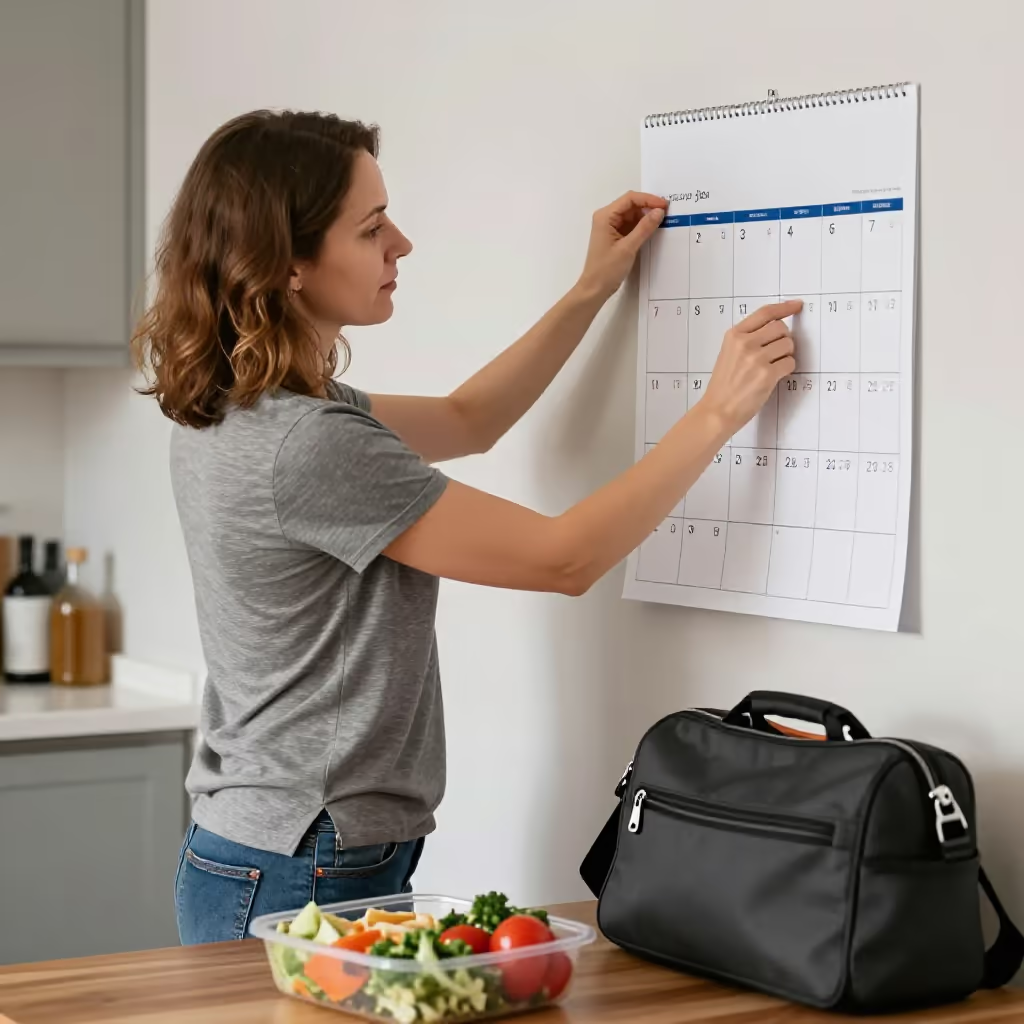
Sie meldete sich am 3. Mai an, und in der folgenden Woche begann der neue Kurs.
She registered on May 3, and the new course started the following week.
Nächste Woche beginnt der neue Kurs.
The new course starts next week.