


anschließend
afterward
Directly after something else in time; after that, then.
EXAMPLE
Wir besuchen zuerst das Museum und gehen anschließend in ein Café.
First we visit the museum, and afterward we go to a café.
afterward
Loading your saved state.
afterward
Directly after something else in time; after that, then.
Wir besuchen zuerst das Museum und gehen anschließend in ein Café.
First we visit the museum, and afterward we go to a café.
As an adverb, 'anschließend' (afterward) can stand in different positions in the sentence. In position 1, it introduces the sentence and the verb follows directly after it. In the middle of the sentence, it usually comes after the verb and the subject.
Anschließend tranken wir einen Kaffee.
Afterward, we drank a coffee.
'Anschließend' (afterward) is the present participle form of the verb 'anschließen' (to connect / to follow). This verb can mean 'folgen' (to follow) or 'sich anschließen' (to join / to be attached). So the adverb describes an action that 'connects' to a previous one.
Nach dem Vortrag schloss sich eine Diskussion an.
After the lecture, a discussion followed.
This word is often used in reports, instructions, or more formal narratives to structure a clear sequence of events. It often sounds somewhat more formal than other words for 'danach' (after that).
Zuerst die Zwiebeln schneiden, anschließend in Öl anbraten.
First chop the onions, then sauté them in oil.
then
„Dann“ and „anschließend“ can both name the next step in a sequence of events. „Anschließend“ emphasizes more strongly that something follows directly after what came before and often sounds somewhat more formal; „dann“ remains more general. Use „anschließend“ for a closely connected direct sequence and „dann“ in a normal narrative sequence.
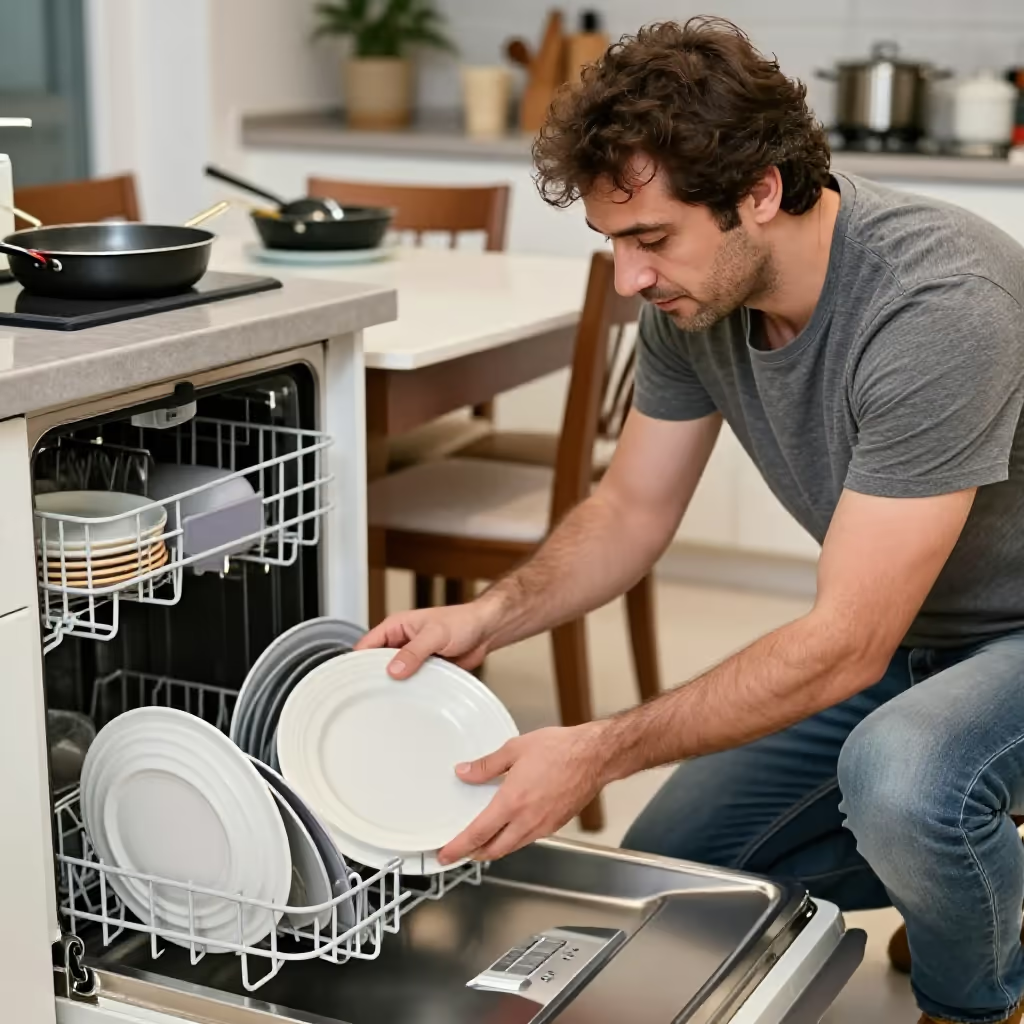
Wir räumen zuerst den Tisch ab, anschließend sehen wir einen Film.
First we’ll clear the table, and afterward we’ll watch a movie.
Wir räumen zuerst den Tisch ab, dann sehen wir einen Film.
First we’ll clear the table, then we’ll watch a movie.