

aufmachen
to open
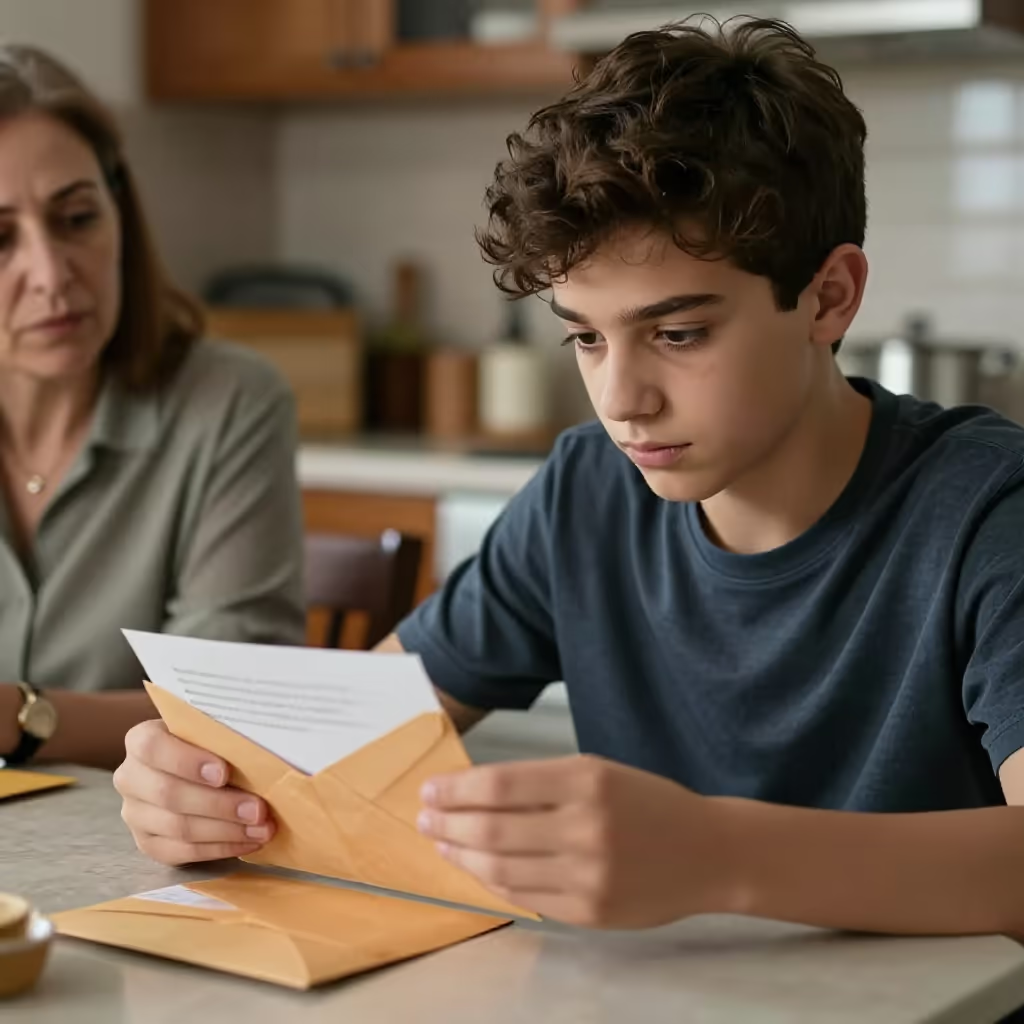
To open something that is closed, for example a door, a window, a bottle, or a letter.
EXAMPLE
Kannst du bitte das Fenster aufmachen? Es ist sehr stickig hier drin.
Can you please open the window? It's very stuffy in here.
to open
Loading your saved state.
to open
To open something that is closed, for example a door, a window, a bottle, or a letter.
Kannst du bitte das Fenster aufmachen? Es ist sehr stickig hier drin.
Can you please open the window? It's very stuffy in here.
to open
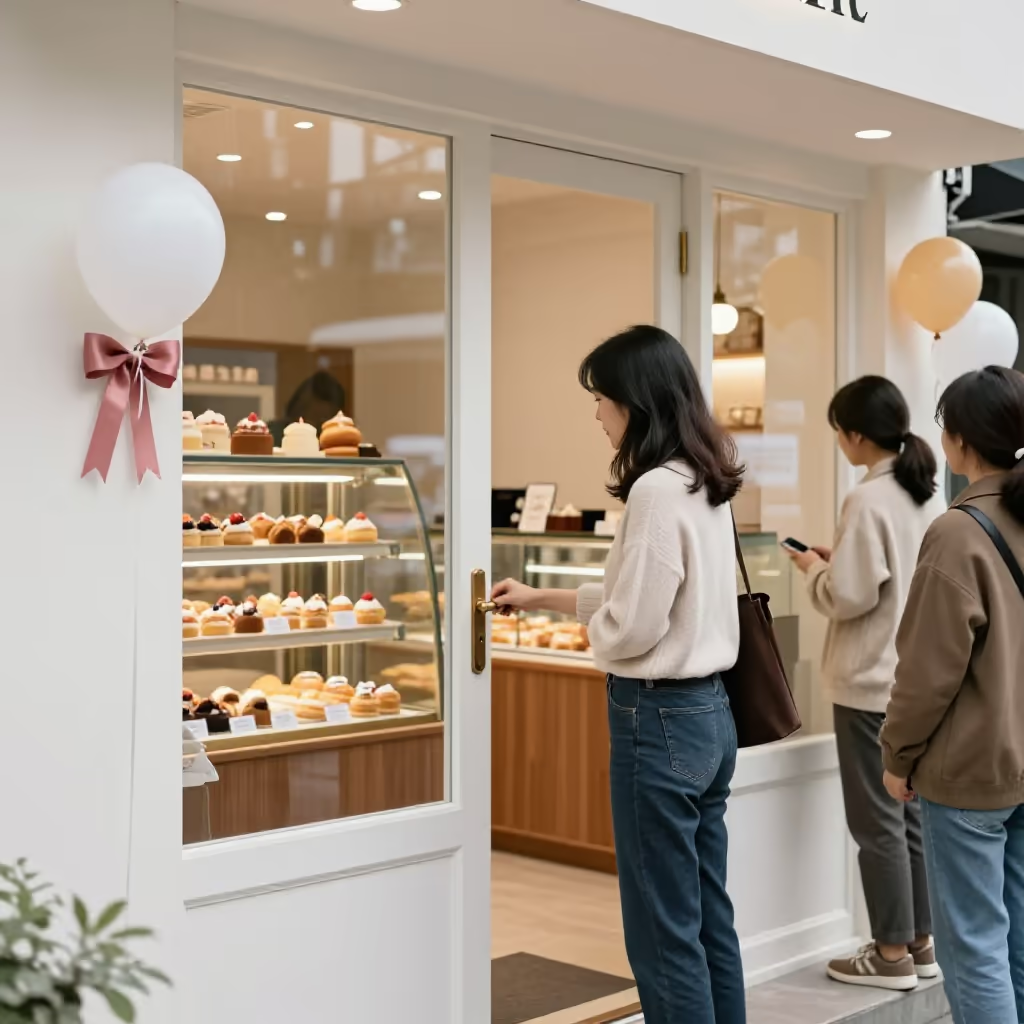
To open a new shop, practice, or branch and make it accessible to customers.
Nächsten Monat macht in der Innenstadt ein neuer Buchladen auf.
Next month, a new bookshop is opening downtown.
to set off
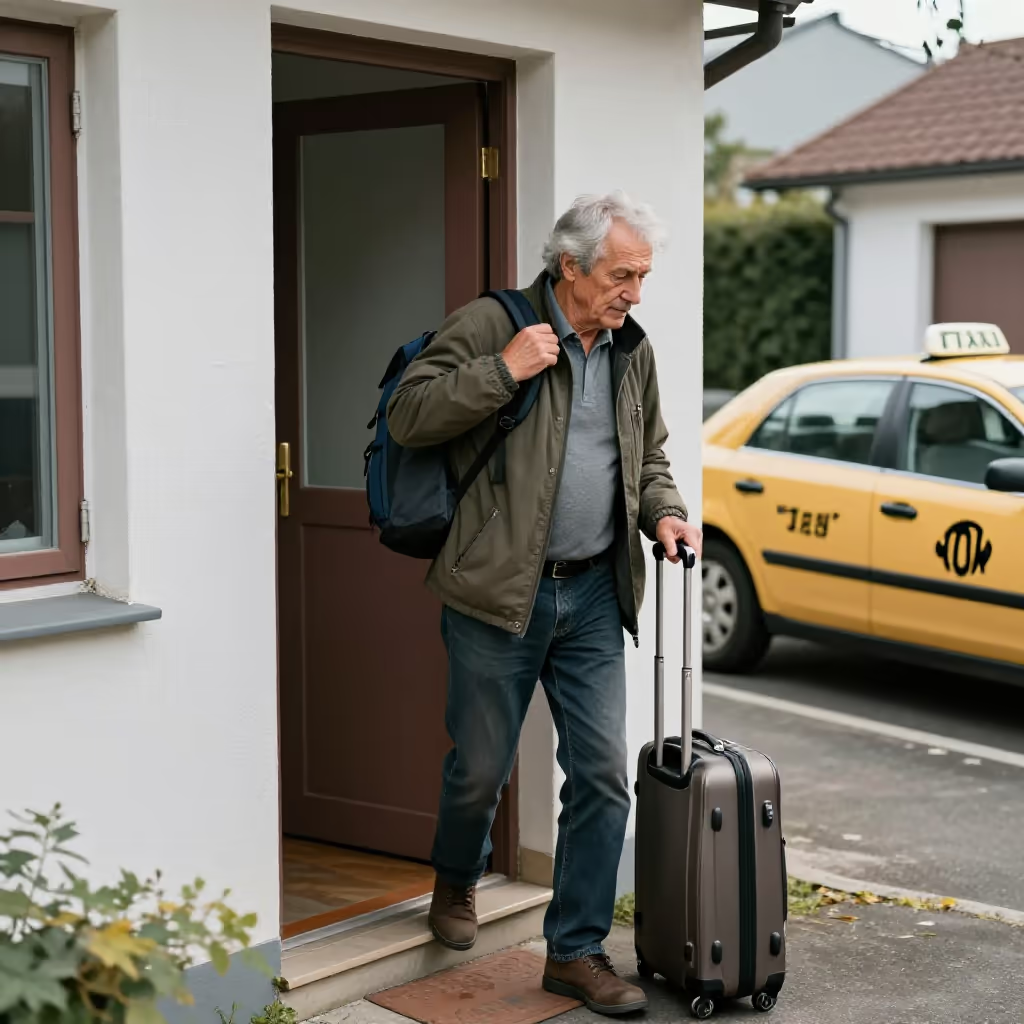
To set out; to begin a journey or route.
Wir sollten uns langsam aufmachen, wenn wir den Zug nicht verpassen wollen.
We should slowly set off if we don't want to miss the train.

to make a fuss
Colloquial for making a big deal out of something; to dramatize or complicate something unnecessarily.
Wegen dieser kleinen Meinungsverschiedenheit müssen wir doch nicht gleich ein Fass aufmachen.
We really don't need to make a fuss over this small difference of opinion.
'Aufmachen' (to open) is a separable verb. The prefix 'auf' goes at the end of the main clause. In subordinate clauses, the verb stays together, and in the infinitive with 'zu', 'zu' goes in the middle.
Machst du bitte die Tür auf?
Will you please open the door?
In the meaning of 'öffnen' (to open), 'aufmachen' (to open) is used for everyday things: 'eine Tür aufmachen' (to open a door), 'ein Fenster aufmachen' (to open a window), 'eine Flasche aufmachen' (to open a bottle), 'einen Brief aufmachen' (to open a letter), or 'ein Geschenk aufmachen' (to open a present).
Er machte das Geschenk neugierig auf.
He opened the present curiously.
In connection with shops, restaurants, or practices, 'aufmachen' (to open) means the initial opening. It can be used with an object ('er macht ein Café auf' — he is opening a café) or without one ('ein Café macht auf' — a café is opening).
Nächste Woche macht hier ein neues Restaurant auf.
A new restaurant is opening here next week.
The reflexive form 'sich aufmachen' (to set off) always means 'sich auf den Weg machen' (to set out) or 'losgehen' (to get going). The reflexive pronoun is obligatory here.
Die Wanderer machten sich schon früh am Morgen auf den Weg.
The hikers set off early in the morning.
The idiom 'ein Fass aufmachen' (to make a big fuss) is colloquial and means to make a big deal out of a small thing or to complicate a topic unnecessarily.
Wegen des kleinen Kratzers am Auto brauchst du doch kein Fass aufzumachen!
You really don't need to make such a fuss over the small scratch on the car!
to open
Both verbs can refer to starting a new business, practice, or branch. „Eröffnen“ is the standard formal term and emphasizes the official first opening, while „aufmachen“ is colloquial and can also mean opening something each day. Use „eröffnen“ in formal situations and „aufmachen“ in casual conversation.
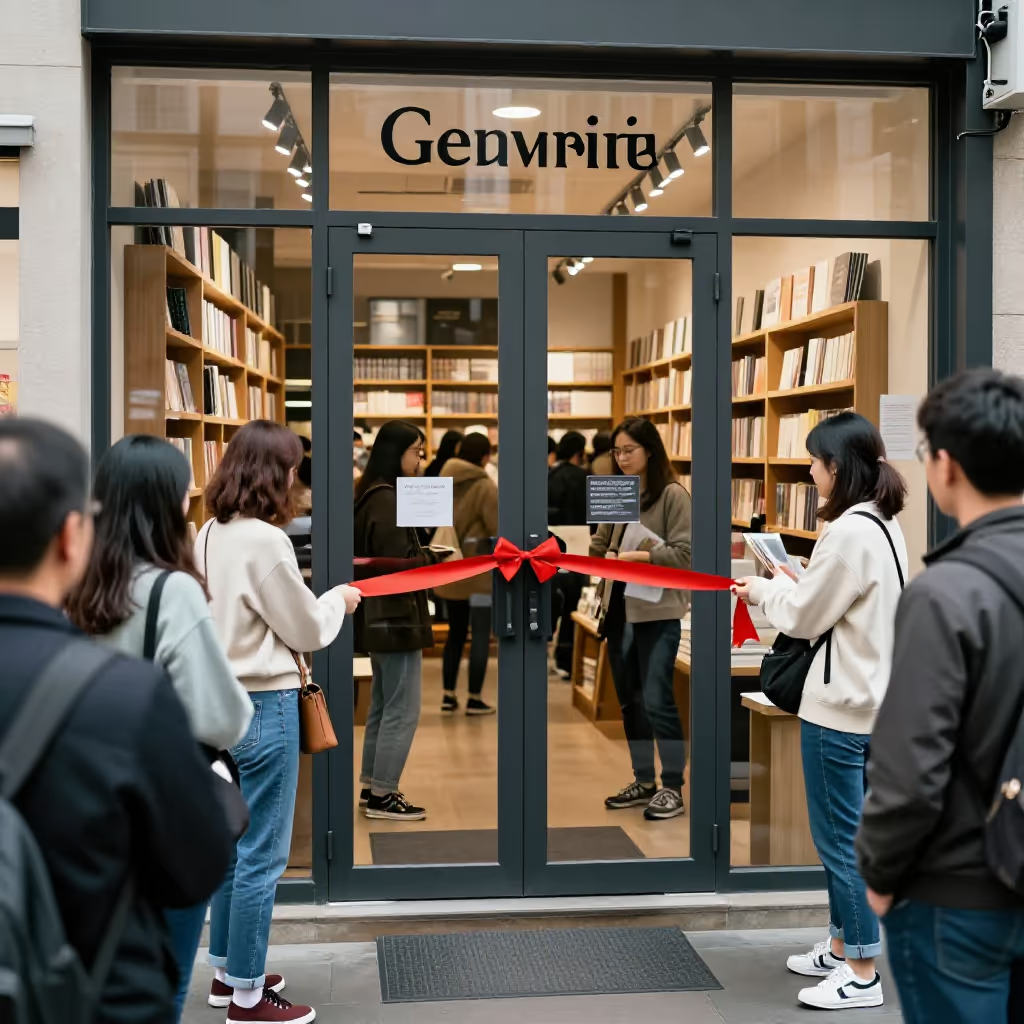
Meine Schwester macht im Mai eine kleine Bäckerei in Berlin auf.
My sister is opening a small bakery in Berlin in May.
Das Unternehmen eröffnet im Mai eine neue Filiale in Berlin.
The company is opening a new branch in Berlin in May.