

öffnen
to open
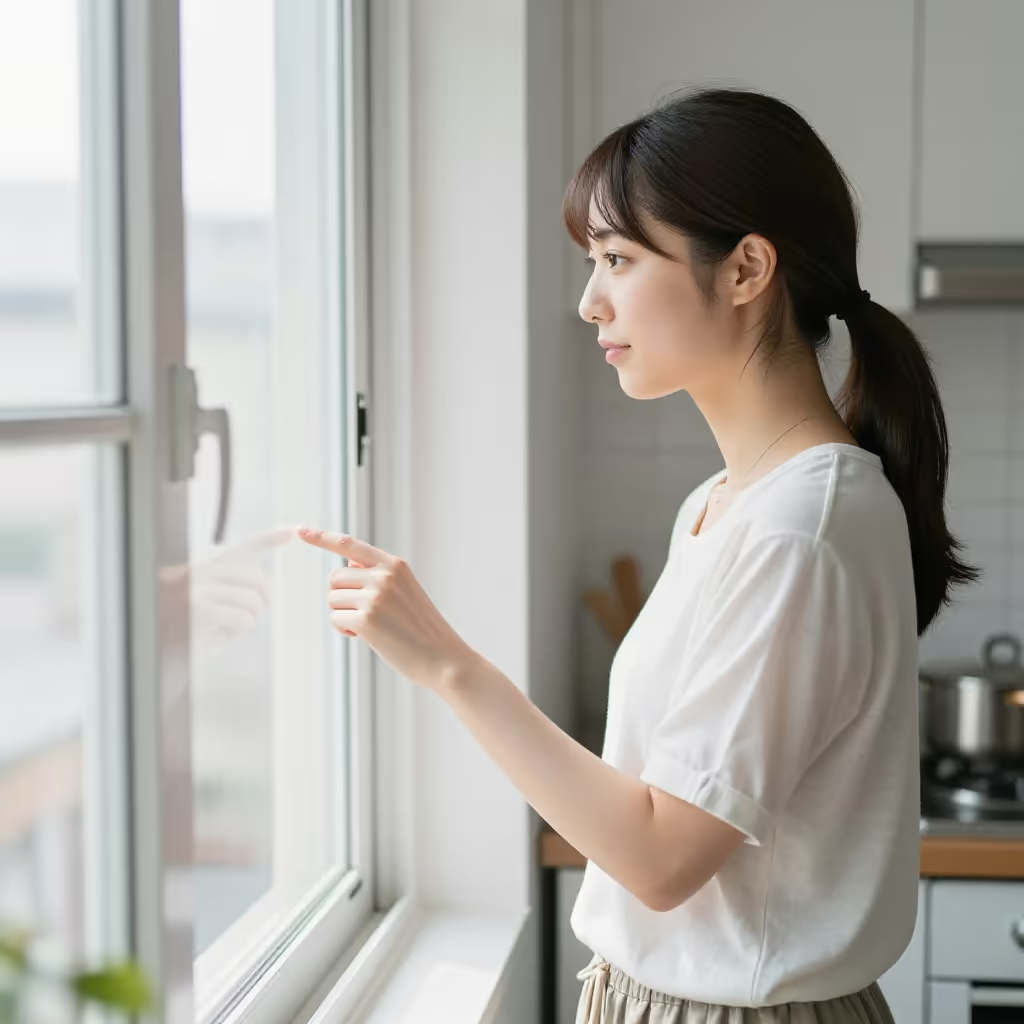
To make something that is closed (e.g., a door, a window, a bottle, a book) accessible or open it up.
EXAMPLE
Kannst du bitte das Fenster öffnen?
Can you please open the window?
to open
Loading your saved state.
to open
To make something that is closed (e.g., a door, a window, a bottle, a book) accessible or open it up.
Kannst du bitte das Fenster öffnen?
Can you please open the window?
to open
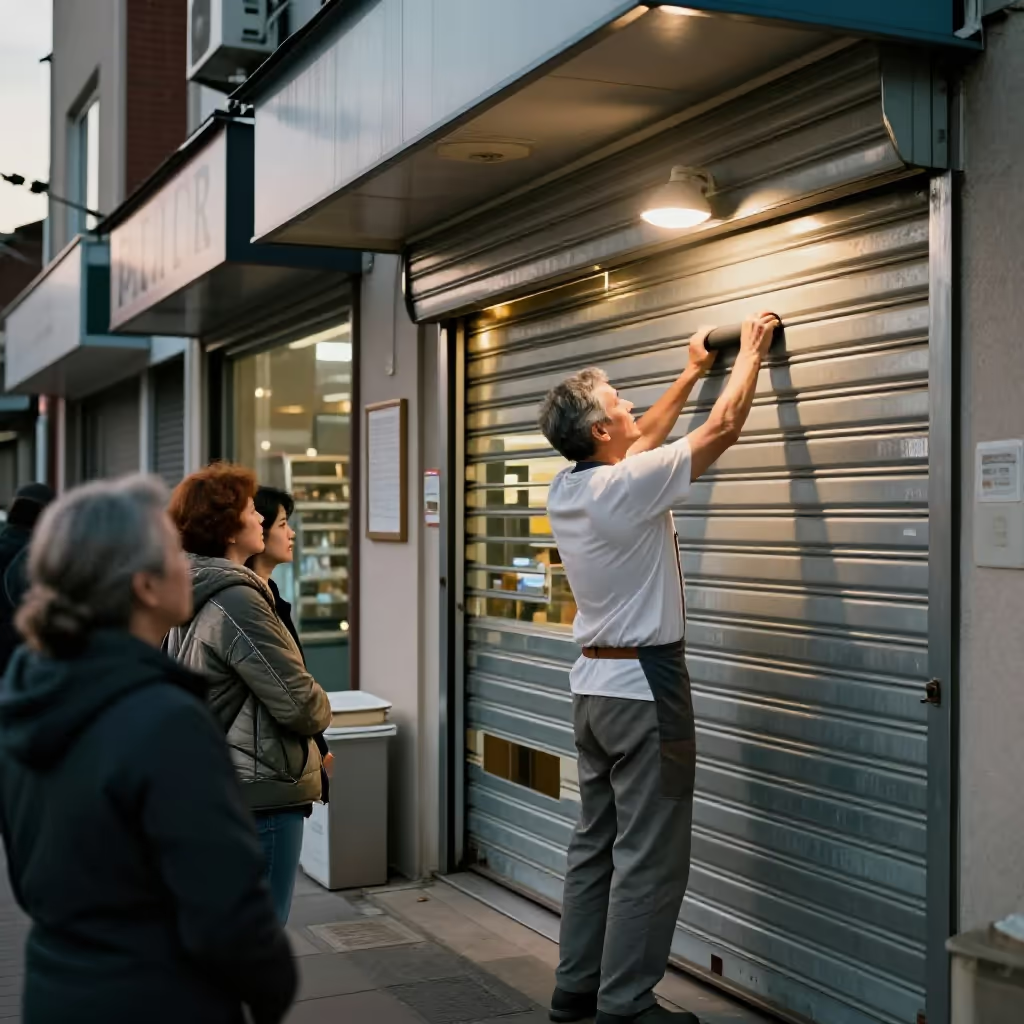
To make a business, event, or institution accessible to the public or put it into operation.
Das neue Schwimmbad öffnet am ersten Juni.
The new swimming pool opens on the first of June.

to open up
To share personal thoughts and feelings; to become more trusting and talkative.
Nach einer Weile hat sie sich mir gegenüber geöffnet und von ihren Sorgen erzählt.
After a while, she opened up to me and told me about her worries.

to open
To set up or start something new, for example a bank account or a computer file.
Ich kann das Dokument nicht öffnen, die Datei scheint beschädigt zu sein.
I can’t open the document; the file seems to be corrupted.
The verb 'öffnen' (to open) is the action that causes something to be 'offen' (open). It is derived directly from the adjective 'offen'.
Das Fenster ist offen, weil ich es gerade geöffnet habe.
The window is open because I just opened it.
The past participle 'geöffnet' (opened/open) is very often used like an adjective to describe a state. It answers the question 'How is something?'.
Die Geschäfte sind sonntags nicht geöffnet.
The shops are not open on Sundays.
In this meaning, the subject is usually an institution (shop, museum, etc.), not a person. A time or date is often mentioned for when the opening takes place.
Die Bibliothek öffnet erst um 10 Uhr.
The library doesn’t open until 10 o’clock.
When a person becomes more emotionally accessible, the reflexive verb 'sich öffnen' (to open up) is used. It is often followed by the preposition 'gegenüber' with a person in the dative.
Er braucht Zeit, um sich neuen Leuten gegenüber zu öffnen.
He needs time to open up to new people.
In digital and administrative contexts, 'öffnen' (to open) is used for starting or setting up things. Typical objects are 'eine Datei' (a file), 'ein Dokument' (a document), 'eine E-Mail' (an email), or 'ein Konto' (an account).
Um Kunde zu werden, müssen Sie zuerst ein Konto bei uns öffnen.
To become a customer, you first have to open an account with us.
to open
Both verbs can refer to the start of a business or event’s public operation. „Eröffnen“ emphasizes the official or first opening, while „öffnen“ also refers to simply making something accessible during regular operations. Use „eröffnen“ for the official opening and „öffnen“ for daily access.
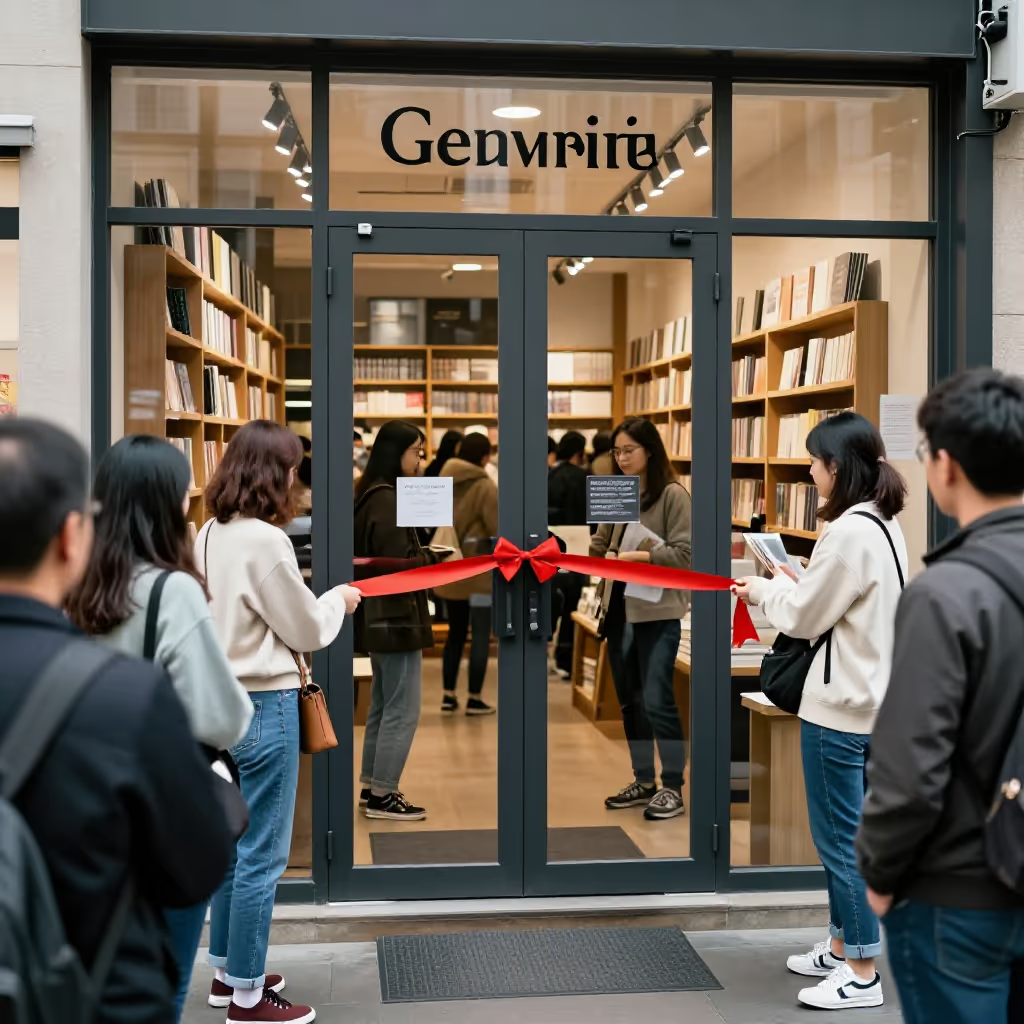
Der Händler öffnet den Stadtmarkt jeden Samstag um acht Uhr.
The market vendor opens the city market at eight o’clock every Saturday.
Die Bürgermeisterin eröffnet am Samstag den neuen Stadtmarkt.
The mayor is officially opening the new city market on Saturday.