

die Aura
aura
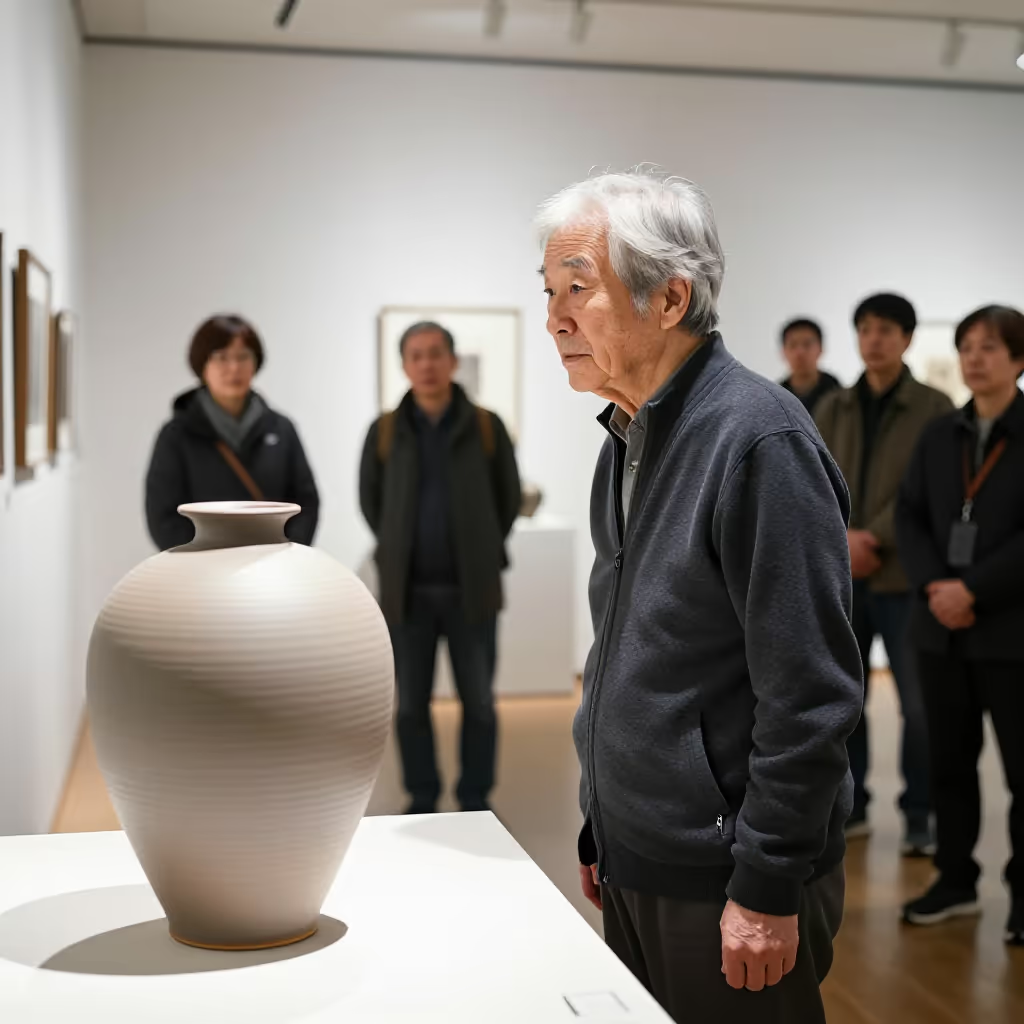
A special, characteristic atmosphere or presence that surrounds a person, place, or work of art.
EXAMPLE
Der alte Künstler hatte eine Aura von Weisheit und Melancholie.
The old artist had an aura of wisdom and melancholy.
aura
Loading your saved state.
aura
A special, characteristic atmosphere or presence that surrounds a person, place, or work of art.
Der alte Künstler hatte eine Aura von Weisheit und Melancholie.
The old artist had an aura of wisdom and melancholy.

aura
In esotericism and parapsychology, a supposed energy field that is said to surround the body and be visible to some people.
Die Heilerin behauptete, sie könne die Farbe der Aura eines Menschen sehen und daraus Rückschlüsse auf dessen Gesundheit ziehen.
The healer claimed she could see the color of a person's aura and draw conclusions about their health from it.
aura
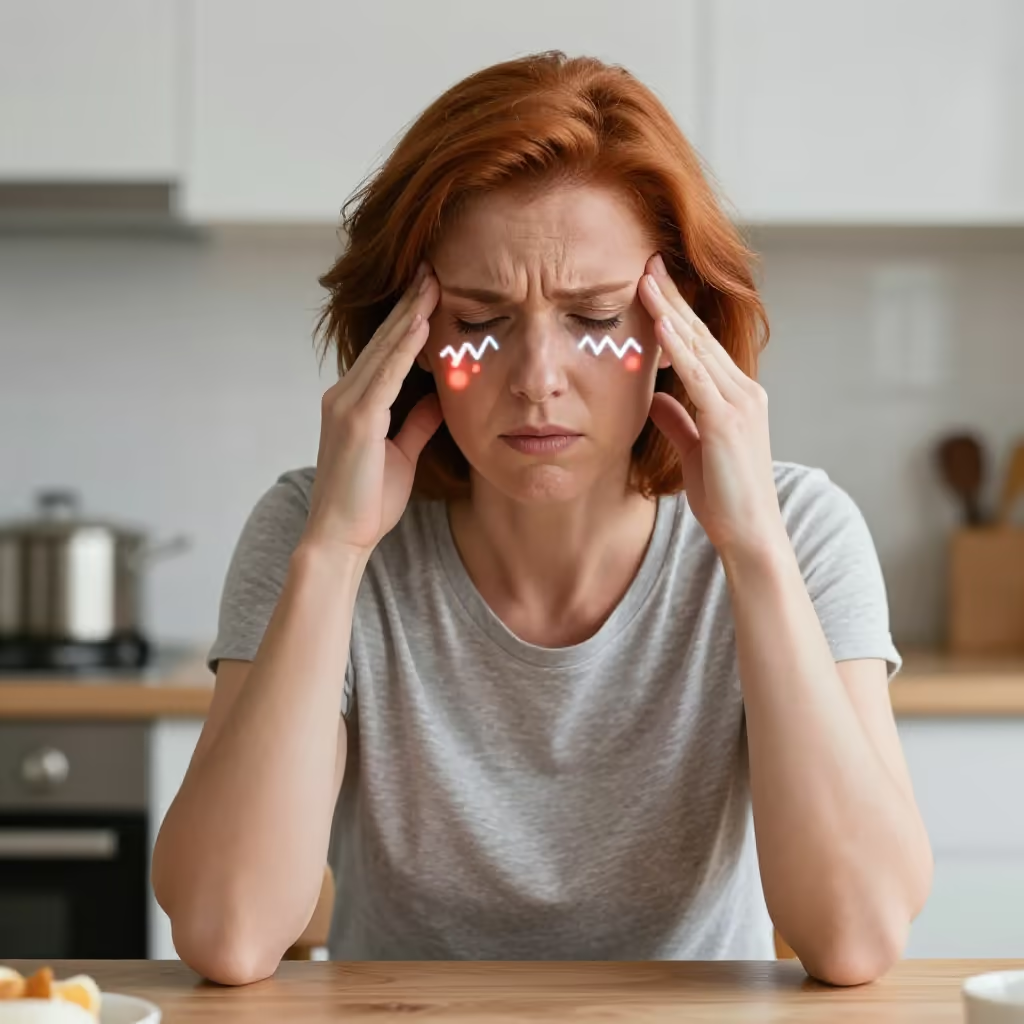
In medicine, a neurological disturbance of perception that often occurs as a warning sign of a migraine attack or epileptic seizure.
Vor ihren Kopfschmerzen sieht sie oft eine visuelle Aura in Form von flimmernden Zickzacklinien.
Before her headaches, she often sees a visual aura in the form of flickering zigzag lines.
To describe the type of presence or atmosphere, the structure 'eine Aura von + [noun]' (an aura of + [noun]) is often used. The noun describes the quality, e.g. 'eine Aura von Macht' (an aura of power), 'von Ruhe' (of calm), or 'von Geheimnis' (of mystery).
Den alten Professor umgab eine Aura von Weisheit und Erfahrung.
The old professor was surrounded by an aura of wisdom and experience.
Alongside 'eine Aura haben' (to have an aura), the verb 'ausstrahlen' (to radiate) is often used to emphasize the effect. A person or place 'strahlt eine bestimmte Aura aus' (radiates a certain aura).
Dieses alte Schloss strahlt eine düstere und geheimnisvolle Aura aus.
This old castle radiates a dark and mysterious aura.
In the medical field, 'Aura' (aura) is a technical term. It describes a perceptual disturbance, often visual, that occurs as a warning sign of a migraine attack or epilepsy.
Patienten mit Migräne beschreiben die Aura oft als flimmernde Lichter oder Zickzacklinien.
Patients with migraines often describe the aura as flickering lights or zigzag lines.
In a spiritual or esoteric context, 'Aura' (aura) refers to an energy field that is said to surround people. Words like 'Farben' (colors), 'Energie' (energy), 'fühlen' (to feel), or 'sehen' (to see) point to this meaning.
Die Seminarleiterin erklärte, wie man die menschliche Aura wahrnehmen kann.
The seminar leader explained how to perceive the human aura.
air / aura
Both words describe a special impression a person makes on others. Air tends to emphasize a consciously displayed, often affected manner, whereas Aura refers to a perceived presence that does not necessarily arise deliberately. Use Air for someone's manner and Aura for their personal effect.

Die ruhige Aura der Ärztin gab den Patienten sofort Vertrauen.
The doctor's calm aura immediately gave the patients confidence.
Mit seiner vornehmen Air wollte er zeigen, dass er etwas Besonderes war.
With his refined air, he wanted to show that he was something special.