


der Ausbruch
outbreak
The sudden beginning of something negative or intense, such as a disease, a war, or a fire.
EXAMPLE
Der Ausbruch der Grippewelle führte zu vielen Krankmeldungen.
The outbreak of the flu wave led to many sick notes.
outbreak / escape
Loading your saved state.
outbreak
The sudden beginning of something negative or intense, such as a disease, a war, or a fire.
Der Ausbruch der Grippewelle führte zu vielen Krankmeldungen.
The outbreak of the flu wave led to many sick notes.

escape / breakout
The escape from a closed place, especially from a prison.
Den Häftlingen gelang der Ausbruch in der Nacht.
The prisoners managed to escape during the night.

outburst
A sudden and uncontrolled expression of strong feelings such as anger, laughter, or crying.
Nach der Beleidigung kam es bei ihm zu einem heftigen Wutausbruch.
After the insult, he had a violent outburst of anger.
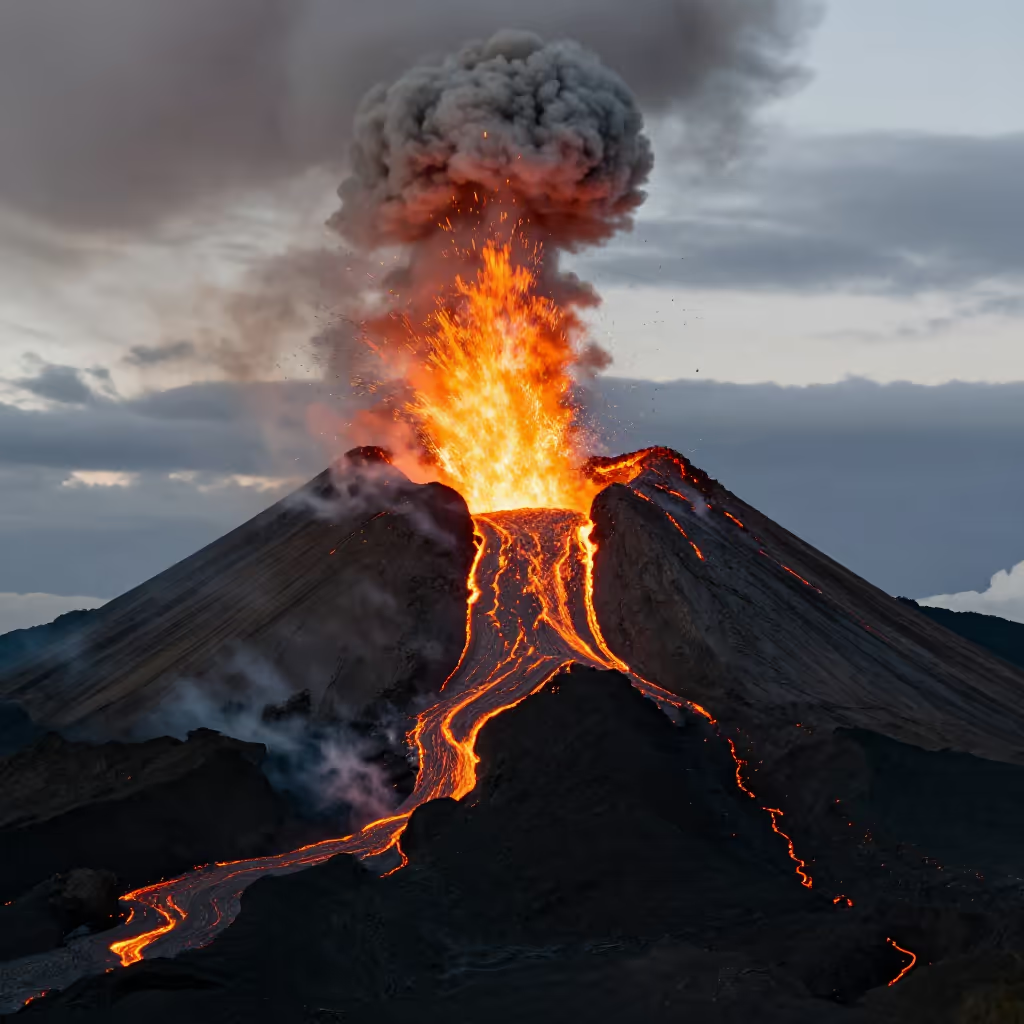
eruption
The eruption of a volcano, during which lava, ash, and gases are expelled.
Der Ausbruch des Vulkans legte eine Ascheschicht über die ganze Insel.
The eruption of the volcano covered the whole island with a layer of ash.
The word comes from the separable verb 'ausbrechen' (to break out). The basic idea of 'breaking out of something' connects all meanings: a disease breaks out, a prisoner breaks out, feelings break out of a person, or lava breaks out of a volcano.
Als der Clown die Torte fallen ließ, brachen alle in Gelächter aus.
When the clown dropped the cake, everyone burst out laughing.
Although the word has many meanings, it is usually immediately clear in the sentence what is meant. Words like 'Krankheit' (disease), 'Gefängnis' (prison), 'Wut' (anger), or 'Vulkan' (volcano) signal the specific meaning.
Der Ausbruch des Feuers konnte schnell gestoppt werden.
The outbreak of the fire was quickly stopped.
In this meaning, 'Ausbruch' (outbreak) is often connected with negative events. Typical formulations are 'der Ausbruch einer Krankheit' (the outbreak of a disease), 'der Ausbruch eines Krieges' (the outbreak of a war), or the phrase 'etwas kommt zum Ausbruch' (something breaks out).
Die Pandemie kam im Winter zum Ausbruch.
The pandemic broke out in winter.
For an escape, the place someone is fleeing from is given with the preposition 'aus' (from/out of) and the dative. A typical combination is 'der Ausbruch aus dem Gefängnis' (the escape from prison).
Die Polizei untersucht den Ausbruch aus der Justizvollzugsanstalt.
The police are investigating the escape from the correctional facility.
In connection with feelings, 'Ausbruch' (outburst) is often part of a compound noun. The best-known example is 'der Wutausbruch' (outburst of anger).
Sein plötzlicher Wutausbruch hat alle erschreckt.
His sudden outburst of anger frightened everyone.
In a geological context, the fixed combination 'der Ausbruch eines Vulkans' (the eruption of a volcano) or simply 'der Vulkanausbruch' (volcanic eruption) is common.
Die Anwohner wurden vor dem Ausbruch des Vulkans gewarnt.
The residents were warned before the eruption of the volcano.
escape / alignment
Flucht and Ausbruch can both refer to escaping from captivity. Ausbruch specifically means overcoming the barriers of an enclosed place, such as a prison, while Flucht more generally describes fleeing from pursuers. Ausbruch is appropriate for breaking out of confinement, while Flucht is appropriate for the subsequent act of fleeing.
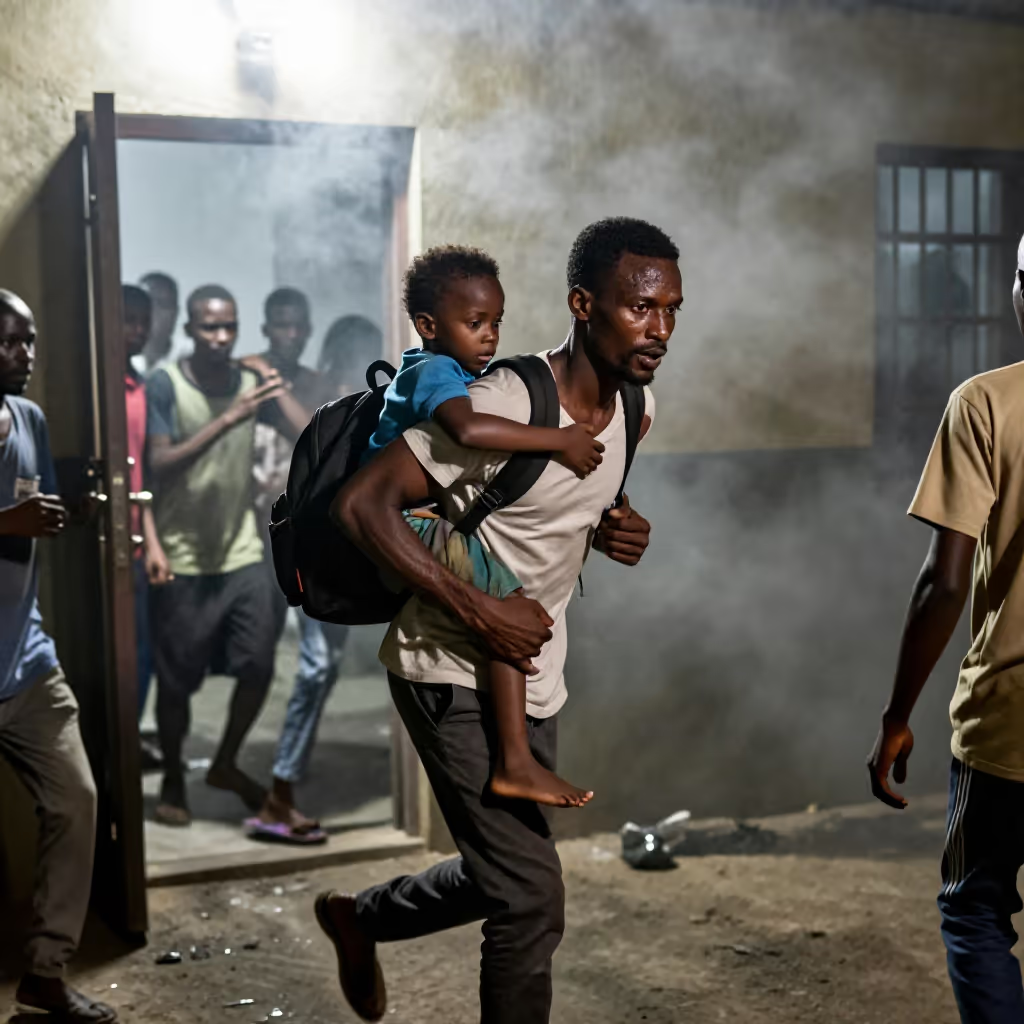
Der Ausbruch aus dem Gefängnis gelang in der Nacht durch einen Tunnel.
The escape from prison succeeded through a tunnel during the night.
Nach der Flucht aus dem Gefängnis suchte die Polizei überall nach dem Häftling.
After escaping from prison, the police searched everywhere for the inmate.