

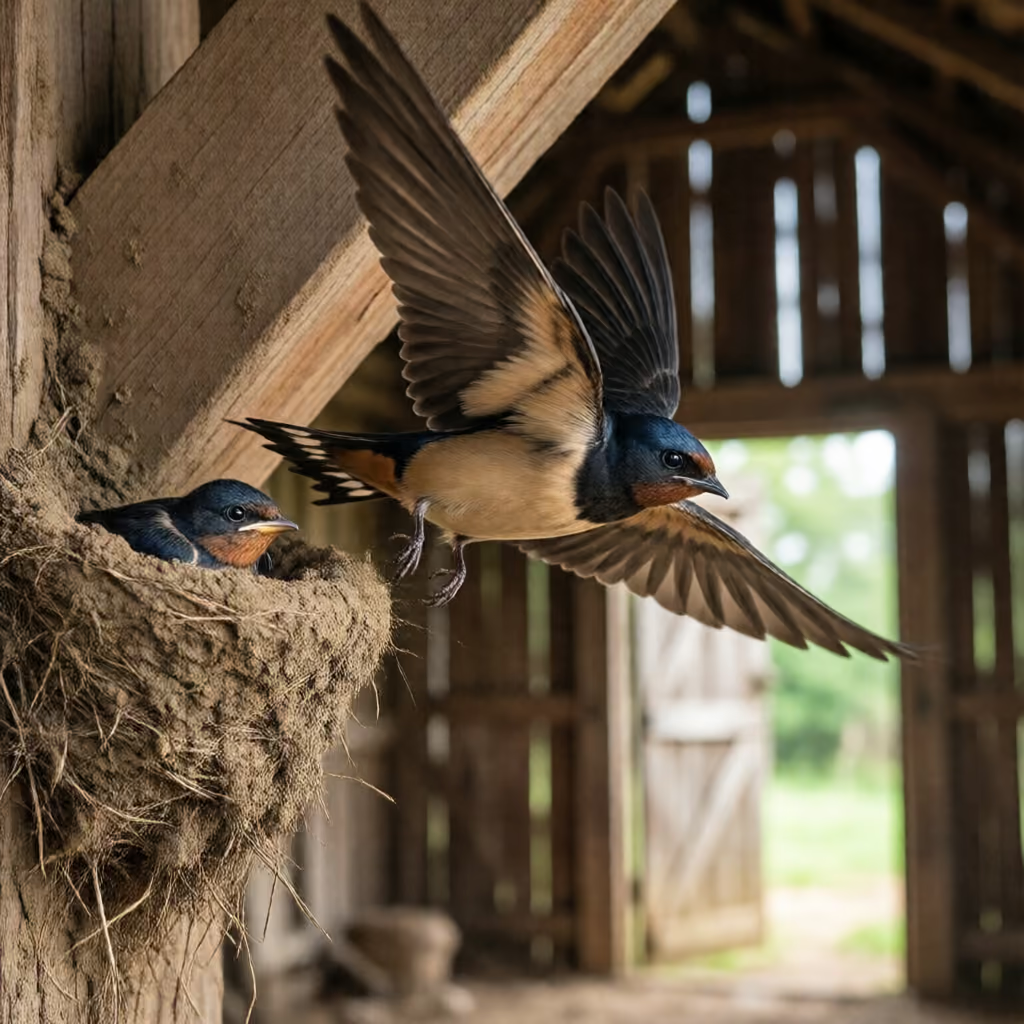
ausfliegen
to fly out
To leave a place or nest by flying; especially used for birds that leave the nest and become independent.
EXAMPLE
Die jungen Schwalben sind gestern aus dem Nest ausgeflogen.
The young swallows flew out of the nest yesterday.
to fly out
ausfliegen – flog aus – ist ausgeflogen
Loading your saved state.
to fly out
To leave a place or nest by flying; especially used for birds that leave the nest and become independent.
Die jungen Schwalben sind gestern aus dem Nest ausgeflogen.
The young swallows flew out of the nest yesterday.

to go out / be out
To go on an outing and be away for a while. Especially in the perfect tense, „ausgeflogen sein“ (to be out) colloquially means that someone is not at home.
Am Sonntag ist die ganze Familie ausgeflogen.
The whole family went out on Sunday.

to fly someone out
To take someone to another place by plane or pick them up from there.
Die Regierung ließ die verletzten Touristen ausfliegen.
The government had the injured tourists flown out.
| ich | fliege aus |
|---|---|
| du | fliegst aus |
| er/sie/es | fliegt aus |
| wir | fliegen aus |
| ihr | fliegt aus |
| sie | fliegen aus |
| ich | flog aus |
|---|---|
| du | flogst aus |
| er/sie/es | flog aus |
| wir | flogen aus |
| ihr | flogt aus |
| sie | flogen aus |
| ich | bin ausgeflogen habe ausgeflogen |
|---|---|
| du | bist ausgeflogen hast ausgeflogen |
| er/sie/es | ist ausgeflogen hat ausgeflogen |
| wir | sind ausgeflogen haben ausgeflogen |
| ihr | seid ausgeflogen habt ausgeflogen |
| sie | sind ausgeflogen haben ausgeflogen |
| du | fliege aus! flieg aus! |
|---|---|
| ihr | fliegt aus! |
| Sie | fliegen Sie aus! |
| ich | war ausgeflogen hatte ausgeflogen |
|---|---|
| du | warst ausgeflogen hattest ausgeflogen |
| er/sie/es | war ausgeflogen hatte ausgeflogen |
| wir | waren ausgeflogen hatten ausgeflogen |
| ihr | wart ausgeflogen hattet ausgeflogen |
| sie | waren ausgeflogen hatten ausgeflogen |
| ich | werde ausfliegen |
|---|---|
| du | wirst ausfliegen |
| er/sie/es | wird ausfliegen |
| wir | werden ausfliegen |
| ihr | werdet ausfliegen |
| sie | werden ausfliegen |
| ich | fliege aus |
|---|---|
| du | fliegest aus |
| er/sie/es | fliege aus |
| wir | fliegen aus |
| ihr | flieget aus |
| sie | fliegen aus |
Used for reported speech.
| ich | flöge aus |
|---|---|
| du | flögest aus flögst aus |
| er/sie/es | flöge aus |
| wir | flögen aus |
| ihr | flöget aus flögt aus |
| sie | flögen aus |
Used for wishes and “would”.
| infinitive | ausfliegen |
|---|---|
| with zu | auszufliegen |
| present participle | ausfliegend |
| past participle | ausgeflogen |
„Ausfliegen“ (to fly out) is a separable verb. In a main clause, „aus“ (out) comes at the end of the sentence; in a subordinate clause, the verb remains together; and with the infinitive marker „zu“ (to), „zu“ comes between the prefix and the verb.
Die jungen Vögel fliegen heute aus.
The young birds are flying out today.
Ich weiß, dass die jungen Vögel heute ausfliegen.
I know that the young birds are flying out today.
Für die Vögel ist es Zeit, auszufliegen.
It is time for the birds to fly out.
With birds, a nest or a young bird points to the meaning of leaving independently. When referring to an outing, it means going away for a while; when someone is „ausgeflogen“ (out), they are usually not at home. When a person is the object, it means transporting or picking them up by plane.
Die jungen Störche sind am Wochenende aus dem Nest ausgeflogen.
The young storks flew out of the nest over the weekend.
Als wir klingelten, waren die Nachbarn schon ausgeflogen.
When we rang the doorbell, the neighbors were already out.
Ein Hubschrauber soll die Bergsteiger ausfliegen.
A helicopter is supposed to fly the mountaineers out.
In the meaning related to birds, „ausfliegen“ (to fly out) is often used with „aus dem Nest“ (out of the nest) or „aus dem Horst“ (out of the eyrie). The subject is usually a young bird or the young of a particular bird species.
Die jungen Eulen sind bereits aus dem Horst ausgeflogen.
The young owls have already flown out of the eyrie.
In colloquial language, „ausfliegen“ (to go out) means going on an outing and being away for a while. In the perfect tense, the expression „ausgeflogen sein“ (to be out) is especially common in the sense of „nicht zu Hause sein“ (not to be at home).
Bei dem schönen Wetter fliegen wir morgen ins Grüne aus.
In this lovely weather, we're going out to the countryside tomorrow.
Ruf später noch mal an, die Kinder sind gerade ausgeflogen.
Call again later; the children are out at the moment.
When a person is taken to another place by plane or picked up from there, that person appears as the accusative object of „ausfliegen“ (to fly someone out). The construction is often used with „lassen“ (to have) or in the passive voice.
Die Botschaft ließ die Reisenden noch am selben Abend ausfliegen.
The embassy had the travelers flown out that same evening.
Die verletzten Wanderer wurden mit einem Hubschrauber ausgeflogen.
The injured hikers were flown out by helicopter.