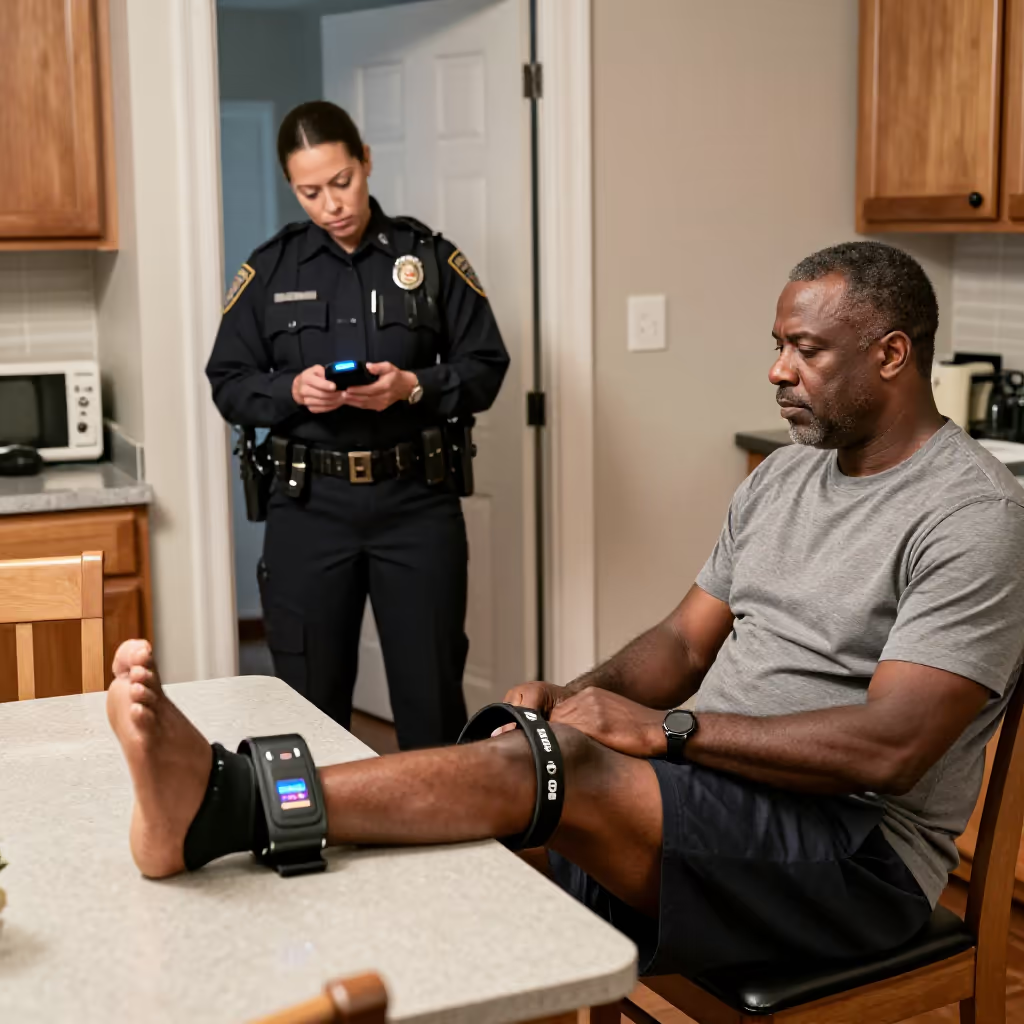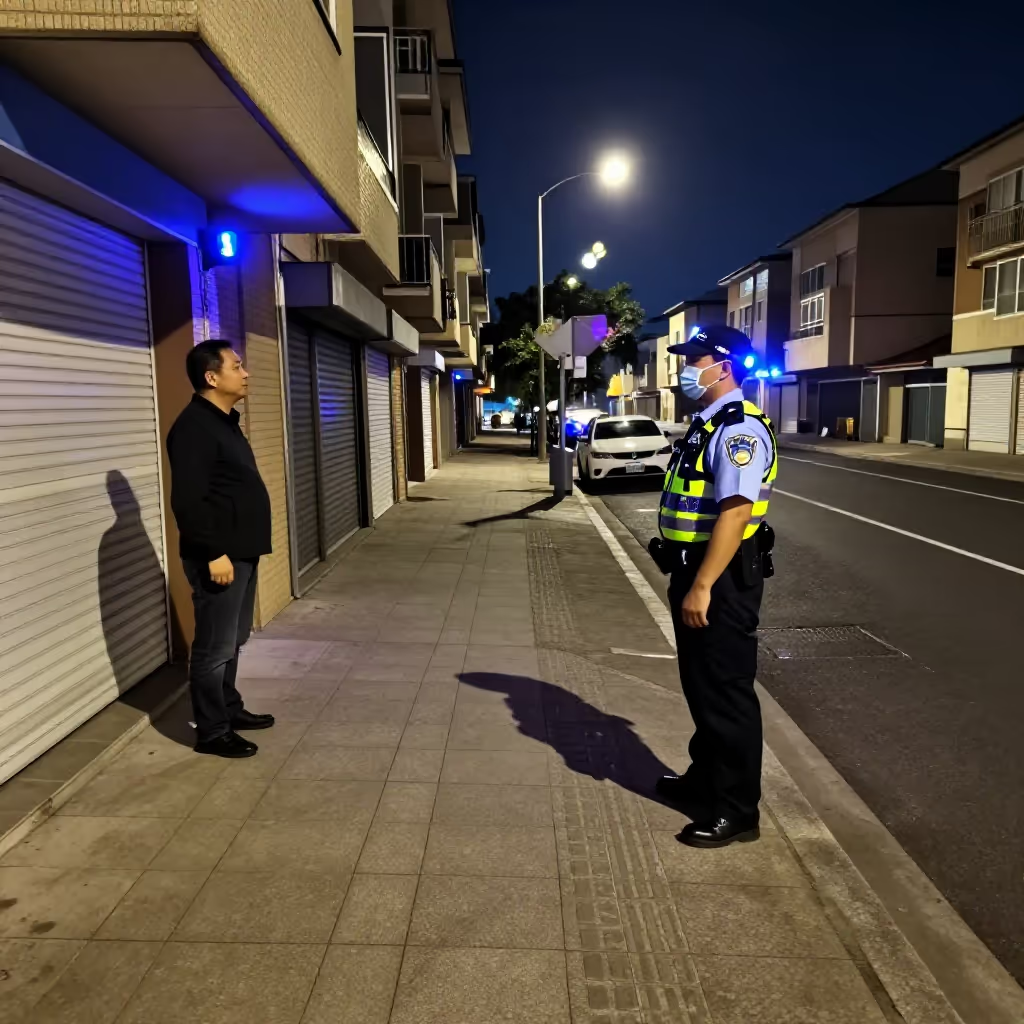
An official order that forbids people from leaving their houses or apartments at certain times, usually at night.
example
Wegen der Unruhen verhängte die Regierung eine nächtliche Ausgangssperre.
Because of the unrest, the government imposed a nighttime curfew.
Usage tips
Compound word
The word is made up of 'der Ausgang' (exit / going out) and 'die Sperre' (block / closure). So it literally describes a blocking or restriction on leaving the house.
EXAMPLE
Bitte benutzen Sie den hinteren Ausgang.
Please use the rear exit.
Context clue
The context reveals whether the official order or the private rule is meant. Words like 'Regierung' (government), 'Stadt' (city), or 'verhängen' (to impose) point to the official meaning. 'Eltern' (parents) or 'eine Ausgangssperre haben' (to have a curfew) indicate the private rule for teenagers.
EXAMPLE
Die Stadt hat eine Ausgangssperre für die Silvesternacht verhängt.
The city imposed a curfew for New Year's Eve.
Typical verbs
In an official context, a curfew is 'verhängt' (imposed), 'angeordnet' (ordered), or 'erlassen' (issued) by an authority. When it is ended, it is 'aufgehoben' (lifted).
EXAMPLE
Die nächtliche Ausgangssperre wurde nach zwei Wochen wieder aufgehoben.
The nighttime curfew was lifted again after two weeks.
Private use
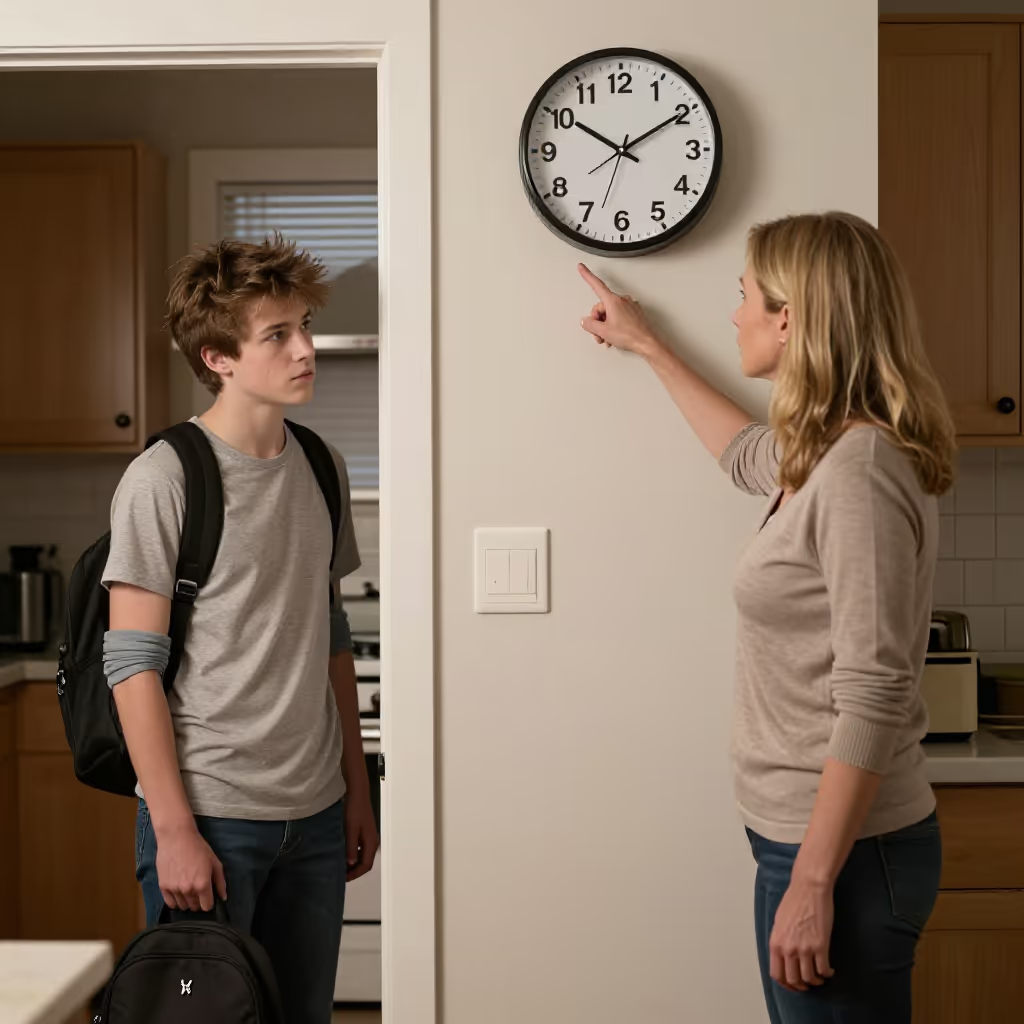
In a private context, a person 'hat' (has) a curfew or 'bekommt' (gets) one from their parents. You can also say that the parents 'geben' (give) someone a curfew.
EXAMPLE
Weil seine Noten schlecht waren, hat er jetzt eine strengere Ausgangssperre.
Because his grades were bad, he now has a stricter curfew.
Compare with
confusable
Ausgangssperre vs Quarantäne
quarantine
'die Quarantäne' and 'die Ausgangssperre' can both mean that someone is not simply allowed to move around freely. Still, they do not mean the same thing. 'Quarantäne' concerns individual people, animals, or goods when infection is to be prevented. 'Ausgangssperre' means that you are not allowed to leave the house or apartment at certain times; it can come from authorities or be private, for example for teenagers. The words can be confused especially during health crises, because both restrict everyday life. If the reason is a possible illness, 'Quarantäne' fits. If it is about a ban on going outside at a certain time, 'Ausgangssperre' fits.
Ausgangssperre
Wegen der Ausgangssperre darf mein Bruder nach 22 Uhr nicht mehr raus.
Because of the curfew, my brother is not allowed to go out after 10 p.m.
Quarantäne
Meine Mutter ist in Quarantäne, weil sie Kontakt zu einer kranken Kollegin hatte.
My mother is in quarantine because she had contact with a sick colleague.