

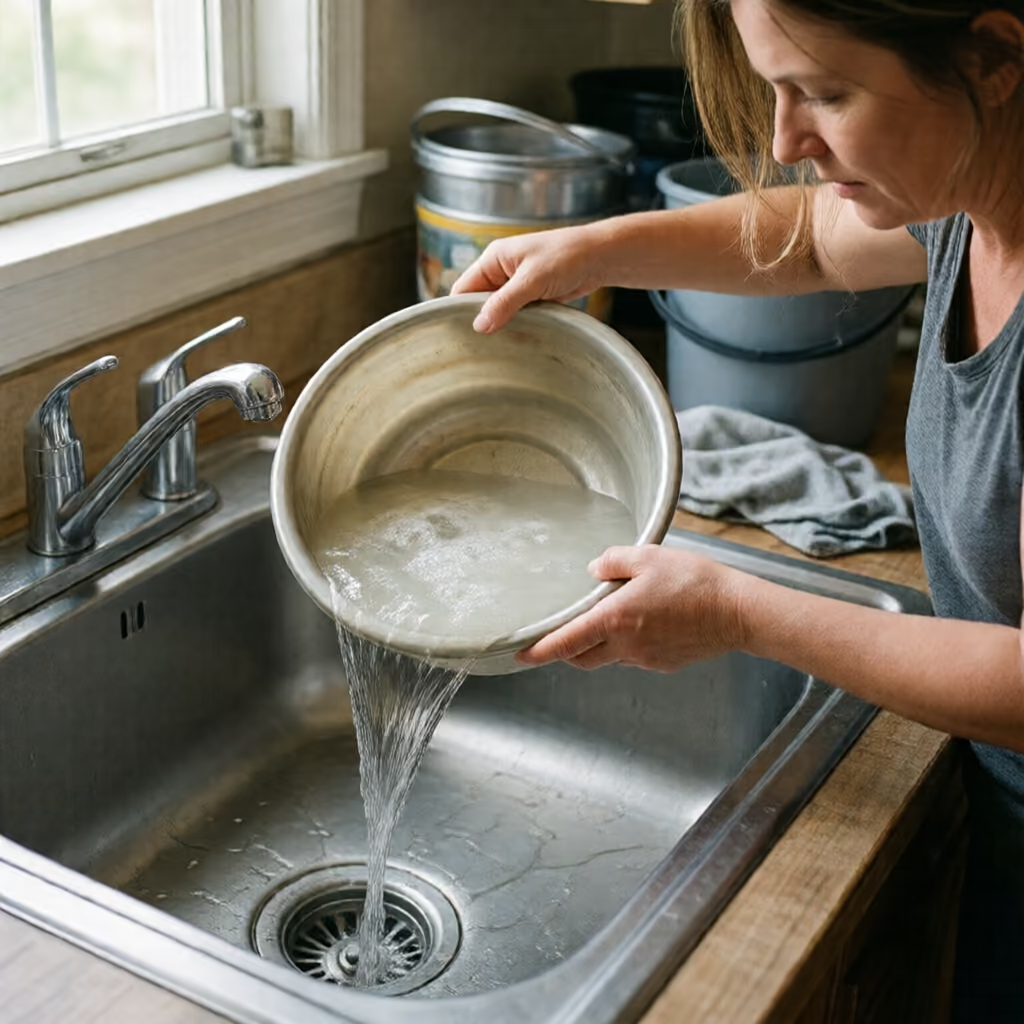
ausgießen
to pour out
To let a liquid flow out of a container, usually to dispose of it.
EXAMPLE
Sie goss das schmutzige Wasser in den Abfluss aus.
She poured out the dirty water down the drain.
to pour out / empty / fill
ausgießen – goss aus – hat ausgegossen
Loading your saved state.
to pour out
To let a liquid flow out of a container, usually to dispose of it.
Sie goss das schmutzige Wasser in den Abfluss aus.
She poured out the dirty water down the drain.
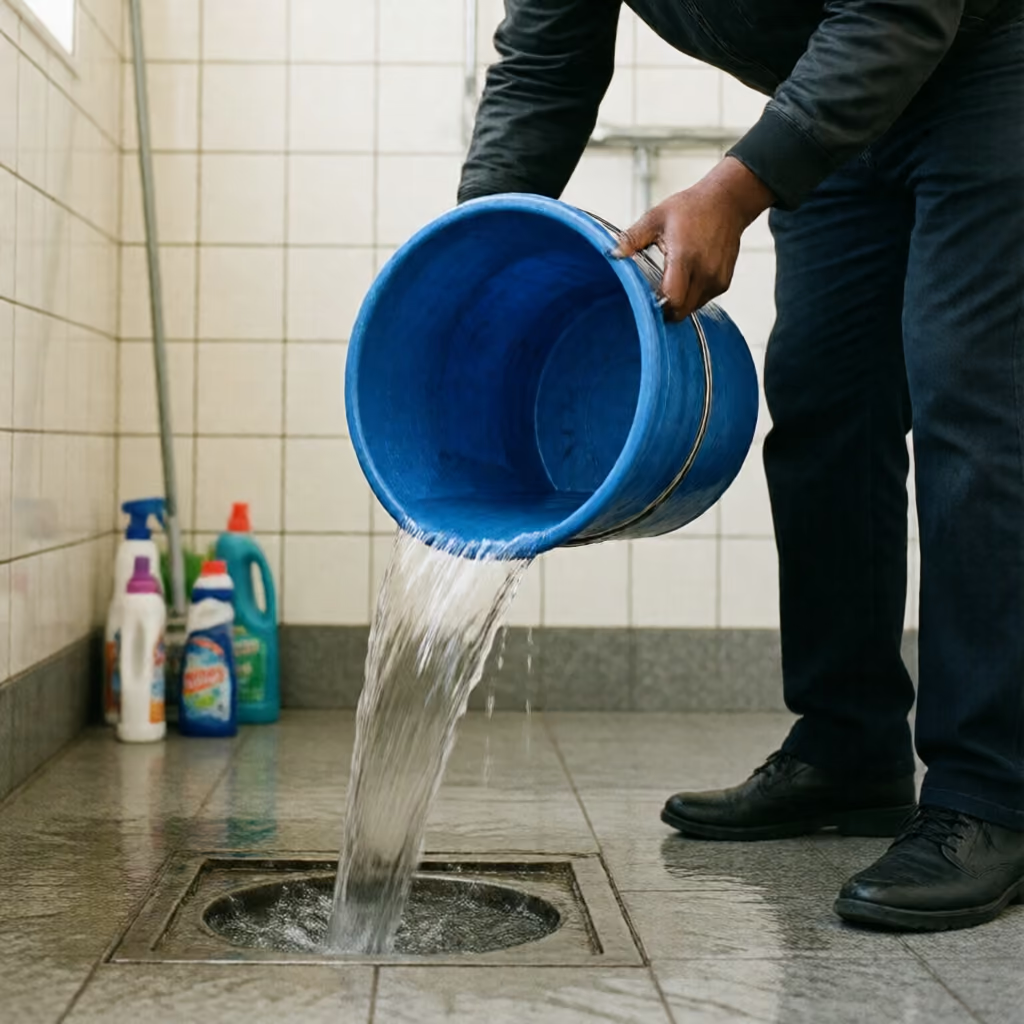
to empty by pouring
To empty a container by letting the liquid inside it flow out.
Er goss den Eimer aus und stellte ihn leer in die Ecke.
He emptied the bucket and put it in the corner.
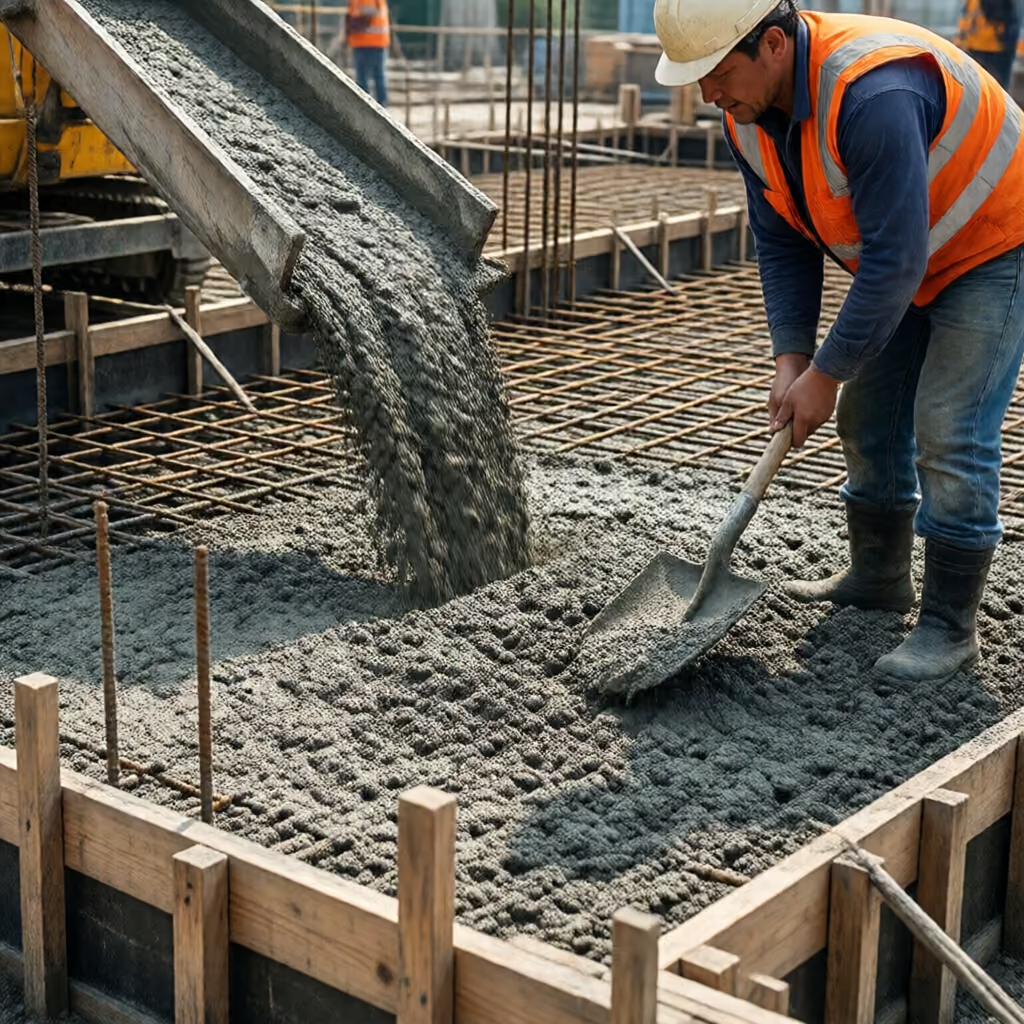
to fill by pouring
To fill a mold or cavity with a liquid material that usually then hardens.
Die Handwerker gossen den Hohlraum mit Beton aus.
The workers filled the cavity with concrete.

to pour out anger or scorn on someone
To direct one's anger or scorn forcefully at someone.
Der Kritiker goss seinen ganzen Spott über den Regisseur aus.
The critic poured out all his scorn on the director.
| ich | gieße aus |
|---|---|
| du | gießt aus |
| er/sie/es | gießt aus |
| wir | gießen aus |
| ihr | gießt aus |
| sie | gießen aus |
| ich | goss aus |
|---|---|
| du | gossest aus gosst aus |
| er/sie/es | goss aus |
| wir | gossen aus |
| ihr | gosst aus |
| sie | gossen aus |
| ich | habe ausgegossen |
|---|---|
| du | hast ausgegossen |
| er/sie/es | hat ausgegossen |
| wir | haben ausgegossen |
| ihr | habt ausgegossen |
| sie | haben ausgegossen |
| du | gieß aus! gieße aus! |
|---|---|
| ihr | gießt aus! |
| Sie | gießen Sie aus! |
| ich | hatte ausgegossen |
|---|---|
| du | hattest ausgegossen |
| er/sie/es | hatte ausgegossen |
| wir | hatten ausgegossen |
| ihr | hattet ausgegossen |
| sie | hatten ausgegossen |
| ich | werde ausgießen |
|---|---|
| du | wirst ausgießen |
| er/sie/es | wird ausgießen |
| wir | werden ausgießen |
| ihr | werdet ausgießen |
| sie | werden ausgießen |
| ich | gieße aus |
|---|---|
| du | gießest aus |
| er/sie/es | gieße aus |
| wir | gießen aus |
| ihr | gießet aus |
| sie | gießen aus |
Used for reported speech.
| ich | gösse aus |
|---|---|
| du | gössest aus |
| er/sie/es | gösse aus |
| wir | gössen aus |
| ihr | gösset aus |
| sie | gössen aus |
Used for wishes and “would”.
| infinitive | ausgießen |
|---|---|
| with zu | auszugießen |
| present participle | ausgießend |
| past participle | ausgegossen |
'Ausgießen' (to pour out) is a separable verb. In a main clause, 'aus' goes at the end of the clause; in a subordinate clause, the verb stays together. In the infinitive with 'zu', 'zu' goes between 'aus' and 'gießen'.
Mara gießt die Suppe vorsichtig aus.
Mara carefully pours out the soup.
Er wartet, bis sie die Flüssigkeit ausgießt.
He waits until she pours out the liquid.
Es ist nicht nötig, das Wasser auszugießen.
There is no need to pour out the water.
'Ausgießen' (to pour out / fill) consists of the prefix 'aus' and the verb 'gießen' (to pour). The prefix 'aus' indicates that the liquid flows out of the container. With molds and cavities, it means filling them completely with liquid.
Sie gießt den kalten Tee aus der Kanne aus.
She pours the cold tea out of the pot.
Die Arbeiter gossen die Fugen mit Mörtel aus.
The workers filled the joints with mortar.
The sentence pattern with 'ausgießen' (to pour out / empty) varies depending on the object: you can pour a liquid into a destination or empty a container. The destination is often expressed with 'in' followed by the accusative.
Sie goss das Wasser in einen Eimer aus.
She poured out the water into a bucket.
Er goss die Teekanne im Waschbecken aus.
He emptied the teapot into the sink.
In this sense, 'ausgießen' (to pour out) is often used with liquids that you want to dispose of or transfer elsewhere, such as water, oil, or wastewater. Common destinations include a drain, a basin, or a bucket.
Bitte gieße das gebrauchte Öl nicht in den Abfluss aus.
Please don't pour out the used oil down the drain.
In construction, 'ausgießen' (to fill) is often used with 'Beton' (concrete), 'Zement' (cement), or 'eine Form' (a mold). The mold or cavity is the object; the material is specified using 'mit' followed by the dative.
Die Maurer gossen die Aussparung in der Wand mit Zement aus.
The bricklayers filled the recess in the wall with cement.
With anger or scorn, 'ausgießen' (to pour out) often appears in the expressions 'seinen Zorn über jemanden ausgießen' (to pour out one's anger on someone) or 'seinen Spott über jemanden ausgießen' (to pour out one's scorn on someone). The person targeted follows 'über' in the accusative.
Der Redner goss seinen Zorn über die Verantwortlichen aus.
The speaker poured out his anger on those responsible.