
der Ausgleich
compensation
An action or thing that compensates for an imbalance or disadvantage.
Als Ausgleich für die Mehrarbeit erhielt sie einen zusätzlichen Urlaubstag.
As compensation for the extra work, she received an additional vacation day.

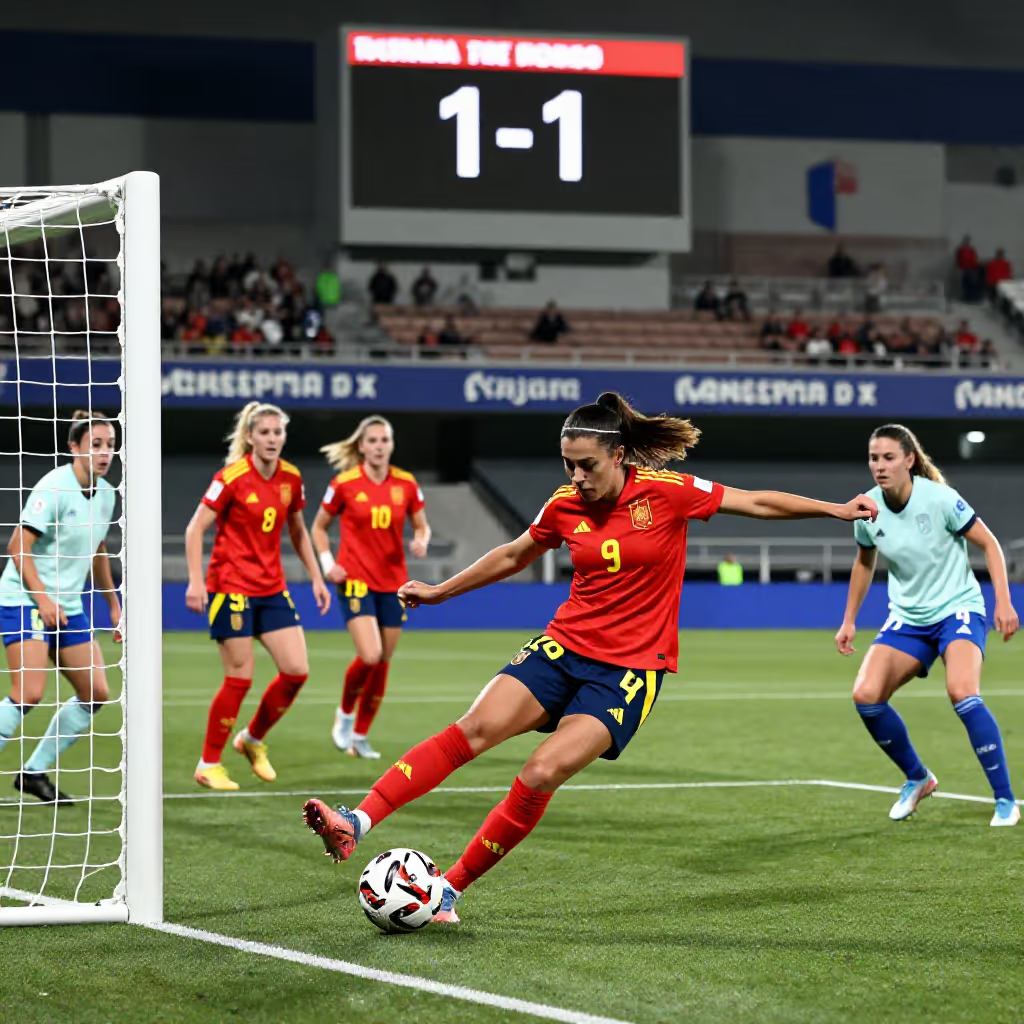
compensation / equalizer
Loading your saved state.
compensation
An action or thing that compensates for an imbalance or disadvantage.
Als Ausgleich für die Mehrarbeit erhielt sie einen zusätzlichen Urlaubstag.
As compensation for the extra work, she received an additional vacation day.
The word is made up of 'aus' (out/even) and 'gleich' (equal). The basic idea is to create a state of balance or equality by 'ausgleichen' (balancing something out/compensating for something).
Nach einem langen Arbeitstag brauche ich einen Ausgleich.
After a long workday, I need some balance.
'Der Ausgleich' (compensation/balance) is the nominalization of the verb 'ausgleichen' (to balance out/compensate). The verb describes the action of creating balance or compensating for something.
Sie versucht, die fehlenden Stunden durch Mehrarbeit auszugleichen.
She tries to compensate for the missing hours by working overtime.
When it is about compensation, the preposition 'für' (for) is often used. You receive something 'als Ausgleich für' (as compensation for) a disadvantage or a service/performance.
Er bekam eine kleine Geldsumme als Ausgleich für den Schaden.
He received a small sum of money as compensation for the damage.
When an activity serves as a counterbalance, the preposition 'zu' (to) is often used. Something serves 'als Ausgleich zu' (as a balance/counterbalance to) another, usually strenuous activity.
Malen ist für ihn der ideale Ausgleich zum technischen Beruf.
Painting is the ideal balance to his technical profession.
In a sports context, 'Ausgleich' (equalizer) is almost always combined with verbs such as 'schießen' (to shoot/score), 'erzielen' (to score), or 'erzwingen' (to force), and refers to the goal or point that makes the score even.
Kurz vor Spielende erzielte der Stürmer den wichtigen Ausgleich.
Shortly before the end of the match, the striker scored the important equalizer.
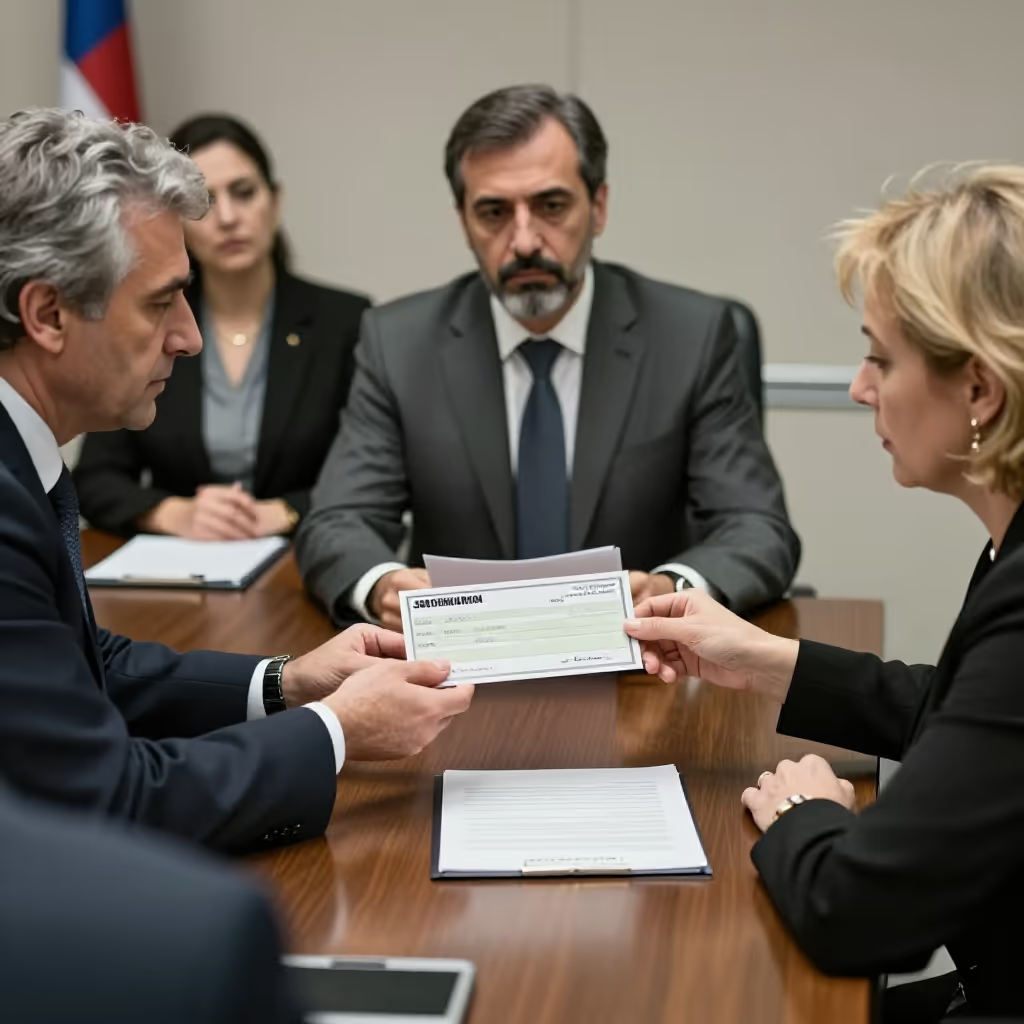
comparison / settlement
'der Vergleich' and 'der Ausgleich' sound similar and can both have to do with two sides or two things. But 'der Vergleich' usually means that you look at similarities and differences. In legal language, it can also mean a settlement in a dispute. 'der Ausgleich' more often means that a disadvantage, a difference, or damage is compensated for, often also with money. They are especially easy to confuse in contexts involving disputes or money: a 'Vergleich' is the agreement or settlement, while an 'Ausgleich' is the compensation or payment.

Nach dem Schaden erhielt der Kunde einen kleinen Ausgleich.
After the damage, the customer received a small amount of compensation.
Der Vergleich der beiden Angebote zeigt klare Unterschiede beim Preis.
The comparison of the two offers shows clear differences in price.