


die Auslage
display
The goods presented in a shop window or on a counter to attract customers.
EXAMPLE
Die Torten in der Auslage der Konditorei sahen köstlich aus.
The cakes in the bakery's display looked delicious.
display / expenses
Loading your saved state.
display
The goods presented in a shop window or on a counter to attract customers.
Die Torten in der Auslage der Konditorei sahen köstlich aus.
The cakes in the bakery's display looked delicious.

expenses
An amount of money that someone pays in advance for another person or a company and that is reimbursed later.
Bitte reichen Sie eine Quittung für Ihre Auslagen während der Dienstreise ein.
Please submit a receipt for your expenses during the business trip.
'Die Auslage' is the noun form of the verb 'auslegen'. 'Auslegen' means to put something on display or to pay money in advance—just like the two meanings of the noun.
Der Händler legt jeden Morgen frisches Obst aus.
The merchant puts out fresh fruit every morning.
The two meanings can be distinguished well by number. 'Die Auslage' in the singular almost always means the goods in the shop window. 'Die Auslagen' in the plural almost always refers to reimbursable costs.
Die Uhr in der Auslage ist sehr teuer.
The watch in the display is very expensive.
In the context of a shop, people say that goods 'in der Auslage liegen' (are displayed / are lying in the display) or 'stehen' (are standing). A decorator can 'die Auslage gestalten' (design the display).
Im Schaufenster liegen die neuen Bücher in der Auslage.
The new books are displayed in the shop window.
In a financial context, 'Auslagen' (expenses) are 'erstattet' (reimbursed), or you can 'seine Auslagen einreichen' (submit your expenses). It is always about money that you spent for someone else.
Die Firma erstattet alle notwendigen Auslagen für die Geschäftsreise.
The company reimburses all necessary expenses for the business trip.
expense / issue / output
Ausgabe and Auslage can both refer to a paid amount of money. Die Ausgabe generally means money that someone pays, while die Auslage specifically refers to money that someone pays in advance for another person or company and later gets reimbursed. Use Ausgabe for your own costs and Auslage for money paid in advance.
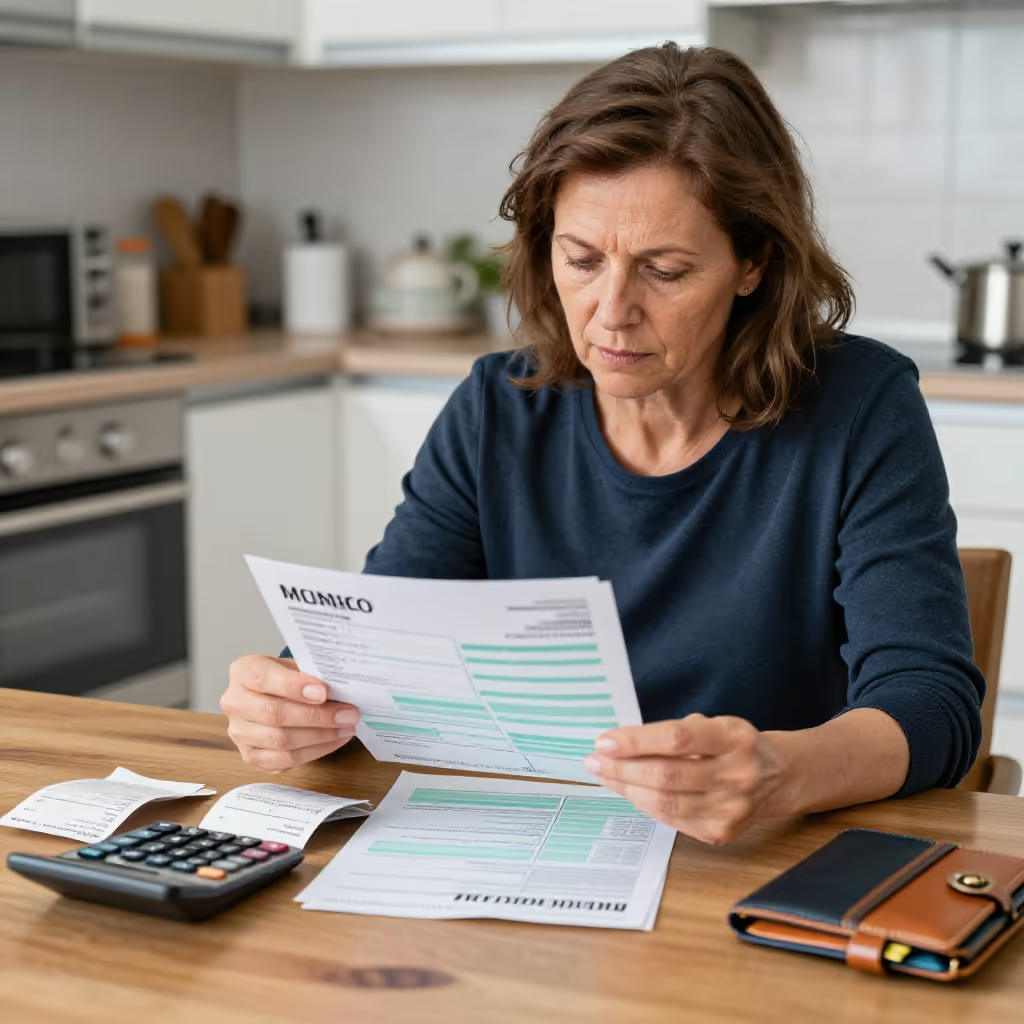
Die Auslage für das Mittagessen bezahle ich zunächst für meine Kollegin.
I will pay the lunch expense for my colleague up front.
Die Ausgabe für das Mittagessen trage ich selbst.
I will cover the expense for the lunch myself.