


ausschlagen
to turn down
To reject or refuse an offer, request, or invitation.
EXAMPLE
Sie hat das Jobangebot ausgeschlagen, weil das Gehalt zu niedrig war.
She turned down the job offer because the salary was too low.
to turn down / to kick out / to sprout
Loading your saved state.
to turn down
To reject or refuse an offer, request, or invitation.
Sie hat das Jobangebot ausgeschlagen, weil das Gehalt zu niedrig war.
She turned down the job offer because the salary was too low.

to deflect
The sudden and strong movement of a needle on a measuring scale.
Der Seismograph schlug während des Erdbebens stark aus.
The seismograph needle deflected sharply during the earthquake.

to break out
The sudden appearance of a skin rash as a reaction to something.
Nach dem Verzehr der Erdbeeren ist er am ganzen Körper ausgeschlagen.
After eating the strawberries, he broke out in a rash all over his body.
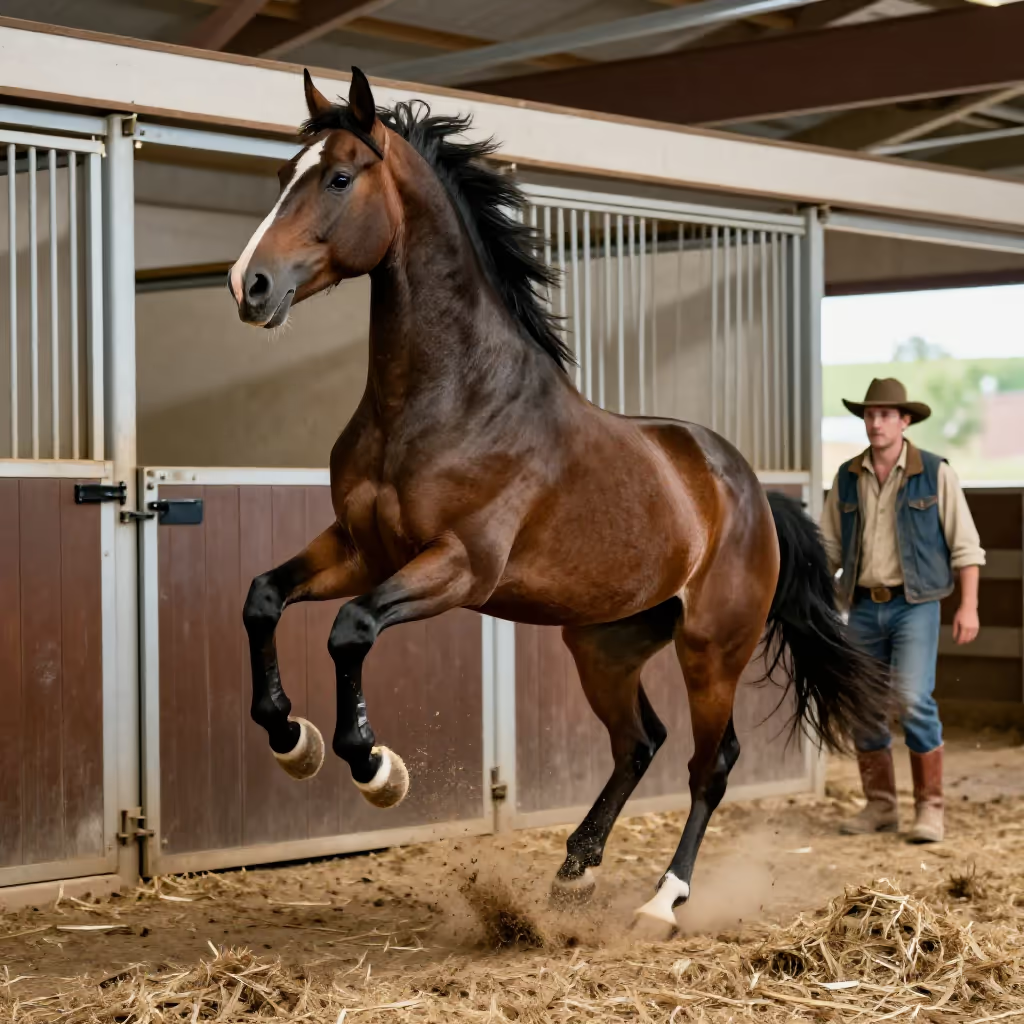
to kick out
The kicking of an animal, especially a horse, with its hind legs.
Geh nicht zu nah hinter das Pferd, es könnte ausschlagen.
Don't go too close behind the horse; it might kick out.
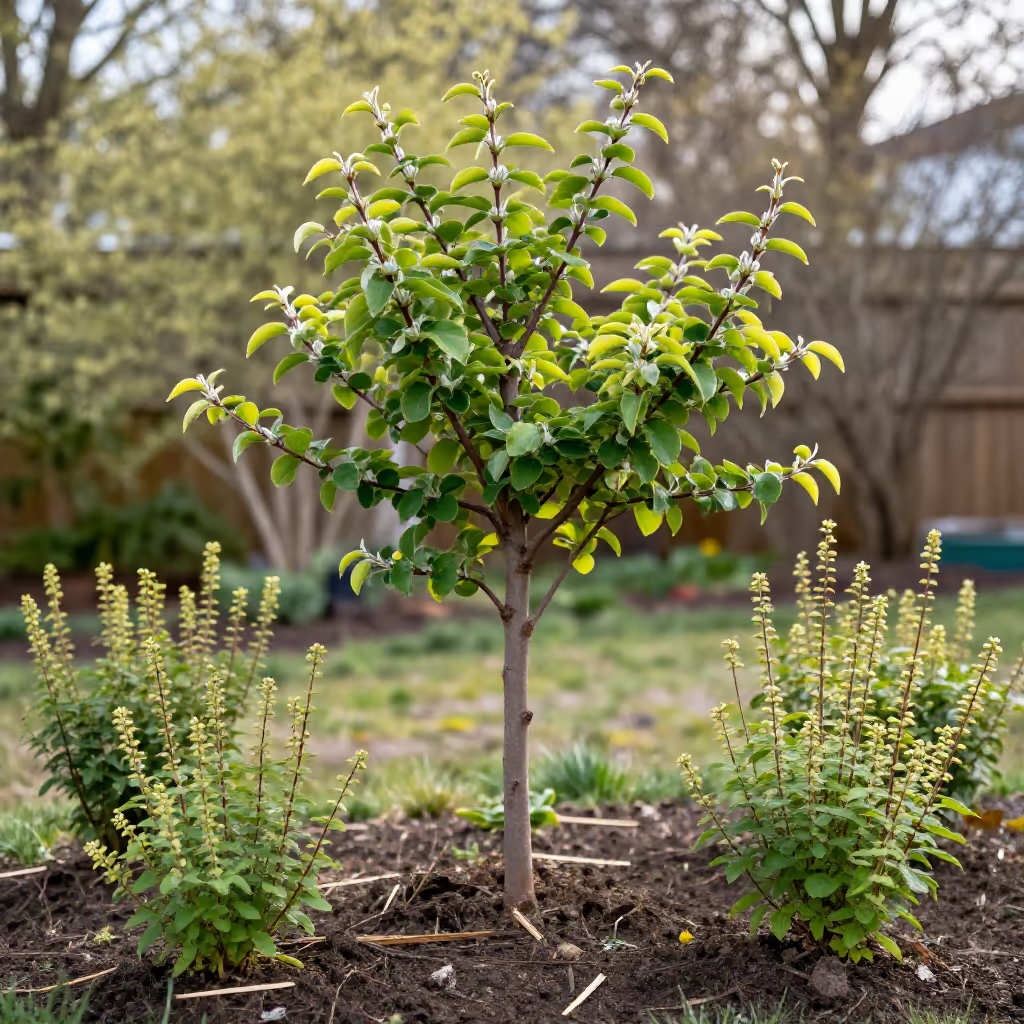
to sprout
The sprouting of new leaves or shoots on plants, especially in spring.
Nach dem langen Winter fangen die Bäume endlich wieder an auszuschlagen.
After the long winter, the trees are finally starting to sprout again.
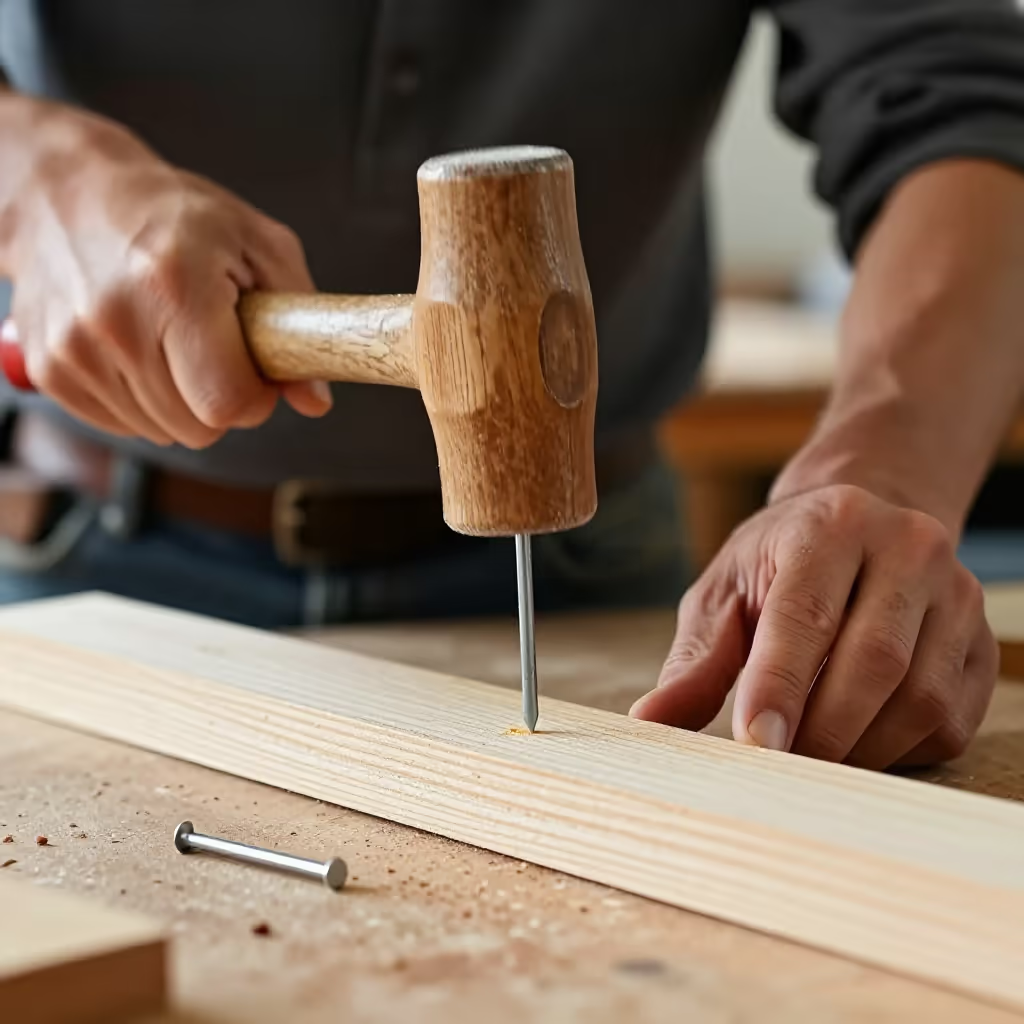
to knock out
To remove something by one or more blows, for example a tooth.
Bei dem Unfall hat er sich einen Schneidezahn ausgeschlagen.
In the accident, he knocked out one of his front teeth.
'Ausschlagen' (to turn down / kick out / sprout) is a separable verb. In a main clause, the prefix 'aus' comes at the end; in a subordinate clause, the verb stays together; and in the infinitive with 'zu', 'zu' comes between 'aus' and 'schlagen'.
Das Pferd schlug plötzlich aus.
The horse suddenly kicked out.
The verb consists of the prefix 'aus-' and the verb 'schlagen' (to hit/strike). The basic meaning of 'schlagen' (to make a quick, forceful movement) is directed in different ways by 'aus-' (out, outward).
Im Frühling schlagen die Bäume wieder aus.
In spring, the trees sprout again.
When someone knocks something out of their own body (e.g. a tooth), a reflexive construction with the dative is used. The person to whom something happens is in the dative.
Er hat sich beim Sturz einen Zahn ausgeschlagen.
He knocked out a tooth in the fall.
In the meaning 'ablehnen' (to reject/turn down), 'ausschlagen' (to turn down) is often combined with things that are offered to you. Typical are: 'ein Angebot' (an offer), 'eine Einladung' (an invitation), 'eine Warnung' (a warning), or 'ein Erbe ausschlagen' (to disclaim/turn down an inheritance).
Er hat die Warnungen seiner Freunde einfach ausgeschlagen.
He simply ignored his friends' warnings.
You can recognize this meaning from the context of measuring devices. Words like 'Zeiger' (needle/pointer), 'Skala' (scale), 'Messgerät' (measuring device), or names of devices, e.g. 'EKG' (ECG) or 'Seismograph' (seismograph), clearly point to this usage.
Der Geigerzähler schlug in der Nähe des alten Labors aus.
The Geiger counter deflected near the old laboratory.
When 'ausschlagen' is used in connection with the body, it usually describes the sudden appearance of a skin rash. Here the verb is used without an object.
Meine Haut schlägt bei dieser Seife immer aus.
My skin always breaks out from this soap.
In this meaning, 'ausschlagen' (to kick out) is used almost exclusively for animals that kick with their hind legs. So the context is always an animal, usually a horse, donkey, or mule.
Der Esel schlug aus, als der Hund zu nahe kam.
The donkey kicked out when the dog came too close.
This meaning is typical of botany and nature. When the context is plants, trees, or buds growing in spring, this verb is appropriate.
Die Knospen an den Zweigen beginnen auszuschlagen.
The buds on the branches are beginning to sprout.
to step / kick
Both words can describe a movement made with an animal's foot. Treten is the general term for kicking with the foot, while ausschlagen specifically refers to an animal, especially a horse, kicking forcefully with its hind legs. Use ausschlagen when this typical movement of a horse is meant; otherwise, treten is often appropriate.

Das Pferd kann ausschlagen, wenn jemand hinter ihm steht.
The horse may kick out when someone is standing behind it.
Das Pferd kann treten, wenn es sich erschreckt.
The horse may kick when it is startled.