

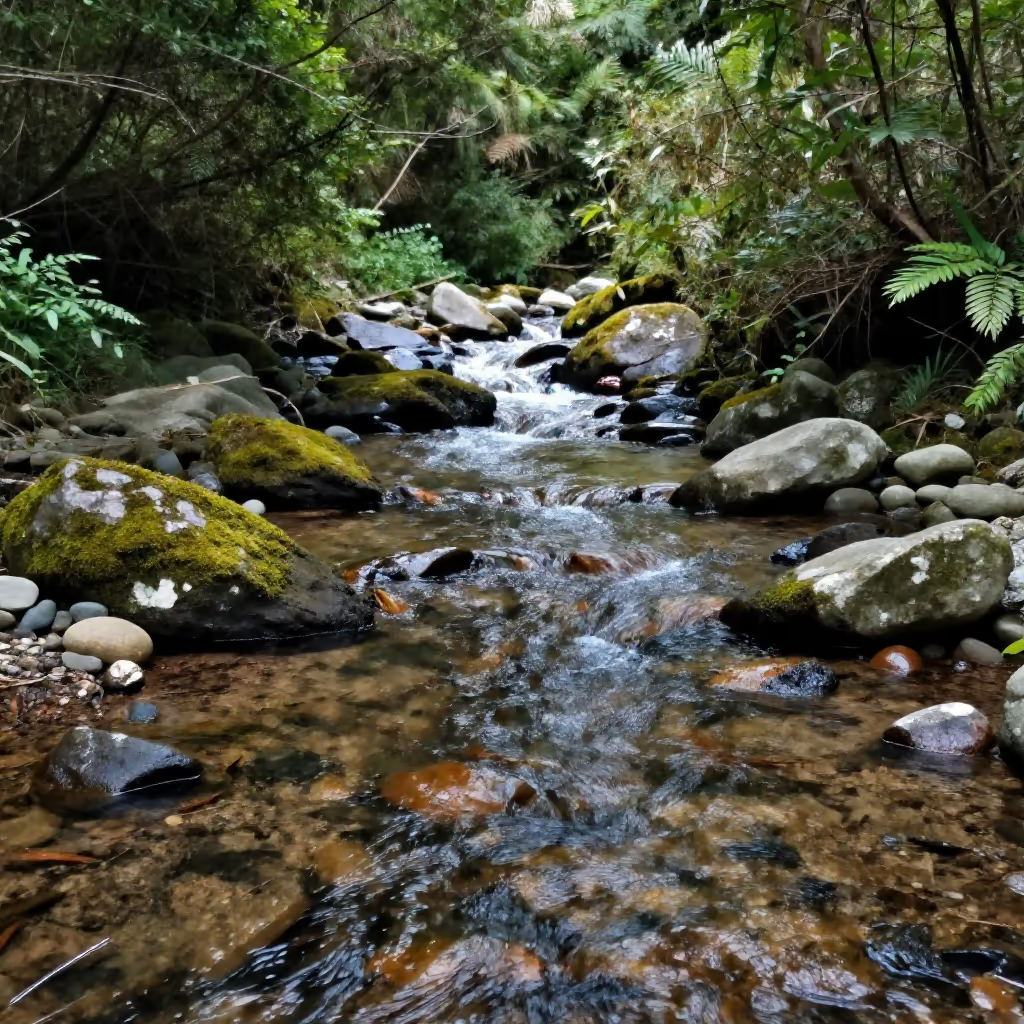
der Bach
stream
A small flowing body of water, smaller than a river.
EXAMPLE
Hinter unserem Garten fließt ein kleiner Bach.
A small stream flows behind our garden.
stream
Loading your saved state.
stream
A small flowing body of water, smaller than a river.
Hinter unserem Garten fließt ein kleiner Bach.
A small stream flows behind our garden.

to go down the drain
An idiom meaning that something fails, is ruined, or deteriorates badly.
Seit dem Weggang des alten Chefs geht die ganze Firma den Bach runter.
Since the old boss left, the whole company has been going down the drain.
The idiom 'den Bach runtergehen' (to go down the drain) is a fixed unit. The subject is the thing that fails or is ruined. Only the verb 'gehen' (to go) is conjugated.
Ohne gute Planung wird unser Projekt den Bach runtergehen.
Without good planning, our project will go down the drain.
With this word, two-way prepositions are important. 'Am Bach' (by the stream, dative) describes a position, while 'in den Bach' (into the stream, accusative) describes movement.
Die Kinder spielen am Bach.
The children are playing by the stream.
'Bach' is also the last name of the world-famous composer Johann Sebastian Bach. Although the words sound the same, the composer and the body of water have nothing to do with each other.
Ich höre gerne Musik von Bach, während ich am Bach spazieren gehe.
I like listening to music by Bach while walking along the stream.
river / flow
A Bach and a Fluss are both natural, flowing bodies of water, but they usually differ in size. A Bach is smaller, while a Fluss is considerably larger and often empties into a lake, another river, or the sea. When the boundaries are unclear, the classification is not always sharp.
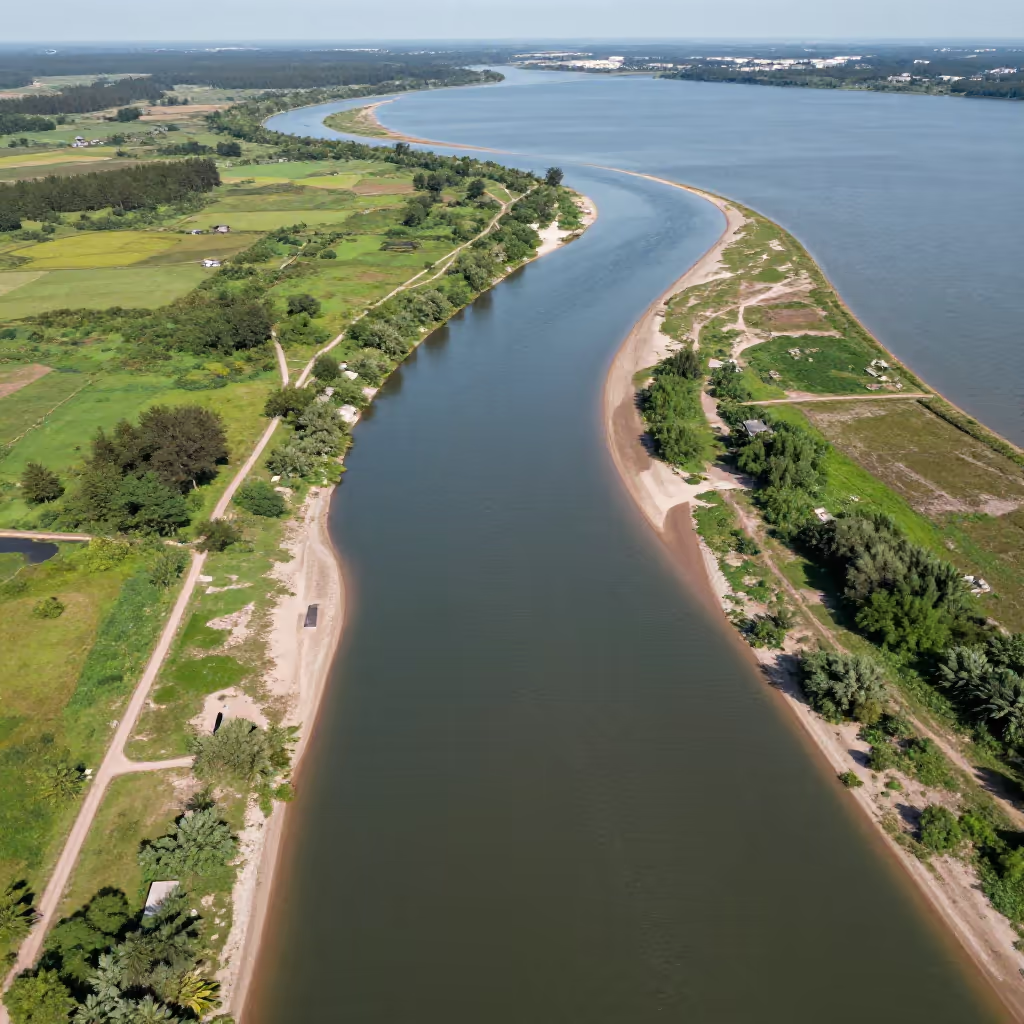
Der schmale Bach fließt durch den Wald und mündet später in den Fluss.
The narrow stream flows through the forest and later empties into the river.
Der breite Fluss führt so viel Wasser, dass er schließlich ins Meer mündet.
The broad river carries so much water that it eventually empties into the sea.