

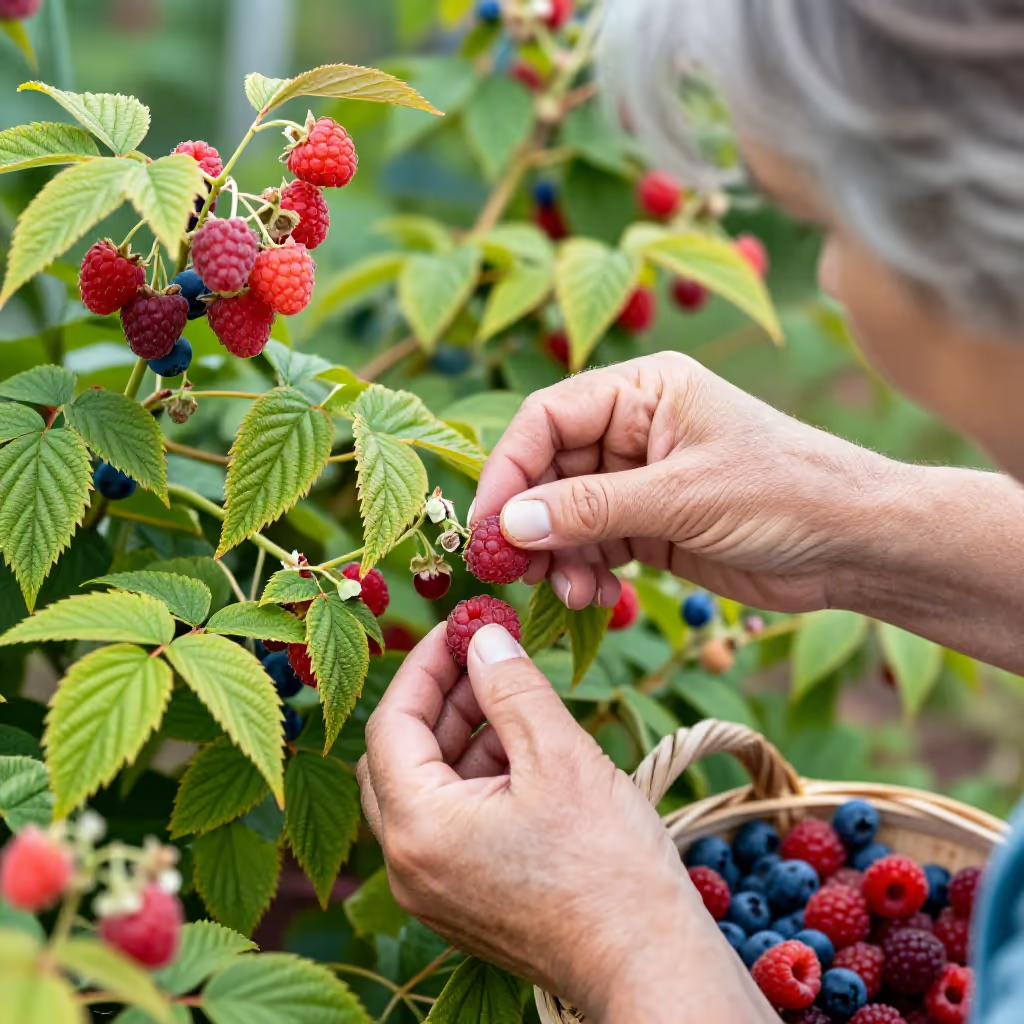
die Beere
berry
A small, usually round and juicy fruit that grows on bushes or small plants.
EXAMPLE
Im Sommer esse ich am liebsten frische Beeren direkt vom Strauch.
In summer, I like eating fresh berries straight from the bush best.
berry
Loading your saved state.
berry
A small, usually round and juicy fruit that grows on bushes or small plants.
Im Sommer esse ich am liebsten frische Beeren direkt vom Strauch.
In summer, I like eating fresh berries straight from the bush best.
berry
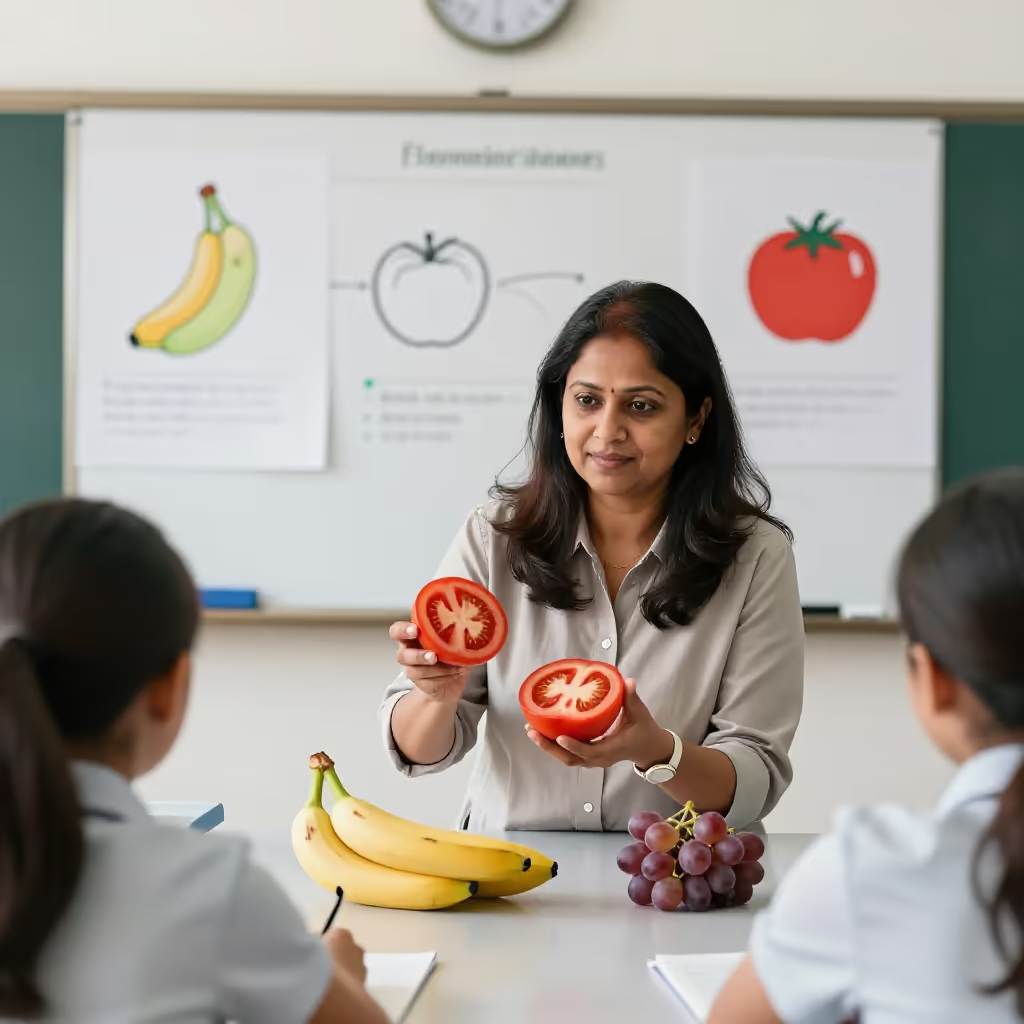
In botany, a type of fruit in which the entire fruit wall remains juicy or fleshy even when ripe. Many fruits that are not considered berries in everyday language belong to this category botanically.
Aus botanischer Sicht ist die Tomate eine Beere, die Erdbeere jedoch nicht.
From a botanical point of view, the tomato is a berry, but the strawberry is not.
The word 'Beere' (berry) is the base word for many German fruit names. If you see '-beere' at the end of a word, it is usually a small, round fruit.
Meine Lieblingsfrüchte sind Erdbeeren und Himbeeren.
My favorite fruits are strawberries and raspberries.
In everyday language, 'Beere' is often combined with verbs of collecting and eating. Typical phrases are 'Beeren pflücken' (to pick berries), 'Beeren sammeln' (to collect berries), or 'frische Beeren genießen' (to enjoy fresh berries).
Im Sommer gehen wir oft in den Wald, um Beeren zu pflücken.
In summer, we often go into the forest to pick berries.
You can recognize the botanical meaning from a scientific or very specific context. Words like 'botanisch' (botanical), 'Fruchtform' (fruit type), or the mention of fruits that people do not normally call berries are clear signals.
Botanisch gesehen ist auch die Gurke eine Beere.
Botanically speaking, the cucumber is also a berry.
The botanical definition of 'Beere' (berry) is used almost exclusively in the technical language of biology and horticulture.
In diesem Fachbuch wird die Banane als Beere klassifiziert.
In this specialist book, the banana is classified as a berry.
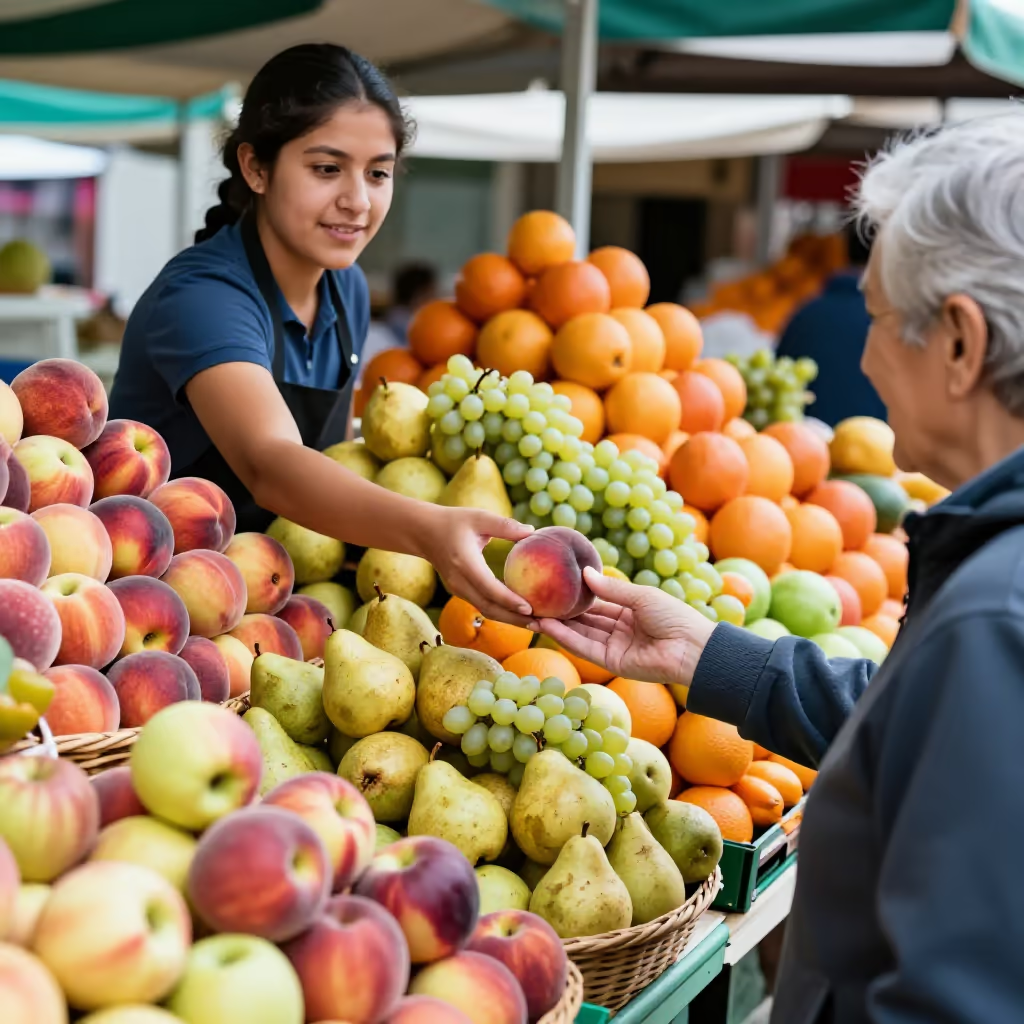
fruit
Frucht is the general term for an edible part of a plant that develops from a flower. Beere refers more specifically to a small, usually round and juicy fruit. So Frucht is the appropriate term for a mango, while Beere is the appropriate term for a raspberry.
Für den Obstsalat nimmt Mia eine kleine saftige Beere, nämlich eine Himbeere.
For the fruit salad, Mia uses a small, juicy berry, namely a raspberry.
Für den Obstsalat schneidet Mia eine große süße Frucht, nämlich eine Mango.
For the fruit salad, Mia cuts up a large, sweet piece of fruit, namely a mango.