

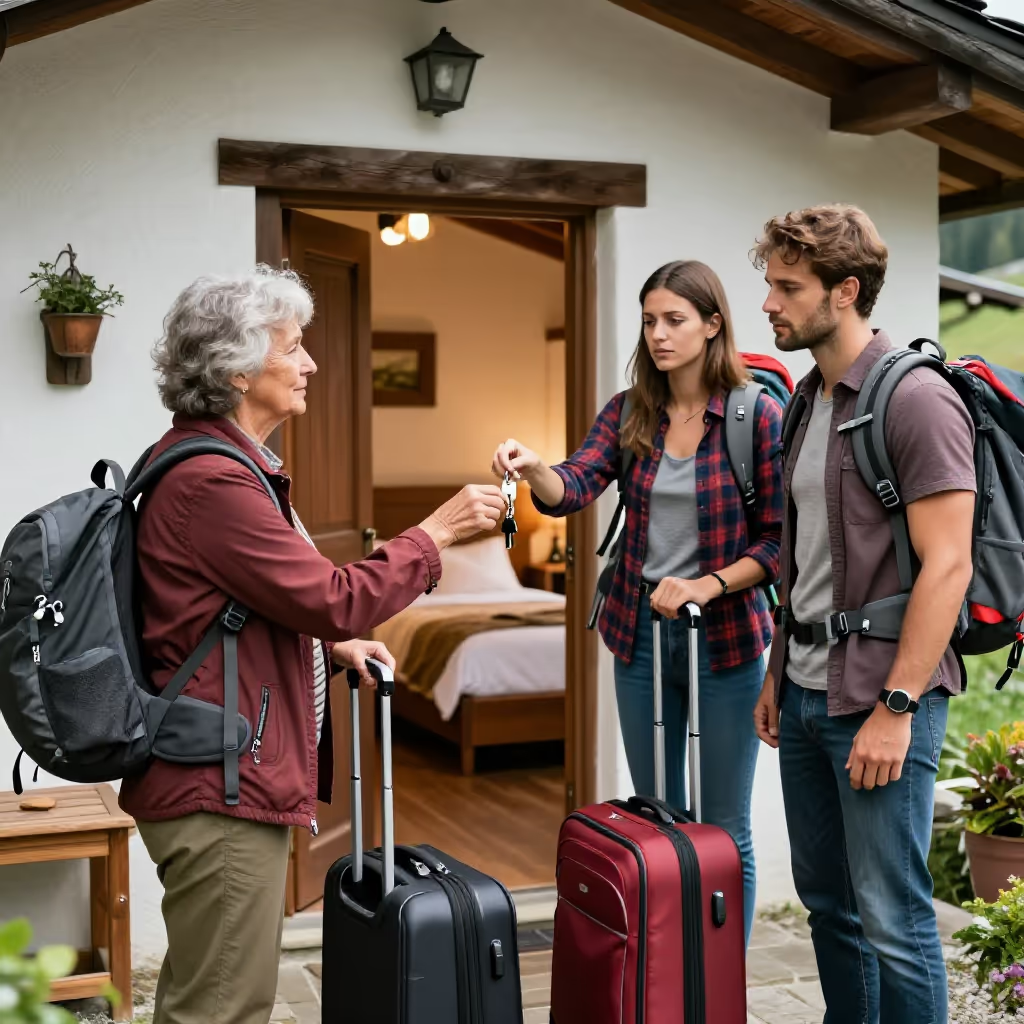
beherbergen
to accommodate
To give someone lodging or a place to sleep, usually for a limited time.
EXAMPLE
Das Hotel kann bis zu 200 Gäste beherbergen.
The hotel can accommodate up to 200 guests.
to accommodate / house
Loading your saved state.
to accommodate
To give someone lodging or a place to sleep, usually for a limited time.
Das Hotel kann bis zu 200 Gäste beherbergen.
The hotel can accommodate up to 200 guests.

to house
In a figurative sense, to carry or contain something within itself. This can refer to feelings, ideas, or also physical objects in a larger context.
Das Museum beherbergt eine beeindruckende Sammlung moderner Kunst.
The museum houses an impressive collection of modern art.
The verb comes from the noun 'die Herberge' (a simple lodging). The prefix 'be-' turns it into a transitive verb meaning to give someone a 'Herberge' (lodging).
Die Familie war so freundlich, uns für eine Nacht zu beherbergen.
The family was kind enough to accommodate us for one night.
'Beherbergen' (to accommodate/house) is an inseparable verb. The prefix 'be-' remains firmly attached to the verb stem in all tenses and sentence constructions.
Das alte Schloss beherbergte früher Könige und Königinnen.
The old castle used to accommodate kings and queens.
'Beherbergen' (to accommodate/house) belongs more to elevated or written language. It sounds more formal and detached than other expressions for providing accommodation.
Die Stadt wird während der Konferenz Tausende von Besuchern beherbergen.
The city will accommodate thousands of visitors during the conference.
The meaning is easy to recognize from the object. If the verb refers to people or living beings, it is about accommodation. If it refers to things, ideas, or feelings, it means 'enthalten' (to contain) or 'in sich tragen' (to carry within itself).
Wir können leider keine weiteren Gäste beherbergen.
Unfortunately, we cannot accommodate any more guests.
to record / take in
Aufnehmen and beherbergen can both mean that someone is allowed to stay temporarily. Aufnehmen places more emphasis on accepting the person into one’s home and providing a place for them to stay; beherbergen primarily refers to providing accommodation or a place to sleep.

Während der Reparatur beherbergte die Familie ihre Nachbarin für zwei Nächte.
While their home was being repaired, the family housed their neighbor for two nights.
Nach dem Brand nahm die Familie ihre Nachbarin bei sich auf.
After the fire, the family took their neighbor in.