

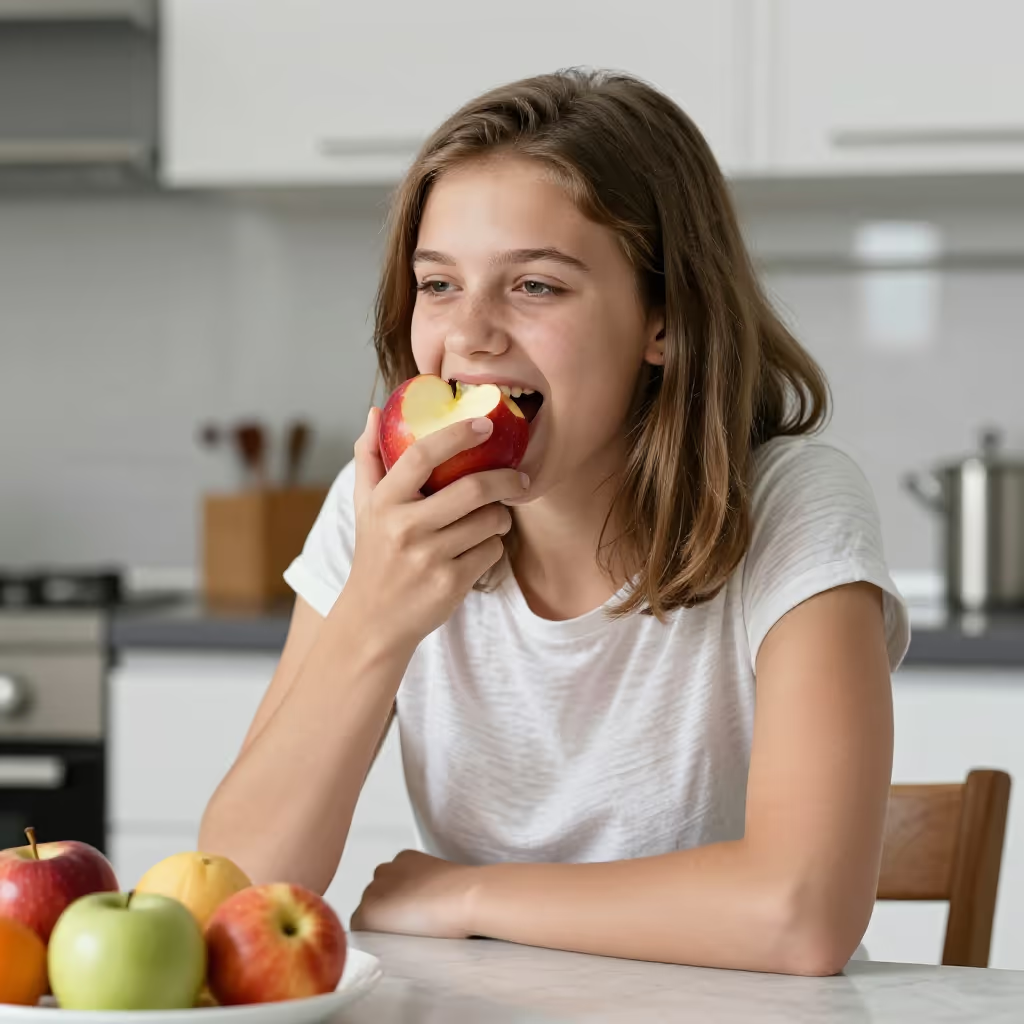
beißen
bite
To cut into something with the teeth, bite through it, or bite off a piece of it.
EXAMPLE
Der Hund hat den Postboten ins Bein gebissen.
The dog bit the mailman in the leg.
to bite
Loading your saved state.
bite
To cut into something with the teeth, bite through it, or bite off a piece of it.
Der Hund hat den Postboten ins Bein gebissen.
The dog bit the mailman in the leg.

sting / burn
To cause a stinging, burning, or sharp sensation. Used for insects, spicy food, smoke in the eyes, or cold.
Der scharfe Senf beißt richtig in der Nase.
The strong mustard really burns in your nose.

clash
(Reflexive) Not to go together, to clash with each other. Used mainly for colors and patterns.
Das grelle Grün und das leuchtende Orange beißen sich.
The bright green and the vivid orange clash.

grit one's teeth
To endure pain or an unpleasant situation without complaining; to pull oneself together.
Obwohl sein Knöchel schmerzte, biss er auf die Zähne und lief das Rennen zu Ende.
Although his ankle hurt, he gritted his teeth and finished the race.

dig into something
(Reflexive, figurative) To work persistently and doggedly on a task, problem, or idea and not let go of it.
Sie hat sich an dem Problem richtig festgebissen und nach Stunden die Lösung gefunden.
She really dug into the problem and found the solution after hours.

bite the dust
(Colloquial, informal) To die.
In dem alten Westernfilm musste der Bösewicht am Ende ins Gras beißen.
In the old Western film, the villain had to bite the dust at the end.
The noun 'der Biss' (bite, e.g. a mosquito bite) and the adjective 'bissig' (snappy, biting; a dog that tends to bite) are derived from the verb 'beißen' (to bite).
Vorsicht, der Hund ist bissig!
Careful, the dog bites!
You can often recognize the literal and figurative meanings from the subject. Living beings with teeth 'beißen' literally (meaning 1), while things like smoke, cold, or spicy food 'beißen' in a figurative sense (meaning 2).
Der Rauch beißt mir in den Augen.
The smoke stings my eyes.
If you want to specify where someone is bitten, use the structure 'jemanden in + accusative beißen' (to bite someone in + body part).
Eine Wespe hat mich in den Arm gebissen.
A wasp bit me in the arm.
The reflexive form 'sich beißen' (to clash) is used almost exclusively for colors, patterns, or also styles that do not harmonize or do not go well together.
Ich finde, das Rosa und das Rot beißen sich.
I think the pink and the red clash.
The idiom 'auf die Zähne beißen' (to grit one's teeth) is a fixed unit. It means that you endure pain or difficulties without complaining.
Die Prüfung war hart, aber ich habe auf die Zähne gebissen und weitergemacht.
The exam was tough, but I gritted my teeth and kept going.
The expression 'sich an etwas festbeißen' (to dig into something) is used with the preposition 'an' and the dative. It means that you deal with a topic very intensively and persistently.
Der Detektiv hat sich an diesem Fall richtig festgebissen.
The detective really dug into this case.
The idiom 'ins Gras beißen' (to bite the dust) is very colloquial and informal for 'sterben' (to die). You should only use it in informal contexts.
Im Computerspiel beißt dein Charakter ins Gras, wenn er keine Lebenspunkte mehr hat.
In the computer game, your character bites the dust when they have no health points left.
to burn
Brennen and beißen can both express an unpleasant sensation caused by smoke or spicy food. Brennen tends to emphasize a hot or ongoing feeling, while beißen emphasizes a sharp, irritating effect. With smoke in the eyes, both words are possible, depending on which impression is in the foreground.

Der Rauch beißt in meinen Augen, seit das Feuer größer geworden ist.
The smoke has been stinging my eyes since the fire grew larger.
Der Rauch brennt in meinen Augen, seit das Feuer größer geworden ist.
The smoke has been burning my eyes since the fire grew larger.