

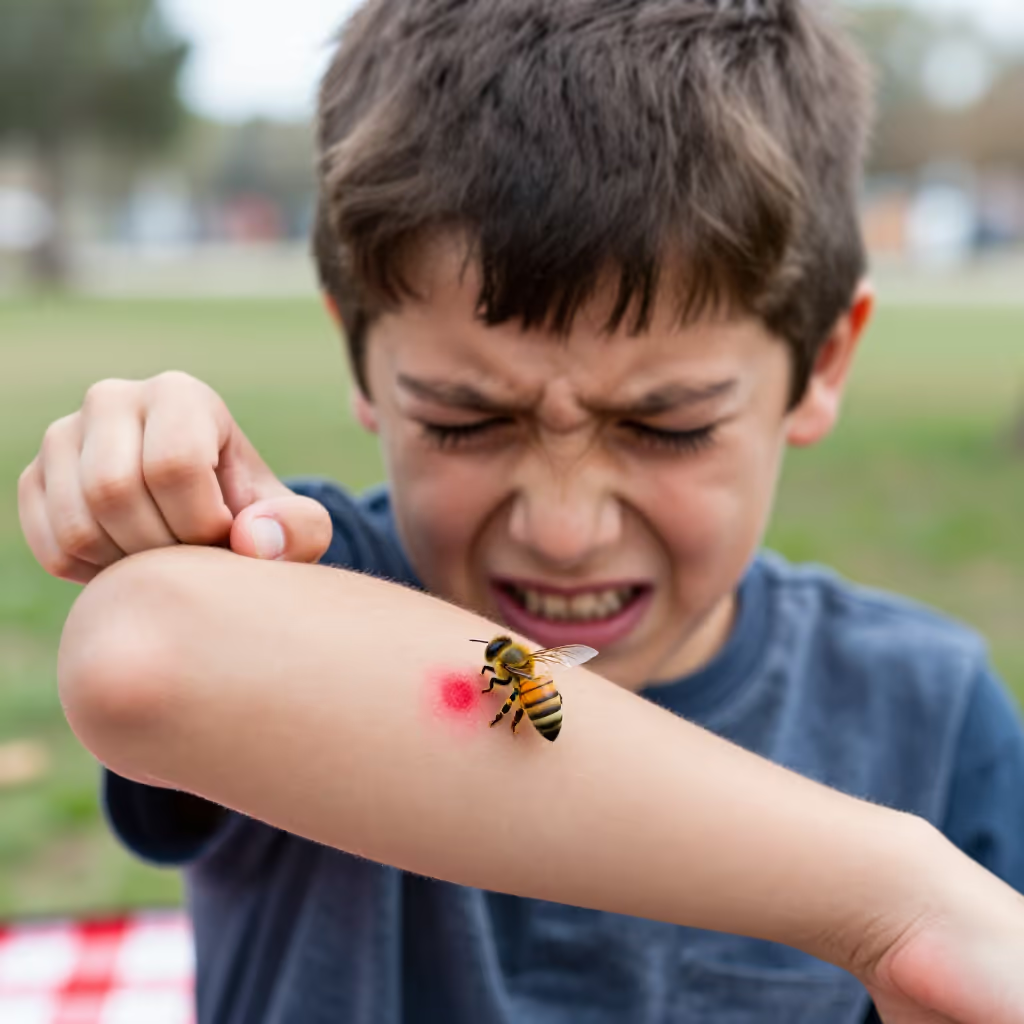
stechen
to sting / prick
To penetrate something with a pointed object, such as a needle or an insect stinger, often causing a small wound or pain.
EXAMPLE
Die Biene hat mich in den Arm gestochen.
The bee stung me in the arm.
to sting / stab
Loading your saved state.
to sting / prick
To penetrate something with a pointed object, such as a needle or an insect stinger, often causing a small wound or pain.
Die Biene hat mich in den Arm gestochen.
The bee stung me in the arm.

to stab / hurt sharply
To cause a sharp, sudden pain.
Beim schnellen Laufen sticht es mir manchmal in der Seite.
When I run fast, I sometimes get a stabbing pain in my side.

to be intense
To make itself felt intensely and unpleasantly, especially with sun or smell.
Die Mittagssonne sticht heute unbarmherzig vom Himmel.
The midday sun is beating down mercilessly from the sky today.

to trump
In a card game, to beat an already played card with a higher-ranking card in order to win the trick.
Er konnte meine Dame mit dem König stechen.
He was able to trump my queen with the king.
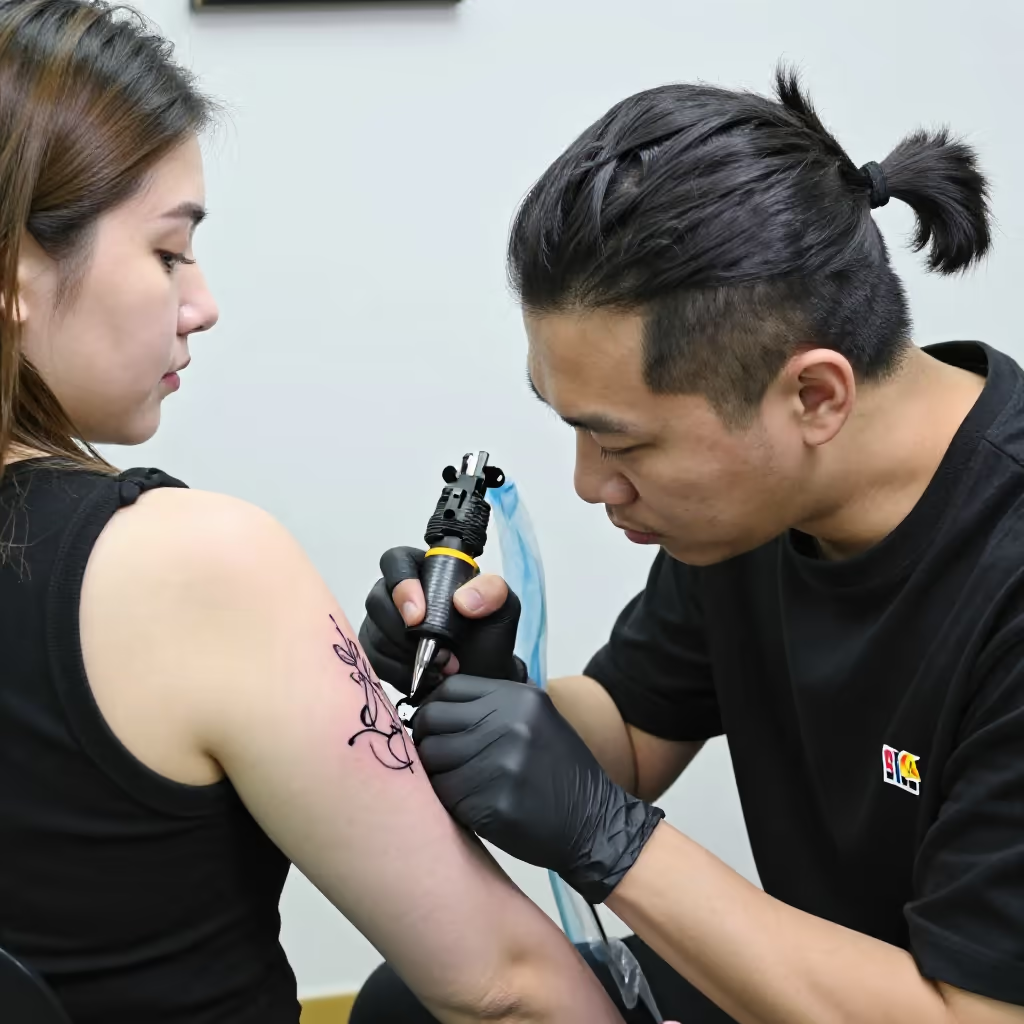
to tattoo / pierce
To put a tattoo or piercing into the skin.
Sie hat sich einen kleinen Anker auf die Schulter stechen lassen.
She had a small anchor tattooed on her shoulder.

to cut / harvest
To lift or cut certain foods or raw materials out of the ground with a special tool.
Im Frühling wird auf den Feldern der erste Spargel gestochen.
In spring, the first asparagus is harvested in the fields.
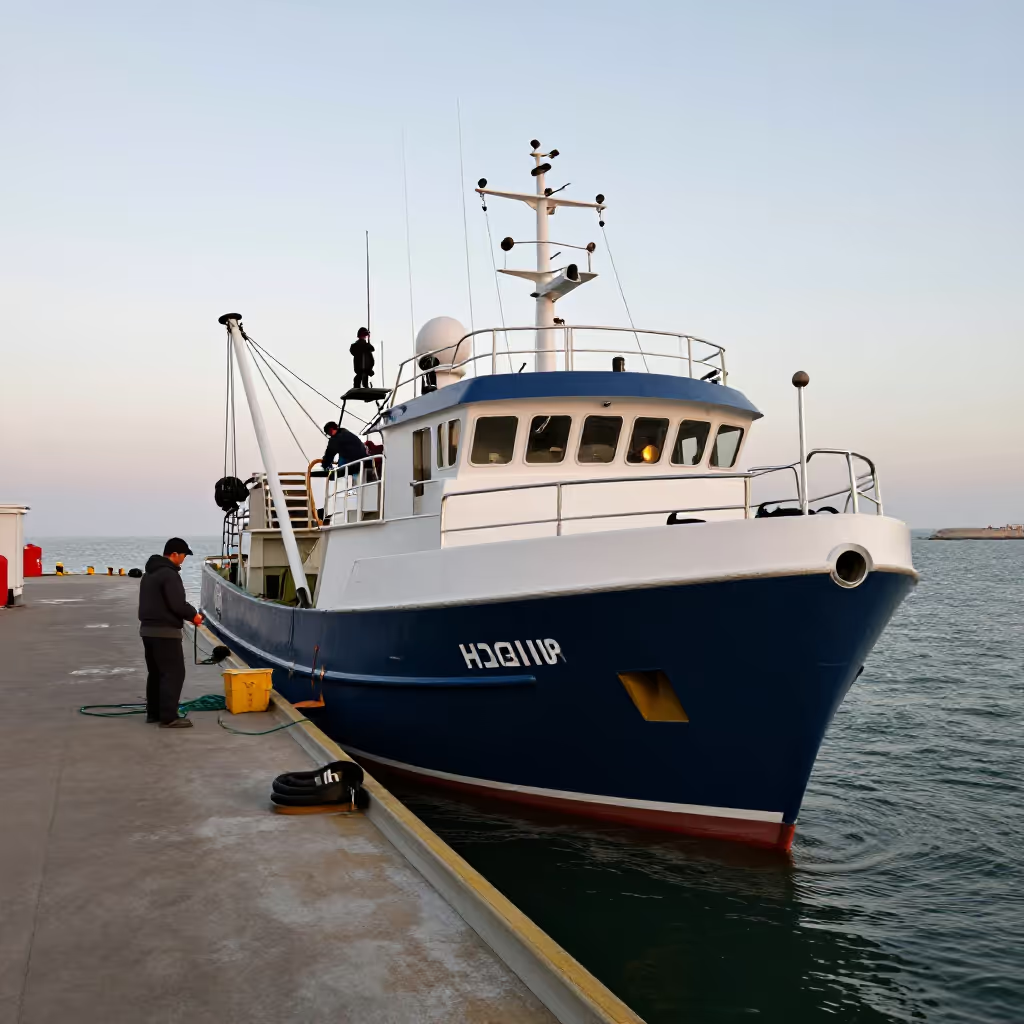
to set sail
To begin a journey by ship on the sea; to depart.
Das Kreuzfahrtschiff wird heute Abend in See stechen.
The cruise ship will set sail this evening.
You can recognize the meaning of 'stechen' from the subject: An insect 'sticht' (stings/causes a wound), the sun 'sticht' (is intense), 'es sticht' (there is a stabbing pain), and a ship 'sticht in See' (sets sail).
Achtung, eine Wespe sticht dich gleich!
Careful, a wasp is about to sting you!
When an insect or a person stings or pricks someone, the affected body part is given with the preposition 'in' and the accusative.
Der Arzt stach die Nadel in den Arm des Patienten.
The doctor stuck the needle into the patient's arm.
To describe a sudden, stabbing pain, you use the impersonal construction 'Es sticht' + dative (person) + 'in' + dative (body region).
Beim Treppensteigen sticht es mir im Knie.
When I climb stairs, I get a stabbing pain in my knee.
In this meaning, 'stechen' is used for intense, often unpleasant impressions such as sun, smell, or even a color. Here the verb is used without an object.
Der Geruch von altem Fisch stach in der Nase.
The smell of old fish stung the nose.
In the context of card games, 'stechen' means to beat a card with a higher-ranking card. The structure is: 'jemandes Karte mit einer anderen Karte stechen' (to trump someone's card with another card).
Ich konnte seinen König mit meinem Ass stechen.
I was able to trump his king with my ace.
When someone has a tattoo or piercing done, you use the construction 'sich (dative) etwas (accusative) stechen lassen' (to have something tattooed/pierced). The verb 'lassen' (to let/have something done) is crucial here.
Er hat sich einen Drachen auf den Rücken stechen lassen.
He had a dragon tattooed on his back.
In agriculture or horticulture, 'stechen' is used for harvesting certain plants or materials. Typical objects are 'Spargel' (asparagus) or 'Torf' (peat).
Die Bauern stechen den ersten Spargel im April.
The farmers harvest the first asparagus in April.
The idiom 'in See stechen' is a fixed unit and means that a ship begins its journey at sea. The verb 'stechen' is not used on its own here.
Der Kapitän gab den Befehl, in See zu stechen.
The captain gave the order to set sail.
to hit / beat
In a card game, „schlagen“ can generally mean that one card beats another. „Stechen“ more specifically means beating a card that has already been played in order to win the trick. Use „stechen“ when winning the trick is the focus; otherwise, „schlagen“ is more general.

Mit dem Kreuz-Ass konnte sie die ausgespielte Karte stechen und den Stich gewinnen.
She was able to trump the card that had been played with the ace of clubs and win the trick.
Mit dem Kreuz-Ass konnte sie die ausgespielte Karte schlagen.
She was able to beat the card that had been played with the ace of clubs.