

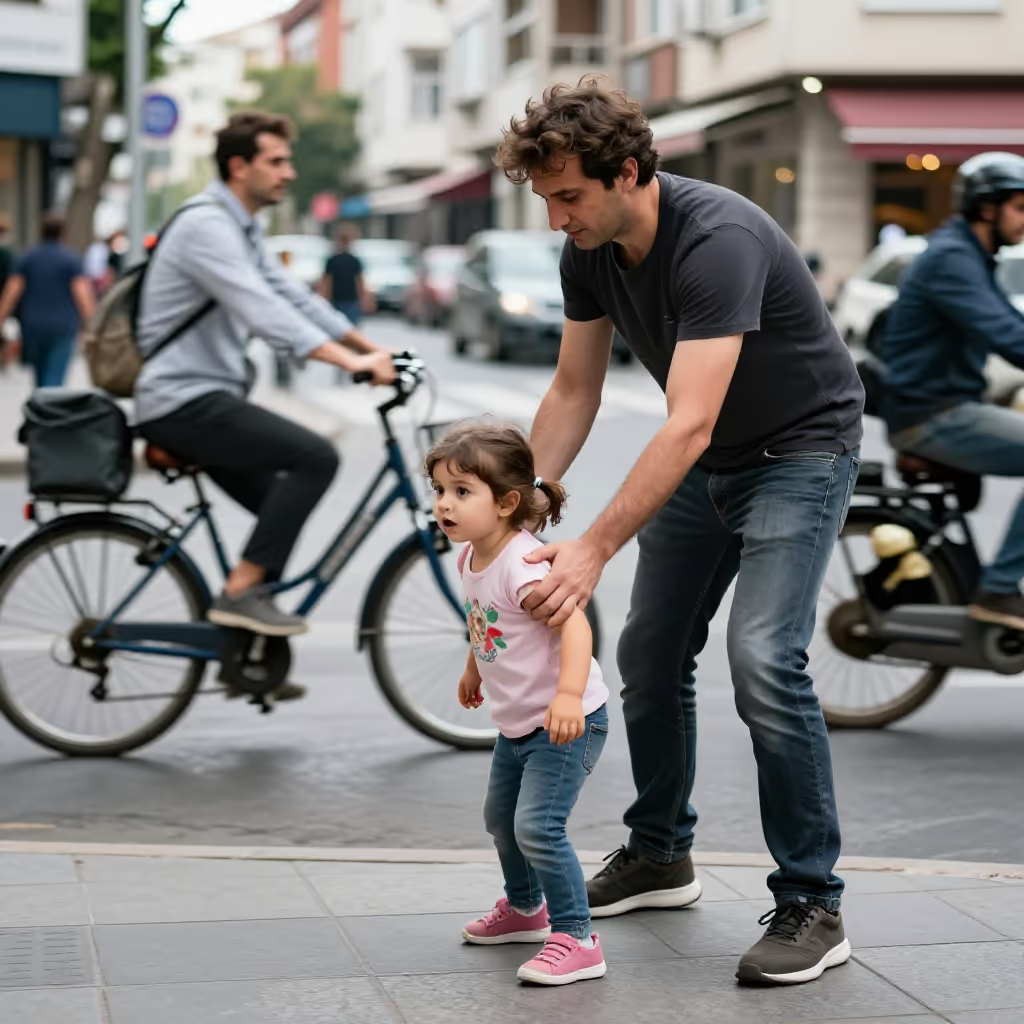
beschützen
to protect
To keep someone or something safe from danger, harm, or a negative influence and look after their safety.
EXAMPLE
Die Eltern beschützen ihre Kinder vor allen Gefahren.
The parents protect their children from all dangers.
to protect
Loading your saved state.
to protect
To keep someone or something safe from danger, harm, or a negative influence and look after their safety.
Die Eltern beschützen ihre Kinder vor allen Gefahren.
The parents protect their children from all dangers.
The verb 'beschützen' (to protect) has the prefix 'be-' and is inseparable. The prefix stays firmly attached to the verb in all sentence forms and is not placed at the end of the sentence.
Ein guter Mantel beschützt dich vor der Kälte.
A good coat protects you from the cold.
To name the danger or negative influence from which something is being protected, you use the preposition 'vor' (from/before) followed by the dative. The structure is: jemanden/etwas (accusative) vor jemandem/etwas (dative) beschützen.
Die Sonnencreme soll die Haut vor der Sonne beschützen.
The sunscreen is meant to protect the skin from the sun.
'Beschützen' (to protect) is often used in contexts involving safety and care. Typical objects are people (children, family), animals, or valuable things (property, the environment, data).
Es ist unsere Pflicht, die Umwelt zu beschützen.
It is our duty to protect the environment.
to protect
Schützen and beschützen both mean keeping someone safe from danger or harm. Schützen is the broader and usually neutral term for a protective measure, while beschützen expresses more personal, immediate care. Schützen fits rules, devices, or general measures; with personal care, beschützen may express the more appropriate nuance.
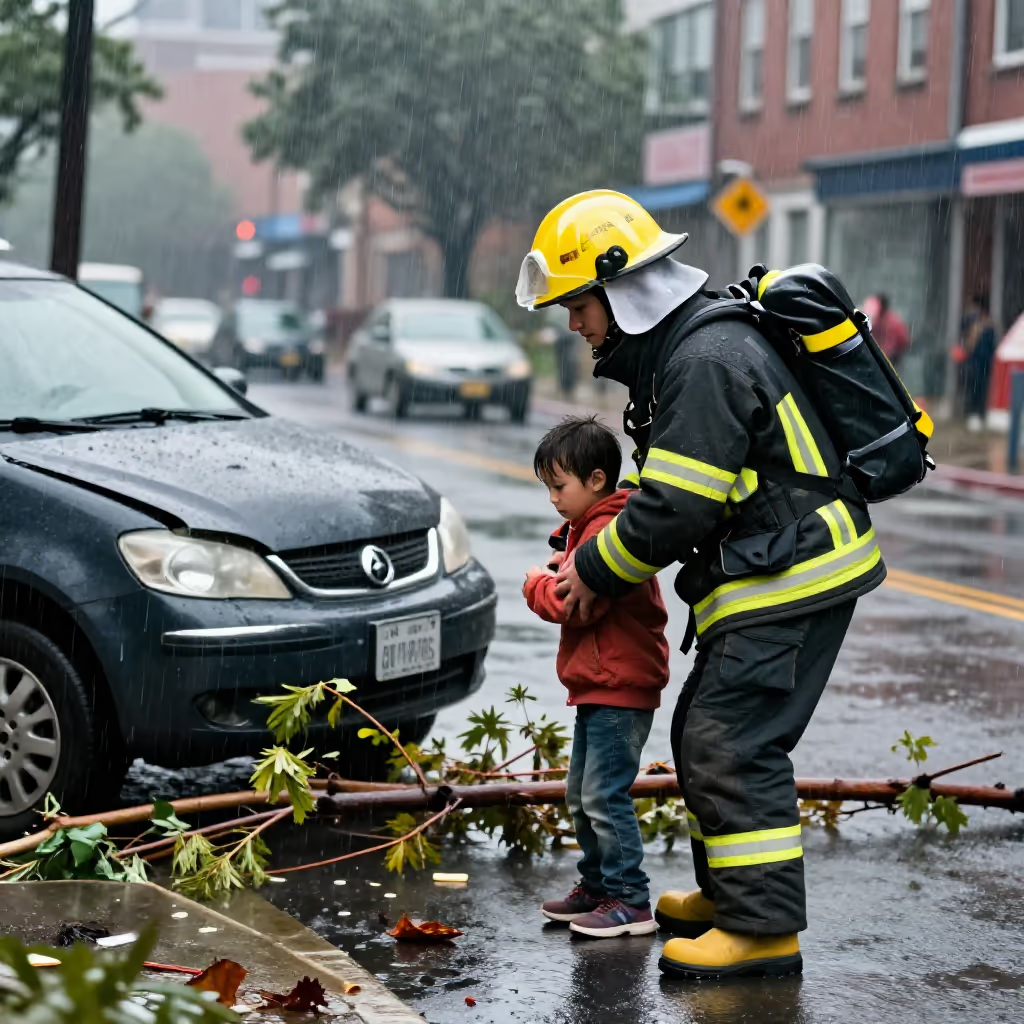
Die Mutter beschützt ihr Kind auf dem gefährlichen Weg.
The mother protects her child on the dangerous journey.
Die Sicherheitsregeln schützen alle Kinder vor Verletzungen.
The safety rules protect all the children from injuries.