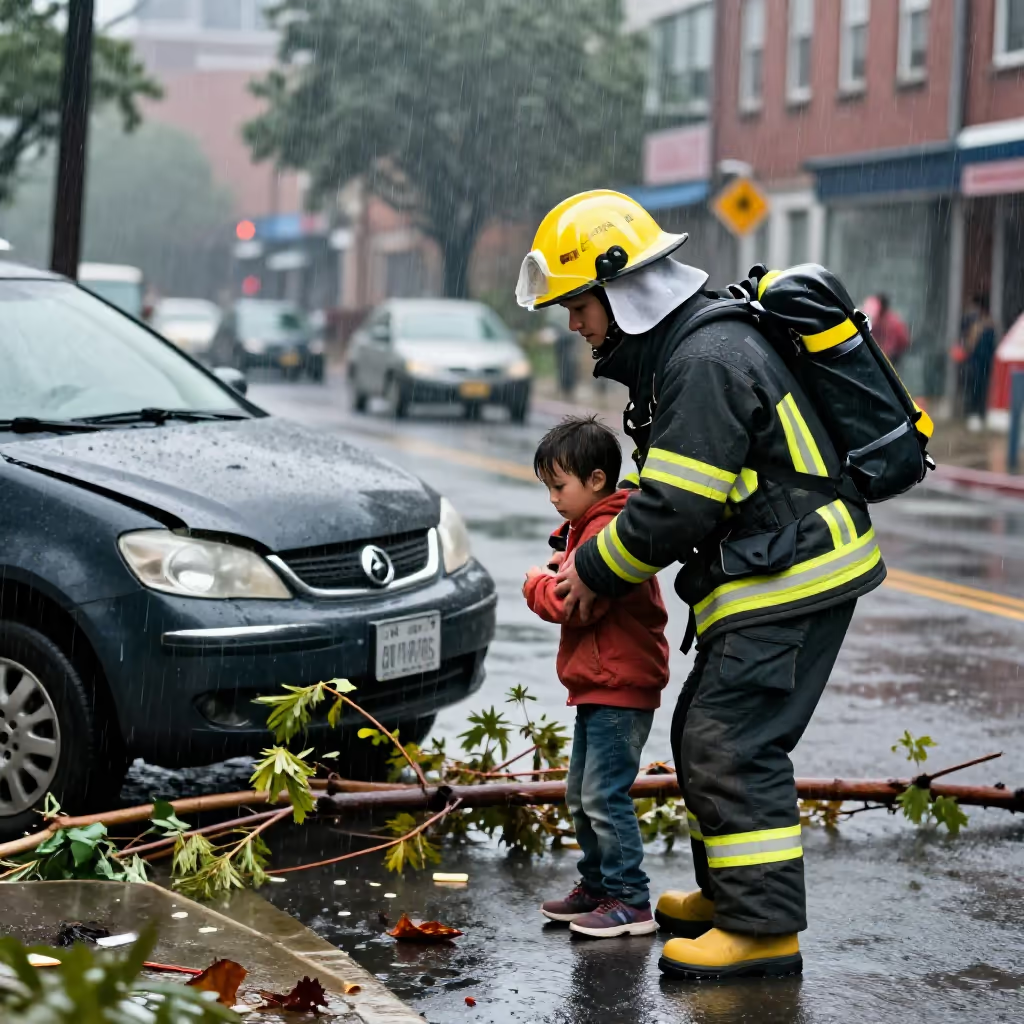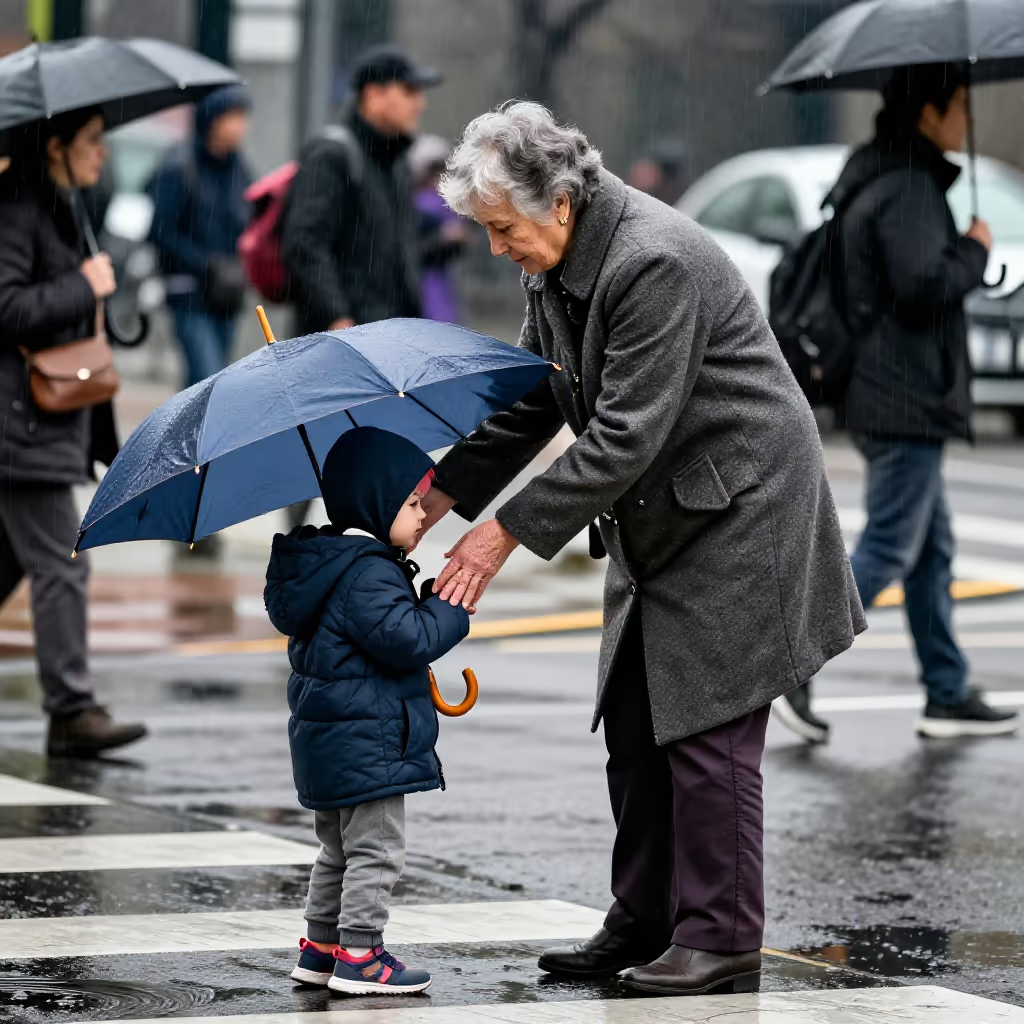
To protect and preserve someone or something from harm, danger, or negative influences. It often has a caring or elevated connotation.
example
Die Eltern versuchten, ihre Kinder vor allen Gefahren zu behüten.
The parents tried to protect their children from all dangers.

Usage tips
Inseparable verb
'Behüten' (to protect) is an inseparable verb because it begins with the prefix 'be-'. The prefix remains firmly attached to the verb 'hüten' in all sentence forms and tenses.
EXAMPLE
Er hat seine Familie immer gut behütet.
He always protected his family well.
Word family
The verb 'behüten' (to protect) is related to 'der Hut' (hat) and the verb 'hüten' (to guard, as a shepherd guards his sheep). All these words share the basic idea of protecting and preserving.
EXAMPLE
Ein guter Hirte hütet seine Herde vor Wölfen.
A good shepherd guards his flock from wolves.
Use with a preposition
To name the danger someone is being protected from, German uses the preposition 'vor' with the dative. The structure is: jemanden/etwas vor etwas (Dativ) behüten (to protect someone/something from something).
EXAMPLE
Möge das Schicksal dich vor großem Unglück behüten.
May fate protect you from great misfortune.
Register and style
'Behüten' (to protect) often has an emotional, caring, or slightly formal tone. It sounds stronger and more personal than the neutral word 'schützen' (to protect).
EXAMPLE
Sie behütete das alte Fotoalbum wie einen Schatz.
She protected the old photo album like a treasure.
Fixed exclamation
The expression 'Gott behüte!' (God forbid!) is a fixed phrase. It is used as an exclamation to express the hope that something negative will not happen.
EXAMPLE
Gott behüte, dass auf der Reise etwas passiert!
God forbid anything happens on the trip!
Compare with
near_synonym
behüten vs schützen
to protect
'schützen' and 'behüten' both mean that someone or something is kept safe from danger or harm. 'schützen' is the normal, neutral word. You use it for people, animals, things, nature, or also for concrete measures. 'behüten' sounds warmer, more caring, and sometimes also solemn. It fits especially when someone lovingly watches over a person or something valuable. In everyday language, people usually say 'schützen' when practical safety is meant.
behüten
Die Großmutter behütet das Kind mit viel Liebe.
The grandmother lovingly watches over the child.
schützen
Eine Sonnencreme schützt die Haut vor starkem Licht.