

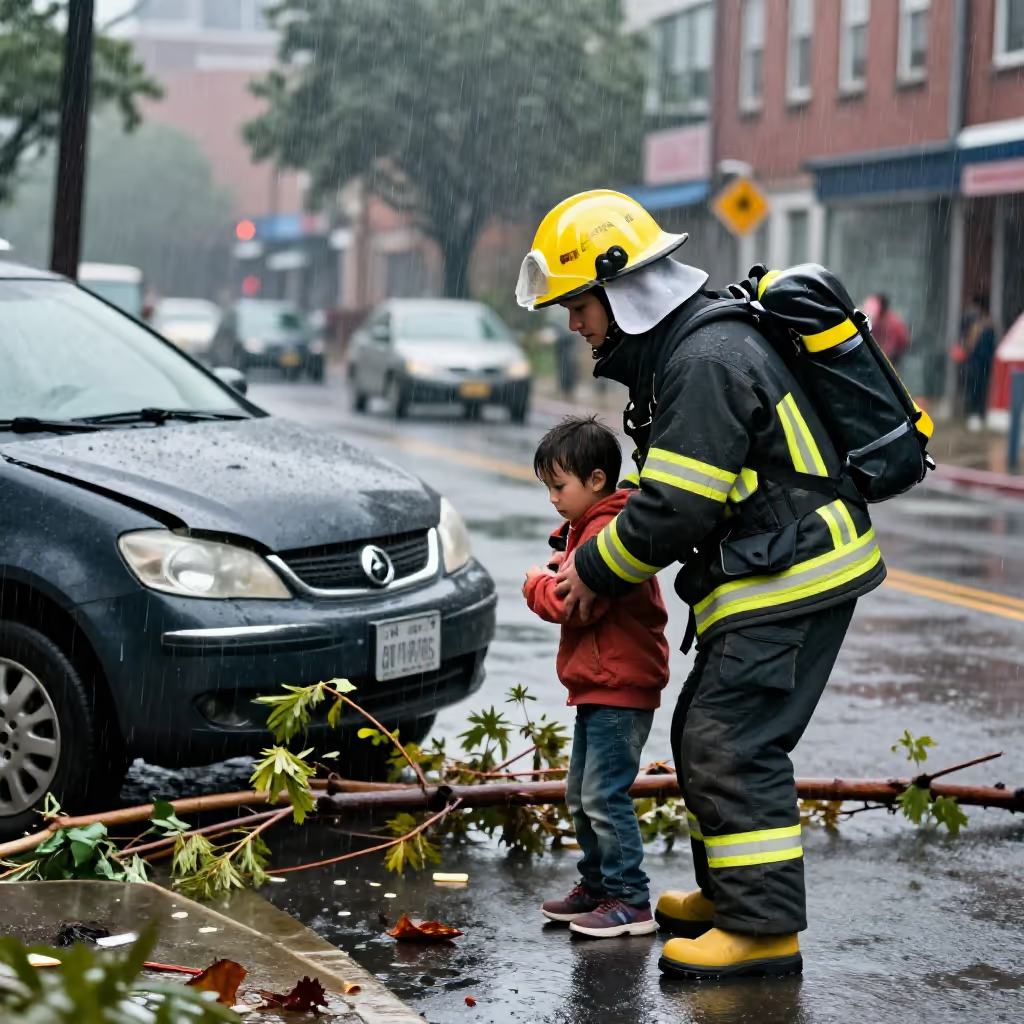
schützen vor
to protect from
To keep someone or something safe from danger, harm, or negative influences.
EXAMPLE
Diese Creme soll die Haut vor der Sonne schützen.
This cream is supposed to protect the skin from the sun.
to protect
Loading your saved state.
to protect from
To keep someone or something safe from danger, harm, or negative influences.
Diese Creme soll die Haut vor der Sonne schützen.
This cream is supposed to protect the skin from the sun.

to protect oneself
To take measures to keep oneself safe from harm or danger.
Beim Fahrradfahren sollte man sich mit einem Helm schützen.
When cycling, you should protect yourself with a helmet.
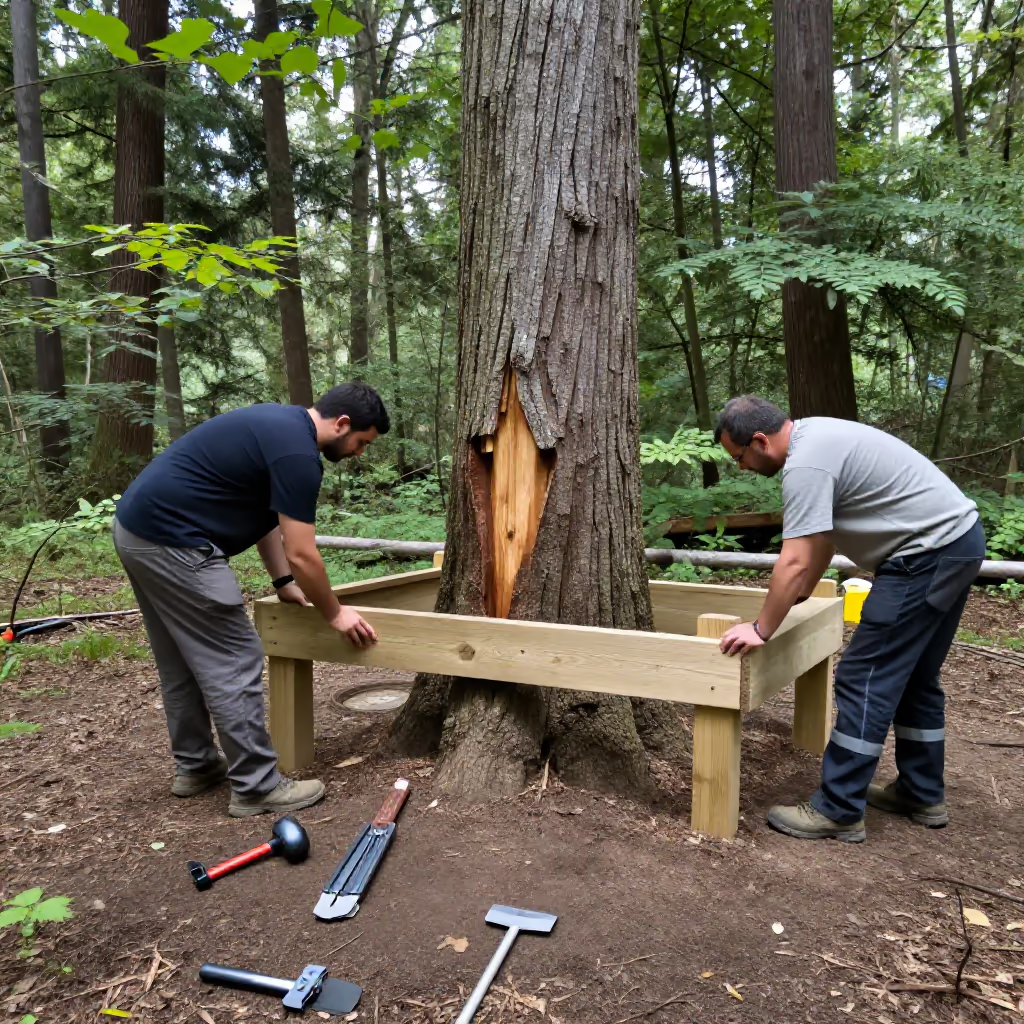
to protect
To preserve something, such as nature or a building, and protect it from destruction or decay.
Dieses Gesetz soll seltene Tierarten schützen.
This law is intended to protect rare animal species.
The verb 'schützen' (to protect) has a fixed structure: you protect someone or something (accusative) from a danger (dative). The preposition 'vor' always introduces the threat.
Ein warmer Schal schützt den Hals vor der Kälte.
A warm scarf protects the neck from the cold.
'Schützen' (to protect) belongs to a word family related to safety. The corresponding noun is 'der Schutz' (protection), and a person who protects is 'der Beschützer' (male protector) or 'die Beschützerin' (female protector).
Guter Sonnenschutz ist im Sommer sehr wichtig.
Good sun protection is very important in summer.
When a person takes measures for their own safety, the verb is used reflexively: 'sich schützen' (to protect oneself). The reflexive pronoun is in the accusative.
Du solltest dich mit Sonnencreme vor einem Sonnenbrand schützen.
You should protect yourself from sunburn with sunscreen.
In the meaning of 'preserve', 'schützen' (to protect) is often used without the preposition 'vor'. Typical objects are things that should be preserved, such as 'die Umwelt' (the environment), 'die Natur' (nature), 'Tiere' (animals), or 'Denkmäler' (monuments).
Wir müssen unsere Umwelt für zukünftige Generationen schützen.
We must protect our environment for future generations.
to receive / preserve / support
When referring to nature, buildings, or cultural assets, both words can express the goal of preventing something from being lost. „Erhalten“ emphasizes that the existing condition continues, while „schützen“ focuses more strongly on warding off destruction or decay. For the state of preservation, „erhalten“ is the better fit; for warding off a danger, use „schützen“.

Die Gemeinde will das alte Gebäude vor weiterem Verfall schützen.
The municipality wants to protect the old building from further decay.
Die Gemeinde will das alte Gebäude in seinem ursprünglichen Zustand erhalten.
The municipality wants to preserve the old building in its original condition.