


die Besetzung
cast
The group of actors who take part in a film, play, or series.
EXAMPLE
Die Besetzung des neuen James-Bond-Films wurde gestern bekannt gegeben.
The cast of the new James Bond film was announced yesterday.
cast / occupation
Loading your saved state.
cast
The group of actors who take part in a film, play, or series.
Die Besetzung des neuen James-Bond-Films wurde gestern bekannt gegeben.
The cast of the new James Bond film was announced yesterday.
occupation
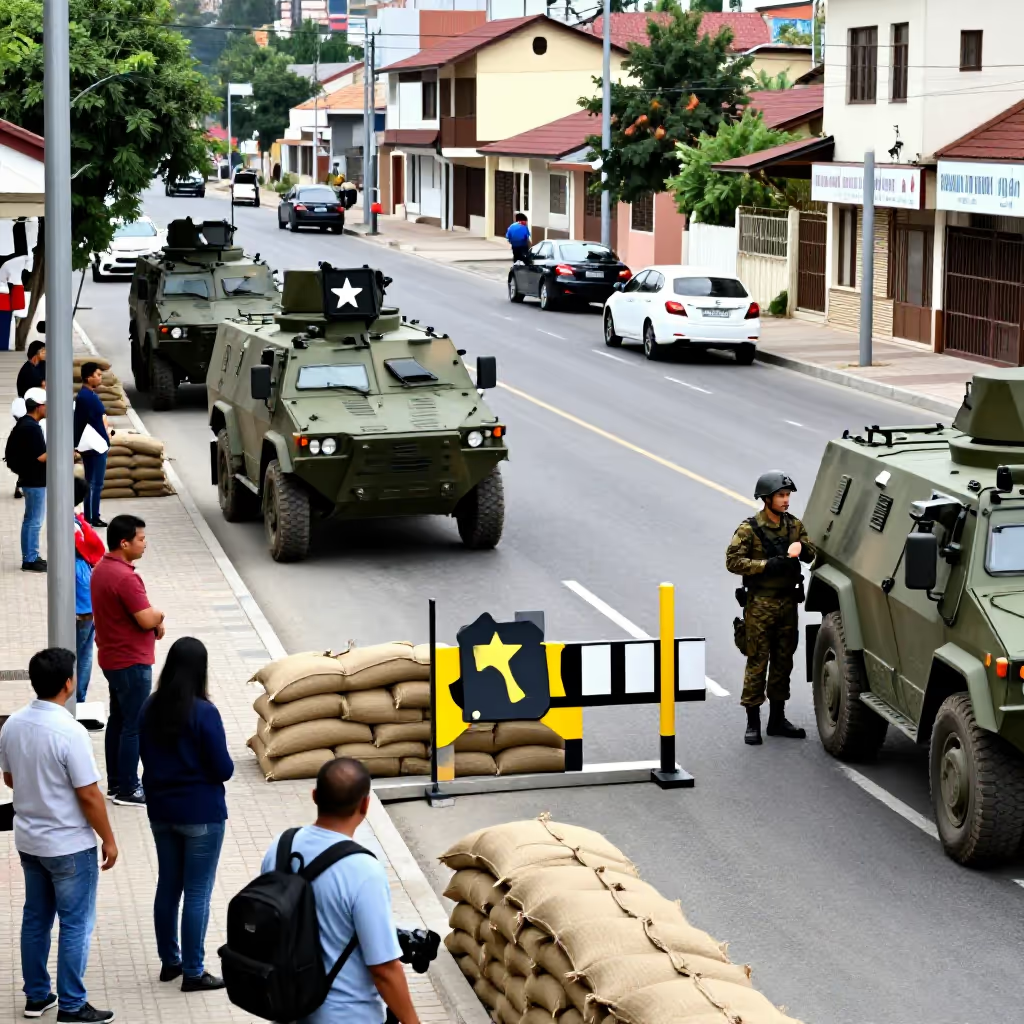
The military seizure and control of a foreign territory or country.
Die Besetzung des Landes durch fremde Truppen dauerte mehrere Jahre.
The occupation of the country by foreign troops lasted several years.

filling a position
The assignment of a job or position to a person.
Die Besetzung der offenen Stelle war schwierig, da es nur wenige qualifizierte Bewerber gab.
Filling the open position was difficult because there were only a few qualified applicants.

occupation
The taking possession of a building, square, or space as a form of protest.
Die Besetzung der alten Fabrik durch die Aktivisten wurde von der Polizei aufgelöst.
The occupation of the old factory by the activists was broken up by the police.
The noun 'die Besetzung' (cast / occupation) is derived directly from the verb 'besetzen' (to occupy / to fill / to cast). The ending '-ung' forms a feminine noun from the verb that describes the action or result of the verb. This pattern is very common in German.
Die Gruppe hat den Platz besetzt.
The group occupied the square.
You can recognize the meaning of 'Besetzung' (cast / occupation) from context. If it is about film or theater, it refers to the actors. In connection with the military and politics, it refers to the taking of a territory. If people are talking about a company, it refers to a job position.
Die Besetzung für die Hauptrolle war hervorragend.
The casting for the lead role was excellent.
In the context of film and theater, 'Besetzung' (cast) is often used with verbs such as 'auswählen' (to choose), 'bekannt geben' (to announce), or 'haben' (to have). A 'Starbesetzung' means that very famous actors are in it.
Der Regisseur hat eine großartige Besetzung ausgewählt.
The director chose a great cast.
When talking about a job, people often say 'Besetzung einer Stelle' (filling a position) or 'Besetzung einer Position' (filling a position). A person can also be 'für die Besetzung verantwortlich' (responsible for filling the position).
Die schnelle Besetzung der Stelle ist für das Projekt sehr wichtig.
Filling the position quickly is very important for the project.
troop / troupe
Both words can refer to a group of artists in a performance. “Die Besetzung” means the people chosen for the roles in a particular production, while “die Truppe” refers more to the established group of artists. So if you are asking about the roles, “Besetzung” is the right word; if you mean the group, use “Truppe.”
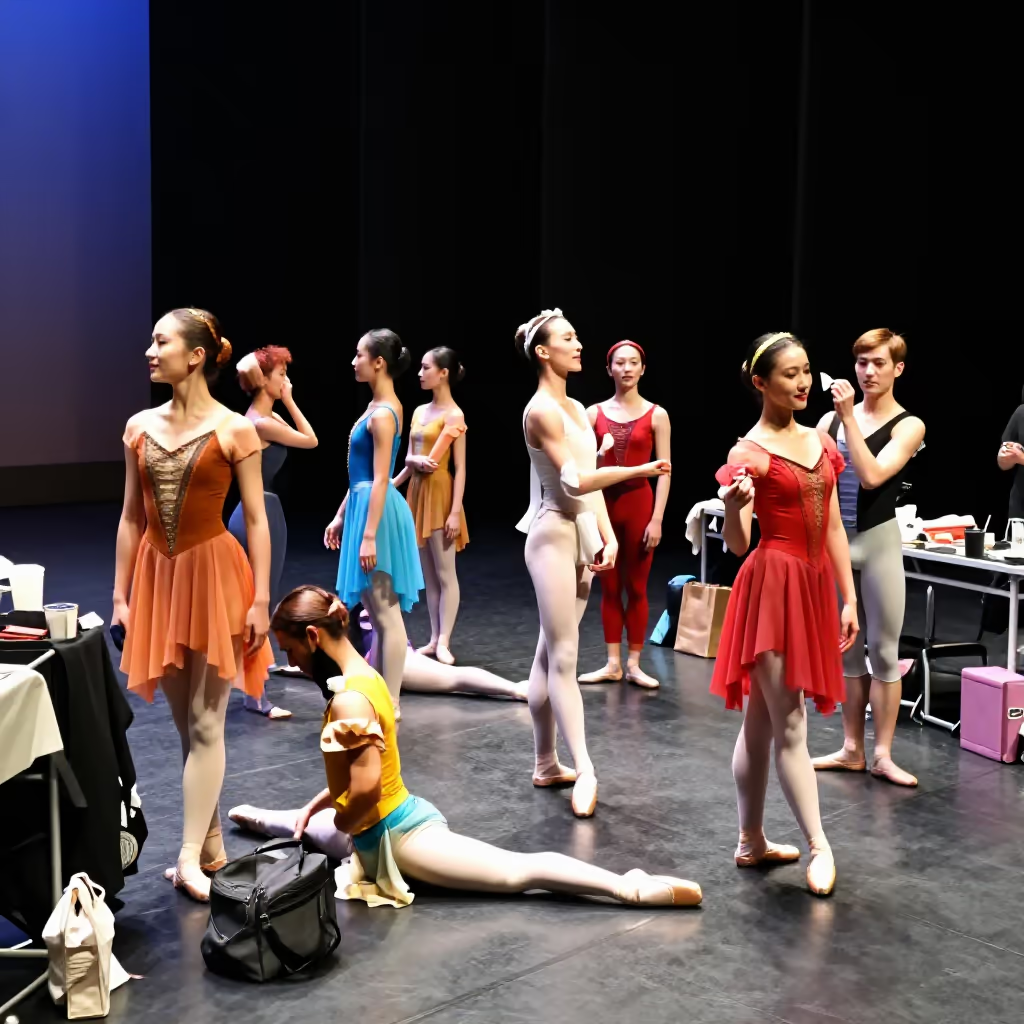
Die Besetzung des neuen Theaterstücks wurde gestern bekannt gegeben.
The cast of the new play was announced yesterday.
Die Truppe tritt seit zehn Jahren gemeinsam im Zirkus auf.
The troupe has been performing together at the circus for ten years.