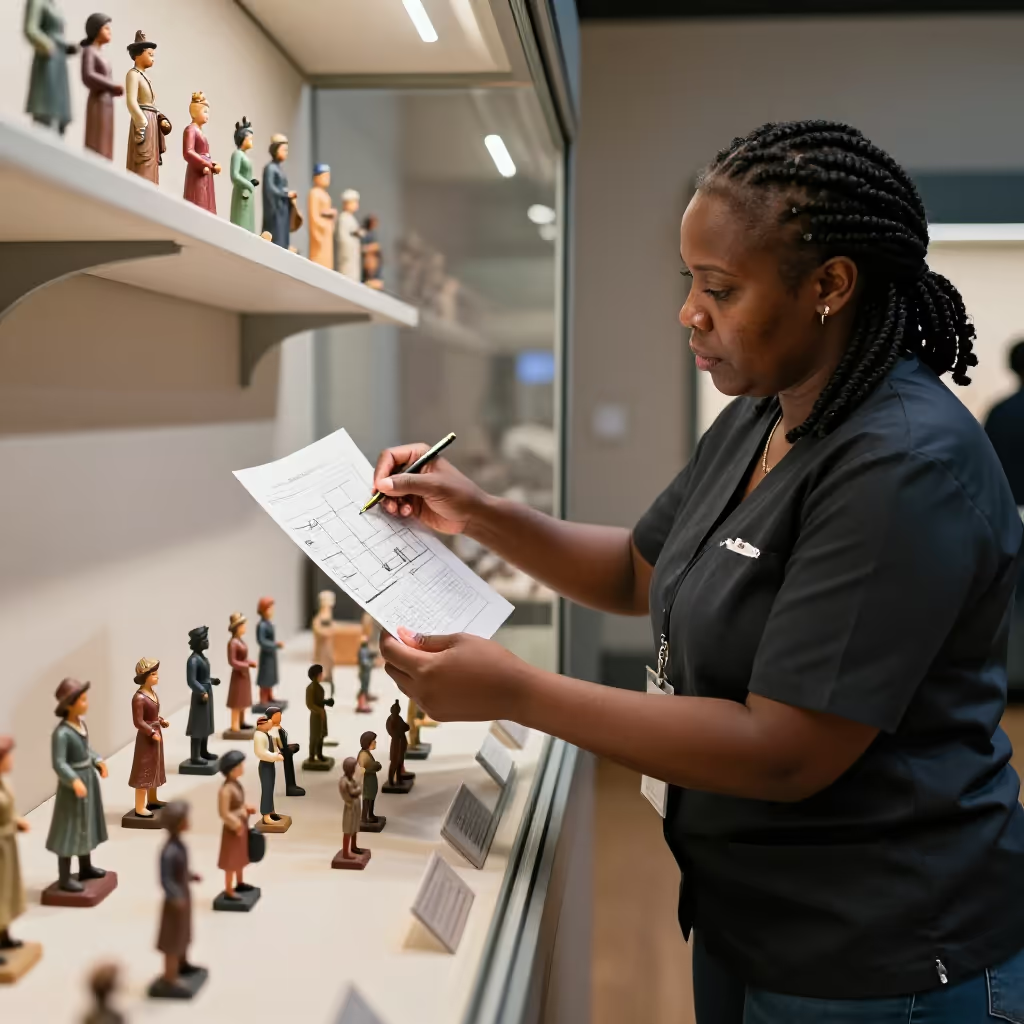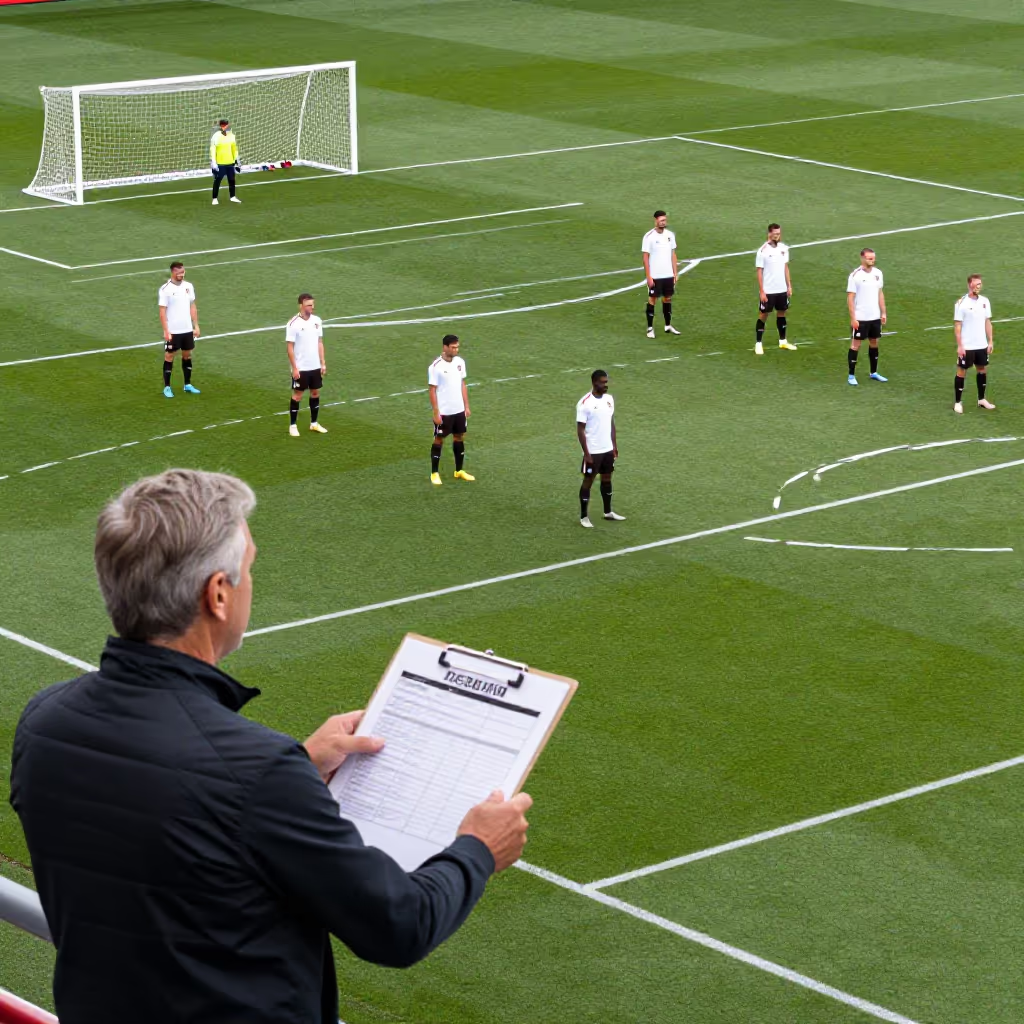
The arrangement of the players of a team at the beginning of a sports competition, determined by the coach.
example
Der Trainer hat die Aufstellung für das heutige Spiel bekannt gegeben.
The coach has announced the lineup for today's game.

Usage tips
Word structure
'Aufstellung' is a noun derived from the separable verb 'aufstellen'. 'Aufstellen' means to place or set something up. The 'Aufstellung' is the result of this action—that is, the way something has been placed or arranged.
EXAMPLE
Wir müssen die Stühle für die Veranstaltung noch aufstellen.
We still have to set up the chairs for the event.
Context clues
The exact meaning of 'Aufstellung' is almost always clear from context. In sports, people talk about the team's 'Aufstellung' (lineup). In business contexts, it refers to an 'Aufstellung' (breakdown/list) of costs or data. In everyday life, it often refers to the arrangement of furniture.
EXAMPLE
Der Trainer war mit der Aufstellung seiner Mannschaft unzufrieden.
The coach was unhappy with his team's lineup.
Typical collocations
In a sports context, 'Aufstellung' is often combined with verbs such as 'bekannt geben' (to announce), 'ändern' (to change), or 'festlegen' (to determine). You can also say 'in der Aufstellung stehen' (to be in the lineup).
EXAMPLE
Der Trainer hat die Aufstellung erst kurz vor dem Spiel festgelegt.
The coach determined the lineup only shortly before the game.
Typical collocations
When a list of facts or figures is meant, 'Aufstellung' is often used with a genitive or the preposition 'von' to specify the content. Typical verbs are 'erstellen' (to create), 'anfordern' (to request), or 'prüfen' (to check).
EXAMPLE
Könnten Sie mir bitte eine Aufstellung der offenen Rechnungen schicken?
Could you please send me a list of the outstanding invoices?
Compare with
near_synonym · confusable
Aufstellung vs Liste
list
'die Liste' and 'die Aufstellung' can both be a written collection of information. 'Liste' is the more general and everyday word. You use it for names, tasks, shopping items, or short points. 'Aufstellung' sounds more factual and precise. It fits especially when information is compiled in detail, for example costs, figures, or facts. Learners may confuse the words because an 'Aufstellung' often looks like a list. In practical terms: for simple points, you usually say 'Liste'; for a more detailed compilation, you are more likely to say 'Aufstellung'.
Aufstellung
Nach der Reise hat sie eine Aufstellung aller Kosten gemacht.
After the trip, she made a breakdown of all the costs.
Liste
Bei der Arbeit steht dein Name schon auf der Liste für den Sprachkurs.
At work, your name is already on the list for the language course.