

der Besitz
possessions
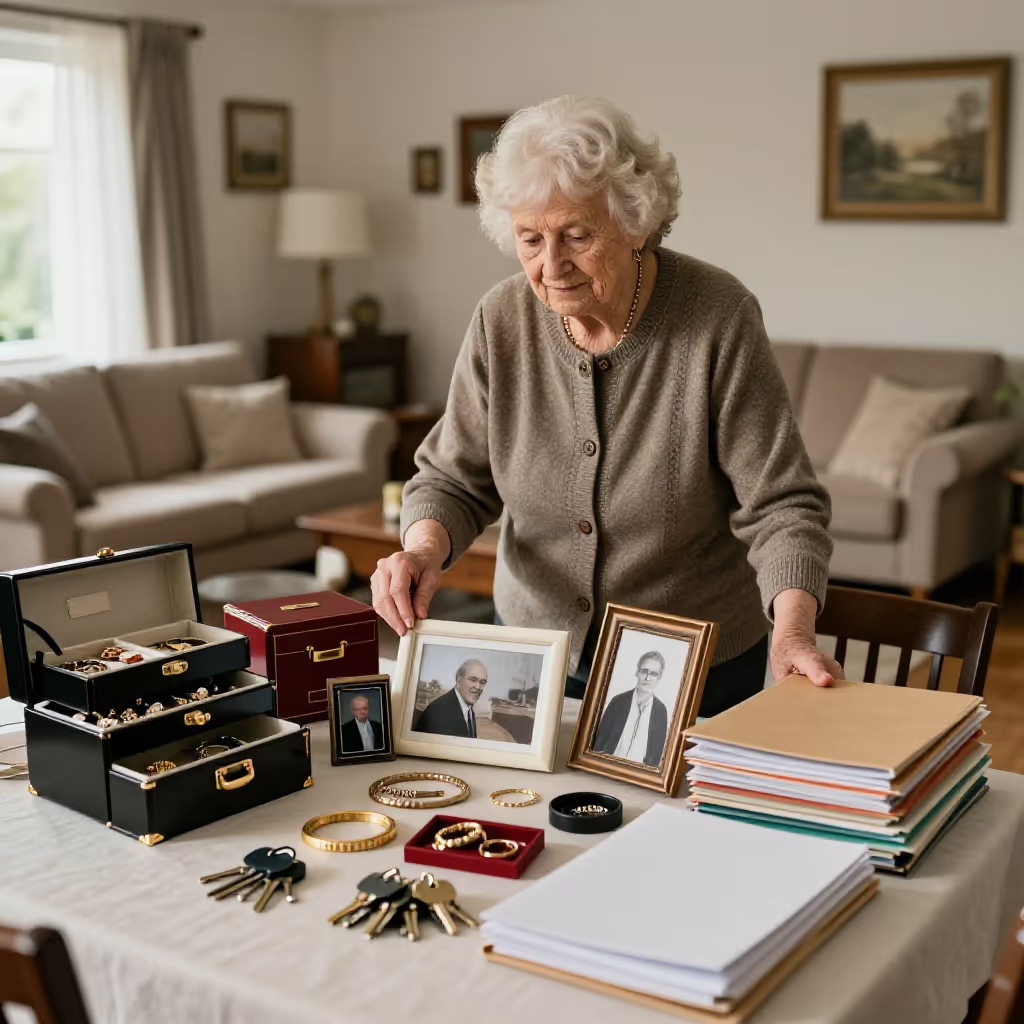
The totality of things that belong to a person; property or assets.
EXAMPLE
Nach dem Brand war ihr gesamter Besitz vernichtet.
After the fire, all her possessions had been destroyed.
possession
Loading your saved state.
possessions
The totality of things that belong to a person; property or assets.
Nach dem Brand war ihr gesamter Besitz vernichtet.
After the fire, all her possessions had been destroyed.

to take possession
To take control of something; to begin using or occupying something.
Die neuen Mieter werden die Wohnung nächsten Monat in Besitz nehmen.
The new tenants will take possession of the apartment next month.
possession
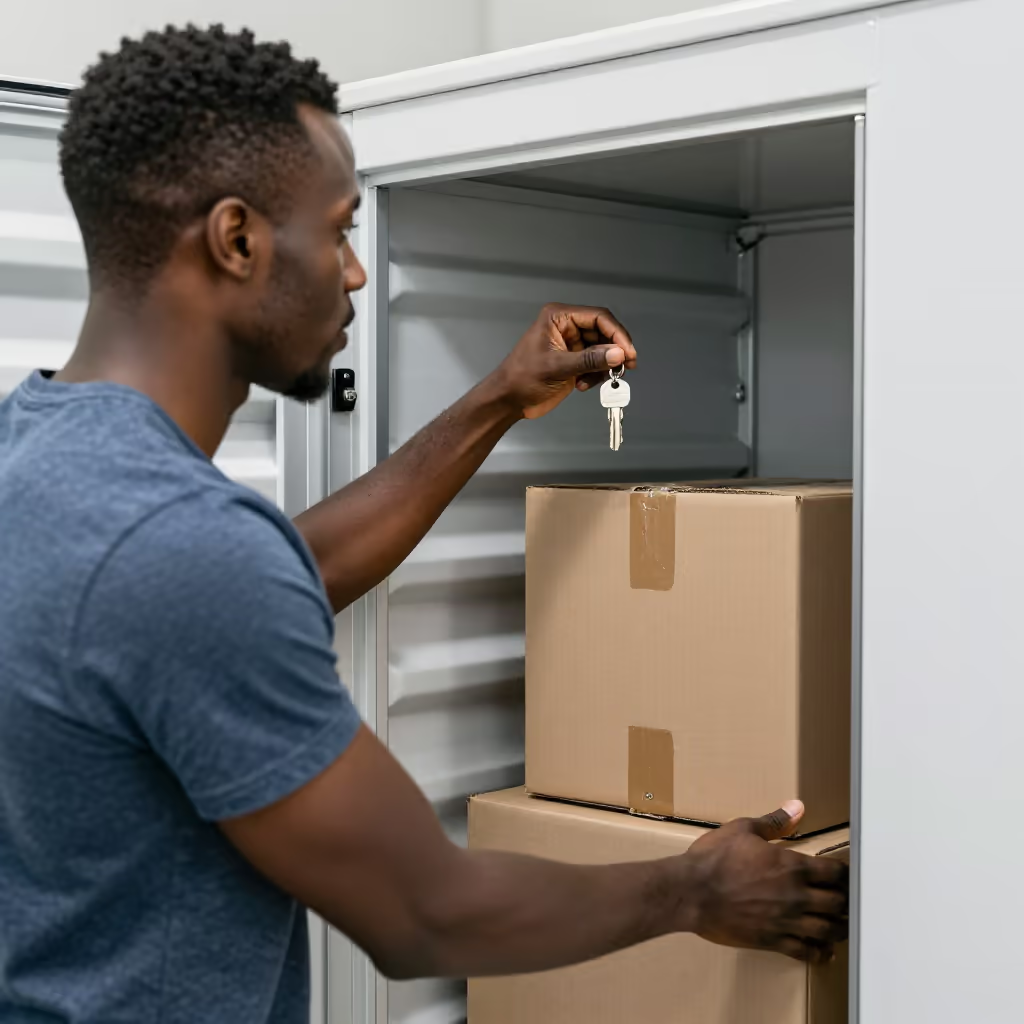
In the legal sense, actual control over an object, regardless of whether one is the lawful owner.
Der Mieter ist zwar nicht Eigentümer der Wohnung, hat sie aber in seinem Besitz.
Although the tenant is not the owner of the apartment, he has it in his possession.
The noun 'der Besitz' (possession/property) is closely related to the verb 'besitzen' (to own/possess) and the person 'der Besitzer' (the owner). If you know one of these words, you can understand and use the others more easily.
Er besitzt mehrere Immobilien in der Stadt.
He owns several properties in the city.
The phrase 'etwas in Besitz nehmen' (to take possession of something) is very common and means to take control of something. The noun after 'nehmen' is always in the accusative.
Nach der Renovierung konnte die Familie ihr neues Haus endlich in Besitz nehmen.
After the renovation, the family was finally able to take possession of their new house.
When referring to a person's assets or property, 'Besitz' is often combined with adjectives such as 'privat' (private), 'fest' (fixed/real), or 'gesamter' (entire). A common phrase is also 'in den Besitz von etwas gelangen' (to come into possession of something).
Durch die Erbschaft gelangte er in den Besitz eines wertvollen Gemäldes.
Through the inheritance, he came into possession of a valuable painting.
In a legal context, 'Besitz' describes actual control over an object, which is not always the same as legal ownership. A tenant, for example, has an apartment in his possession.
Der Finder des Schmucks hatte ihn zwar im Besitz, war aber nicht der Eigentümer.
The finder of the jewelry had it in his possession, but was not the owner.
fortune / ability
Besitz and Vermögen can both refer to things or assets that belong to a person. „Besitz“ focuses more on specific objects or property, while „Vermögen“ refers to a person’s entire financial assets and their value. Use „Besitz“ for individual things or property and „Vermögen“ for the totality of someone’s financial assets.

Zu ihrem Besitz gehören ein kleines Haus und ein altes Auto.
Her possessions include a small house and an old car.
Ihr gesamtes Vermögen besteht aus dem Haus, dem Auto und ihren Ersparnissen.
Her entire fortune consists of the house, the car, and her savings.