


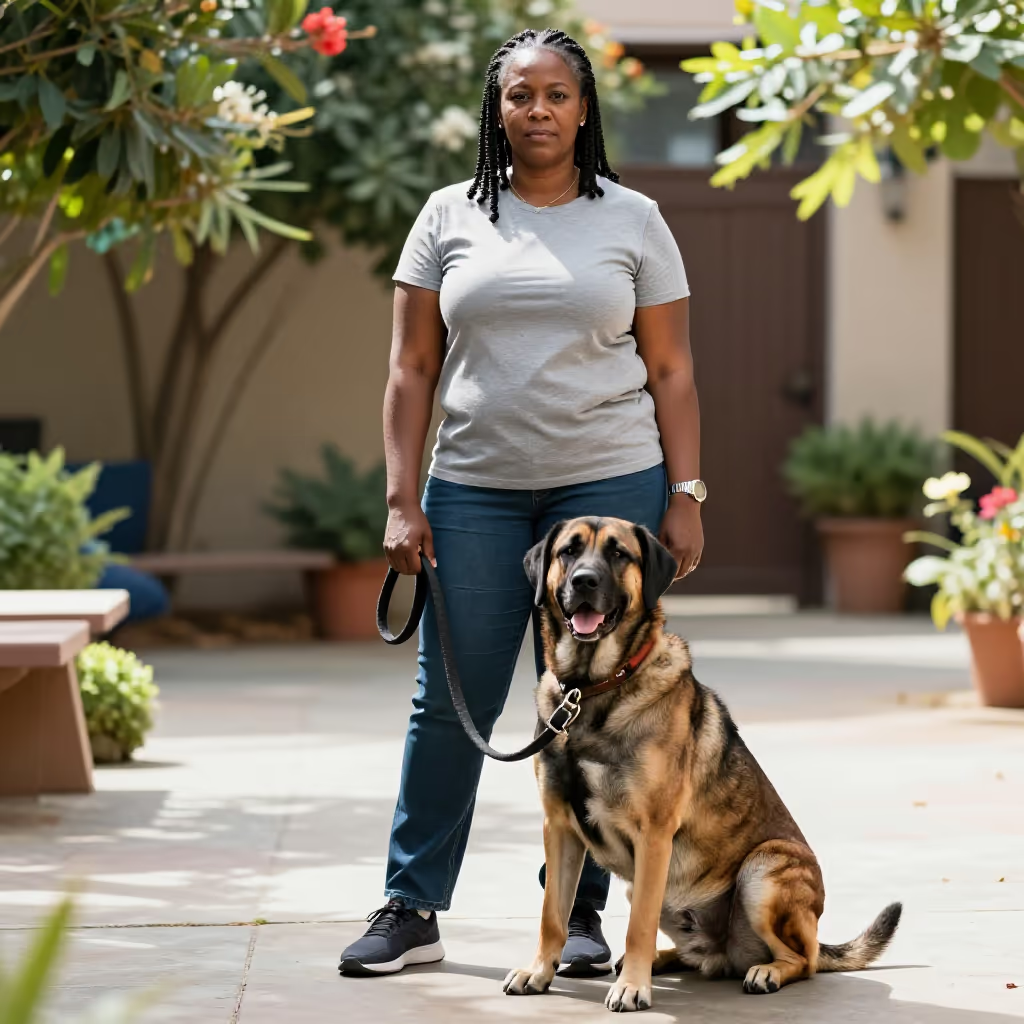
A female person who legally owns something. She has actual control over an object, an animal, or a company.
example
Die Besitzerin des kleinen Cafés kennt alle ihre Stammgäste mit Namen.
The owner of the small café knows all her regular customers by name.
Usage tips
Word family
This word is part of a clear word family: the verb is 'besitzen' (to own), the male person is 'der Besitzer' (the owner), and the female person is 'die Besitzerin' (the female owner). The ending '-in' forms the feminine form.
EXAMPLE
Wer besitzt dieses verlassene Haus?
Who owns this abandoned house?
Sentence structure
To express what belongs to someone, you usually use the preposition 'von' with the dative or, more formally, the genitive.
EXAMPLE
Sie ist die Besitzerin von dem kleinen Laden an der Ecke.
She is the owner of the small shop on the corner.
Typical collocations
'Besitzerin' (female owner) is often used in combination with things that have high value or are legally registered, e.g. 'Besitzerin eines Hauses' (owner of a house), 'eines Unternehmens' (of a company), or 'eines Autos' (of a car).
EXAMPLE
Als neue Besitzerin des Restaurants hat sie die Speisekarte geändert.
As the new owner of the restaurant, she changed the menu.
Compare with
near_synonym · confusable
Besitzerin vs Besitzer
owner
'der Besitzer' and 'die Besitzerin' both mean a person who owns something or can control it. The difference lies in grammatical and natural gender: 'der Besitzer' is used for a man, or generally when gender is not important. 'die Besitzerin' is used for a woman. The words can be confused because the meaning is almost the same. What matters here above all is the form: the article, ending, and reference to the person must fit together.
Besitzerin
Die Verkäuferin ruft die Besitzerin des Autos an, weil ein Licht noch brennt.
The saleswoman calls the owner of the car because a light is still on.
Besitzer
Der Besitzer des Fahrrads hat sich bei der Polizei gemeldet.