

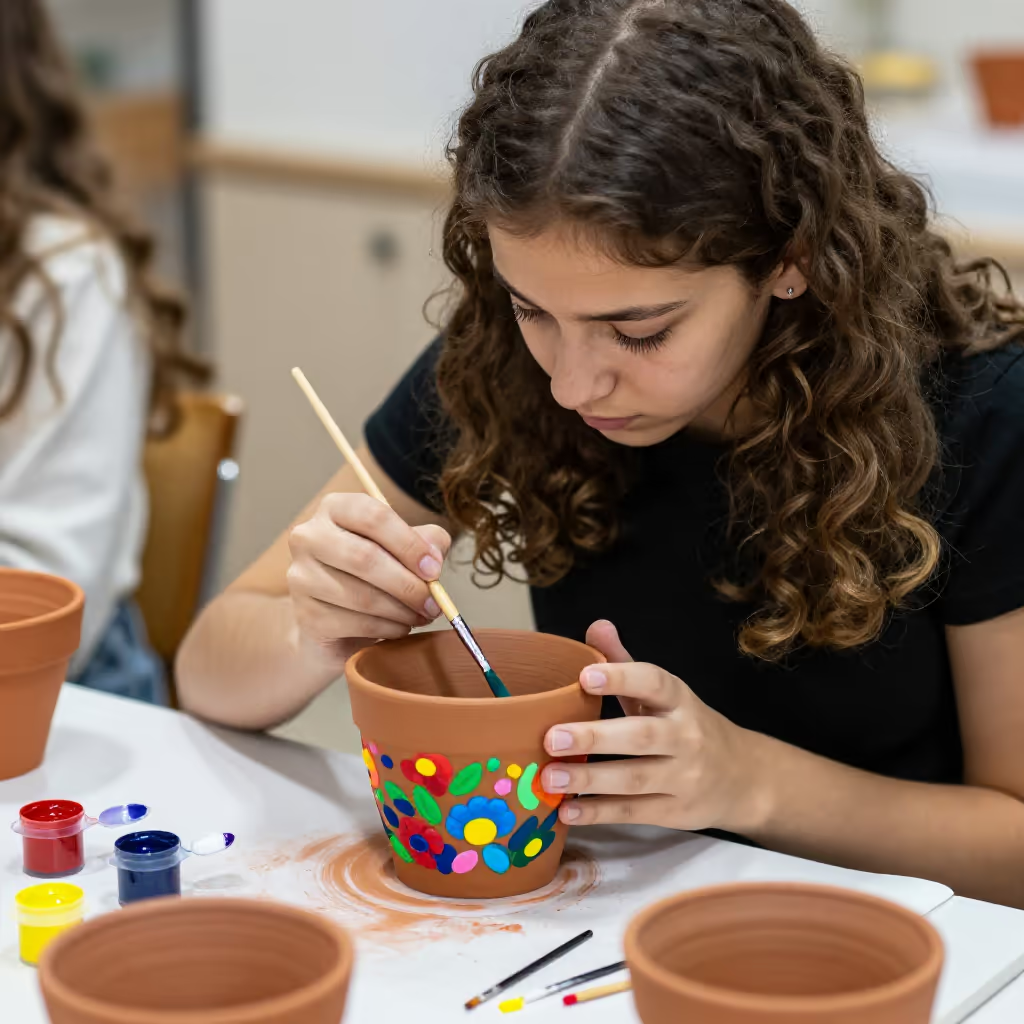
To apply paint to a surface, often to decorate it or design it artistically. In contrast to 'streichen' (to paint/coat), it often implies applying patterns, pictures, or colorful decorations.
example
Die Kinder bemalen zu Ostern die Eier mit bunten Farben.
At Easter, the children paint the eggs with bright colors.
Usage tips
Inseparable verb
'Bemalen' (to paint/decorate with paint) is an inseparable verb. The prefix 'be-' remains firmly attached to the verb 'malen' (to paint) in all tenses and sentence positions.
EXAMPLE
Sie hat die ganze Wand mit Blumen bemalt.
She painted the whole wall with flowers.
Meaning of the prefix
The prefix 'be-' turns 'malen' (to paint) into a transitive verb that focuses on a surface. You 'malt ein Bild' (paint a picture—the picture is the result), but you 'bemalt eine Wand' (paint a wall—the wall is the surface).
EXAMPLE
Wir haben die Holzkiste bunt bemalt.
We painted the wooden box in bright colors.
Sentence structure with a preposition
If you want to say what something is painted with, use the preposition 'mit' followed by the dative.
EXAMPLE
Das Mädchen bemalt das Papier mit bunten Wasserfarben.
The girl paints the paper with colorful watercolors.
Compare with
near_synonym · confusable
bemalen vs streichen
to paint / to cancel
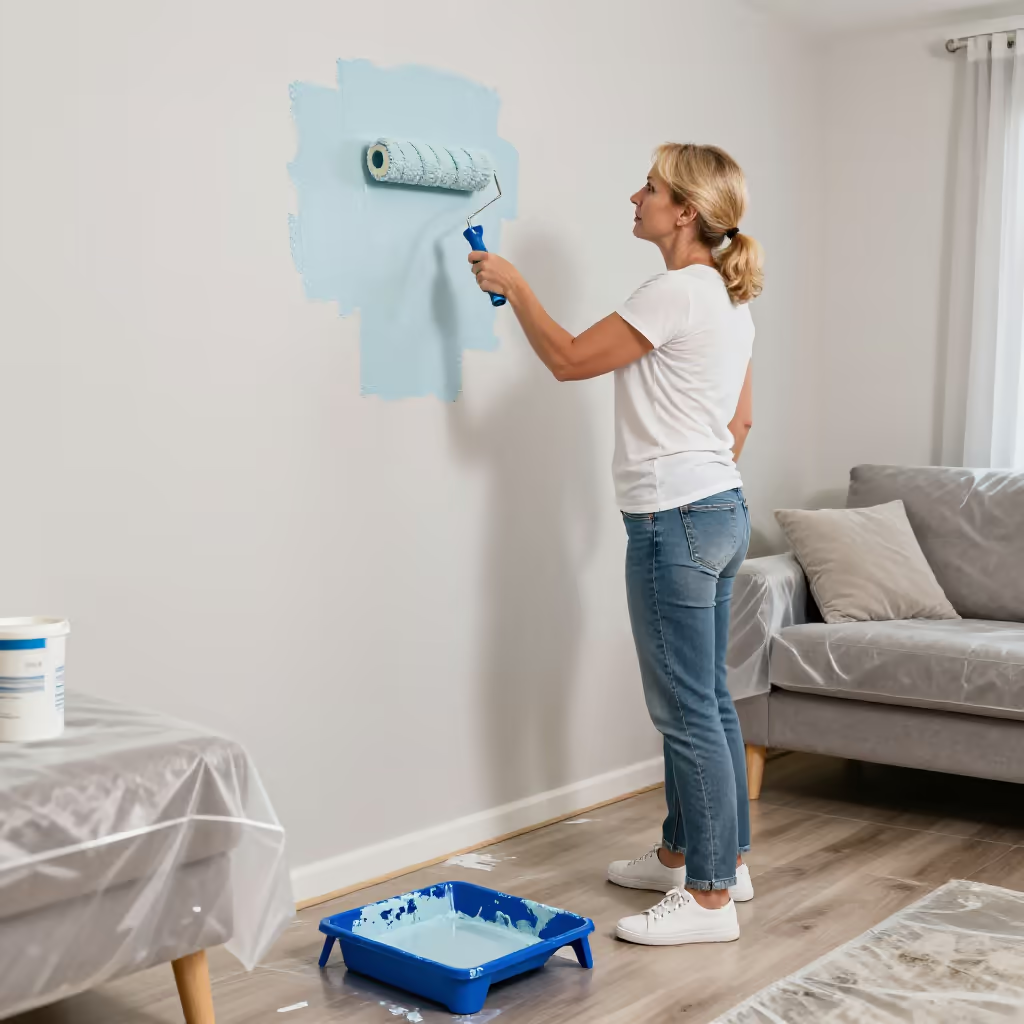
'streichen' and 'bemalen' both have to do with putting paint on a surface. 'streichen' is used when you cover a surface evenly with paint, for example a wall, a door, or a fence. 'bemalen' fits better when you decorate something with paint, that is, when you make patterns, pictures, or decorations. The words can be confused because both mean that paint is put onto something. As a simple guide: you use 'streichen' for a wall, and 'bemalen' for an egg, a picture, or a figure.
bemalen
Vor dem Fest bemalen die Kinder kleine Steine mit bunten Mustern.
Before the festival, the children paint small stones with colorful patterns.