


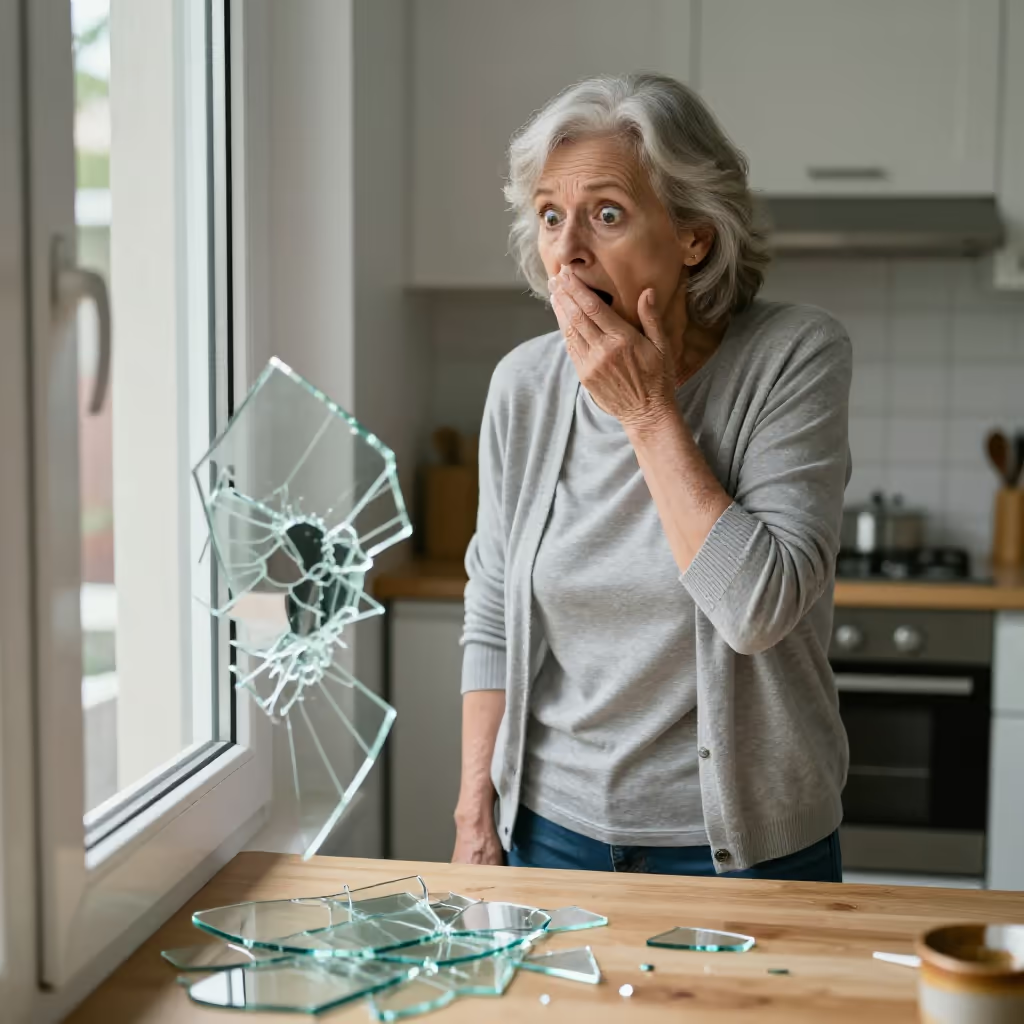
Deeply shocked, upset, and saddened because of an unexpected negative event.
example
Die Mitarbeiter waren bestürzt, als sie von der Schließung der Fabrik erfuhren.
The employees were dismayed when they learned about the closure of the factory.
Usage tips
Origin as a participle
'Bestürzt' (dismayed) is the past participle form of the verb 'bestürzen' (to shock someone, to deeply upset someone). Today, however, it is mainly used as an adjective to describe a person’s state.
EXAMPLE
Die Nachricht von dem Unglück hat uns alle tief bestürzt.
The news of the accident deeply dismayed us all.
Use with 'über'
To state the reason for the dismay, the preposition 'über' (about/over) with the accusative is often used. The structure is: 'bestürzt sein über etwas' (to be dismayed about something).
EXAMPLE
Sie war bestürzt über das Ausmaß der Zerstörung.
She was dismayed by the extent of the destruction.
Typical combinations
'Bestürzt' (dismayed) is often used to describe a reaction or an expression. Typical combinations are 'bestürzt reagieren' (to react with dismay), 'ein bestürztes Gesicht machen' (to look dismayed), or 'ein bestürzter Blick' (a dismayed look).
EXAMPLE
Mit bestürztem Gesicht las sie den Brief.
She read the letter with a dismayed expression.
Compare with
near_synonym
bestürzt vs entsetzt
horrified
'entsetzt' and 'bestürzt' both describe a strong negative reaction to a bad event. 'entsetzt' often sounds stronger and can express shock, horror, or outrage, especially when something seems very serious or wrong. 'bestürzt' sounds a little calmer and emphasizes being upset or deeply affected. For sad news, 'bestürzt' often sounds natural. For something especially serious or shocking, 'entsetzt' fits better.
bestürzt
Samir ist bestürzt, weil seine Nachbarin plötzlich ausziehen muss.
Samir is deeply upset because his neighbor suddenly has to move out.
entsetzt
Im Gespräch reagiert die Mitarbeiterin entsetzt auf die unfairen Vorwürfe.
During the conversation, the employee reacts with shock to the unfair accusations.