

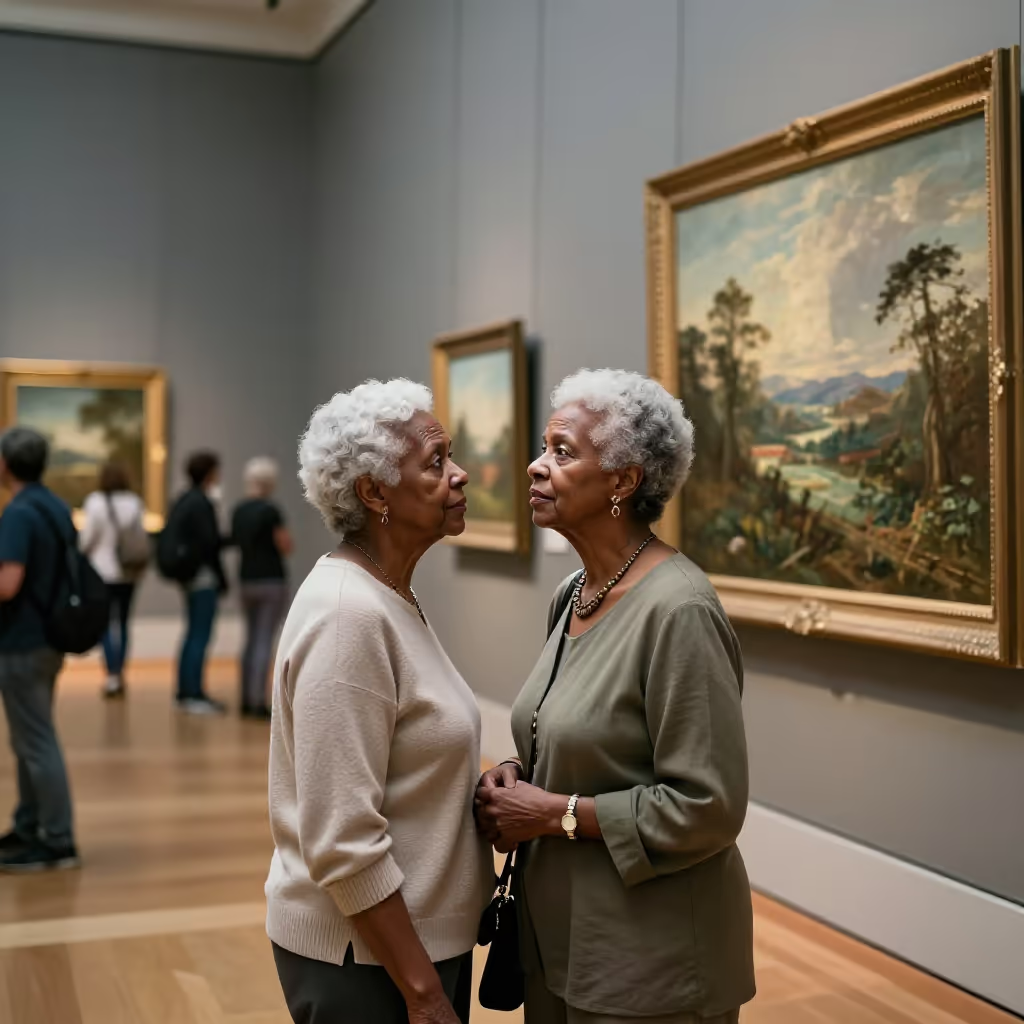
der Betrachter
viewer
A person who looks at or observes something, especially a work of art, a picture, or a scene.
Die Bedeutung des Kunstwerks liegt oft im Auge des Betrachters.
The meaning of the artwork often lies in the eye of the viewer.


viewer / observer
Loading your saved state.
viewer
A person who looks at or observes something, especially a work of art, a picture, or a scene.
Die Bedeutung des Kunstwerks liegt oft im Auge des Betrachters.
The meaning of the artwork often lies in the eye of the viewer.

'Der Betrachter' (the viewer/observer) is derived from the verb 'betrachten' (to look at, to consider). The ending '-er' indicates the person who performs this action, a typical pattern for masculine personal nouns.
Der Künstler wollte wissen, was der Betrachter in seinem Werk sieht.
The artist wanted to know what the viewer sees in his work.
You can tell from the object whether it is about looking at a picture (meaning 1) or analyzing a situation (meaning 2). If it is about art, a landscape, or a scene, the first meaning is intended. If it is about a problem or a development, the second is intended.
Der Betrachter der Fotografie bemerkte ein kleines Detail im Hintergrund.
The viewer of the photograph noticed a small detail in the background.
A very common idiom is 'etwas liegt im Auge des Betrachters' (something lies in the eye of the beholder/viewer). It means that beauty or the interpretation of something is subjective.
Ob das Bild schön ist oder nicht, liegt ganz im Auge des Betrachters.
Whether the picture is beautiful or not lies entirely in the eye of the viewer.
In the sense of an analyst, 'Betrachter' (observer) is often combined with adjectives that describe the perspective. Common phrases are 'ein außenstehender Betrachter' (an outside observer), 'ein neutraler Betrachter' (a neutral observer), or 'ein kritischer Betrachter' (a critical observer).
Für einen neutralen Betrachter ist die Lage schwer einzuschätzen.
For a neutral observer, the situation is difficult to assess.
spectator / viewer
'der Zuschauer' and 'der Betrachter' both describe a person who looks at something. 'Zuschauer' is used mainly for events, performances, sports, or broadcasts, that is, when something is happening and you are watching it. 'Betrachter' is more likely to be used for a picture, work of art, or scene that you look at calmly. The word often sounds a bit more objective or formal. Learners may confuse the words because both have to do with seeing. In practical terms: for a film or game, you are more likely to say 'Zuschauer'; for a painting or photo, 'Betrachter' is more likely.

Das Foto wirkt auf jeden Betrachter ein bisschen anders.
The photo affects every viewer a little differently.
Die Zuschauer warteten gespannt auf den Beginn des Films.
The spectators waited eagerly for the film to begin.