


die Beule
bump
A swelling on the body, typically caused by a knock or blow.
EXAMPLE
Nachdem er gegen die Tür gelaufen war, hatte er eine dicke Beule an der Stirn.
After he walked into the door, he had a big bump on his forehead.
bump / dent
Loading your saved state.
bump
A swelling on the body, typically caused by a knock or blow.
Nachdem er gegen die Tür gelaufen war, hatte er eine dicke Beule an der Stirn.
After he walked into the door, he had a big bump on his forehead.
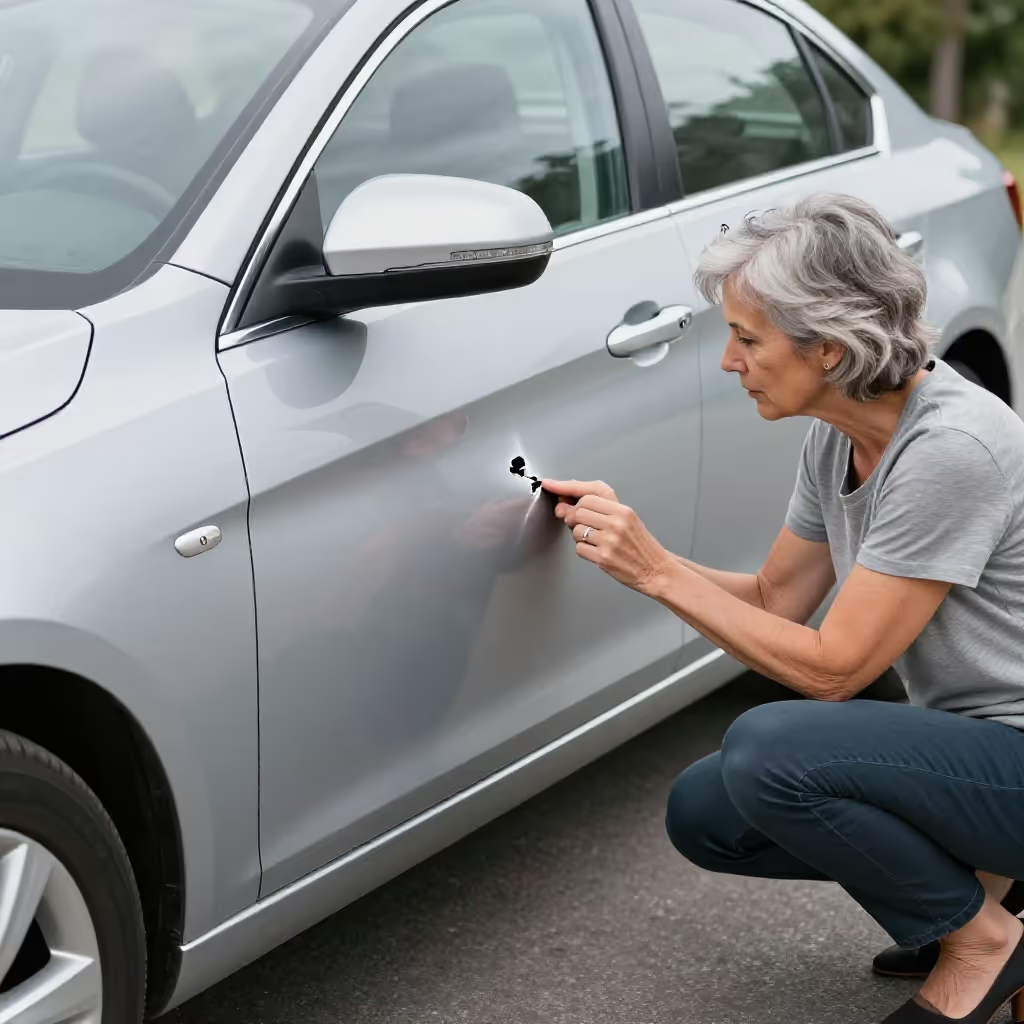
dent
A depression or dent in a smooth surface caused by an impact or pressure, especially on vehicles.
Beim Einparken hat er eine kleine Beule in die Autotür gefahren.
While parking, he put a small dent in the car door.
The context makes the meaning clear. If people are talking about body parts like 'Kopf' (head) or 'Stirn' (forehead), it means a swelling. If they are talking about objects like 'Auto' (car) or 'Kühlschrank' (refrigerator), it means a dent in the surface.
Das Kind ist hingefallen und hat jetzt eine Beule am Knie.
The child fell down and now has a bump on his knee.
When referring to a swelling on the body, the most common verbs are 'eine Beule haben' (to have a bump) or 'eine Beule bekommen' (to get a bump). The spot is often given with 'an' + dative.
Pass auf, sonst holst du dir noch eine Beule am Kopf!
Be careful, or you'll get a bump on your head!
When a dent in an object is meant, the construction 'eine Beule in etwas machen' (to make a dent in something) or 'in etwas fahren' (to drive into something / dent something while driving) is often used. The preposition 'in' takes the accusative here.
Der Hagel hat viele kleine Beulen in das Autodach gemacht.
The hail made lots of small dents in the car roof.
dent
Both words are possible for a deformed vehicle surface. „Delle“ more precisely refers to a spot pushed inward, while „Beule“ can colloquially refer to the visible deformation as a whole. If the inward curve is important, „Delle“ is more precise; otherwise, „Beule“ is also often used.

Nach dem Aufprall hat die Autotür eine sichtbare Beule.
After the collision, the car door has a visible dent.
Nach dem Aufprall ist an der Autotür eine deutlich nach innen gedrückte Delle zu sehen.
After the collision, there is a clearly inward-pressed dent in the car door.