

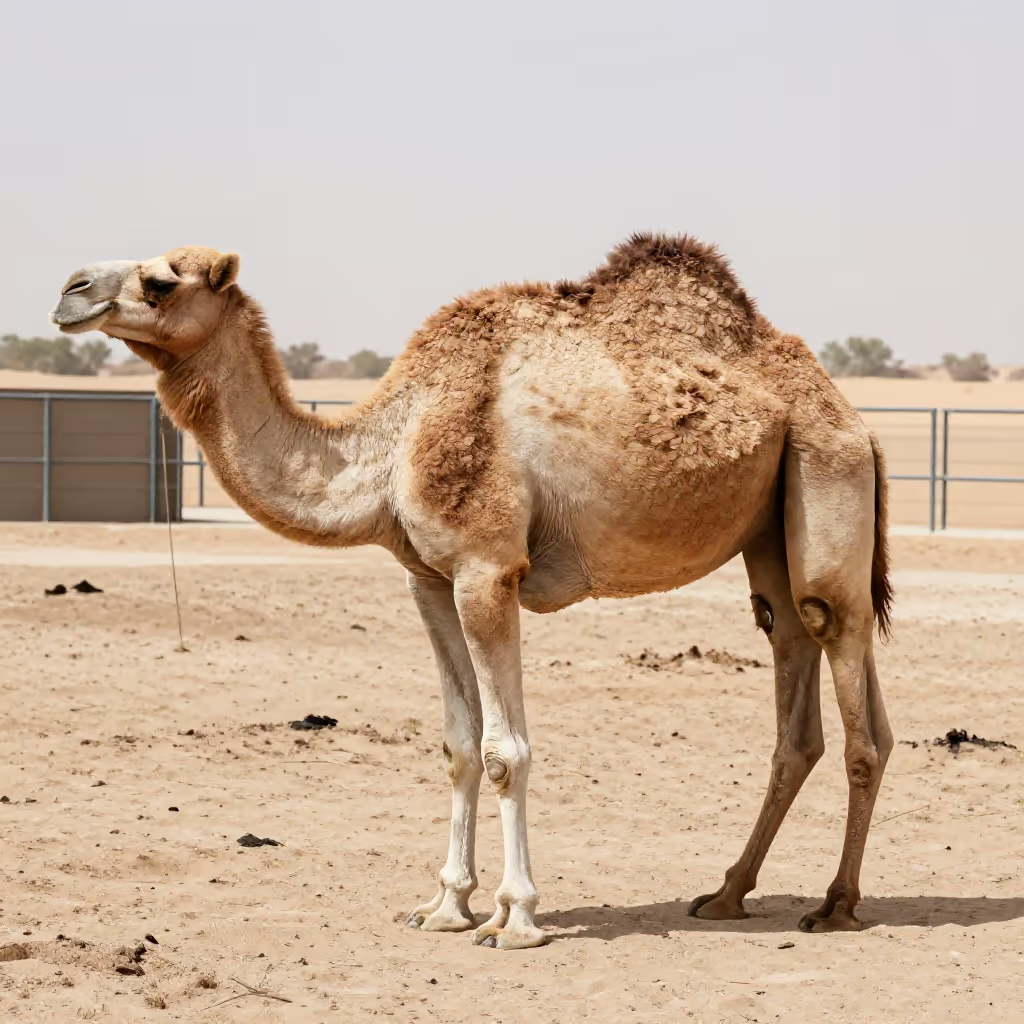
der Höcker
hump
A distinct, rounded raised part on the back of certain animals, especially camels.
EXAMPLE
Ein Dromedar hat einen Höcker, ein Trampeltier hat zwei.
A dromedary has one hump; a Bactrian camel has two.
hump / bump
Loading your saved state.
hump
A distinct, rounded raised part on the back of certain animals, especially camels.
Ein Dromedar hat einen Höcker, ein Trampeltier hat zwei.
A dromedary has one hump; a Bactrian camel has two.

bump
A small, uneven raised area, hump, or lump on a surface or on the body.
Nach dem Sturz hatte er einen kleinen Höcker auf der Stirn.
After the fall, he had a small bump on his forehead.
The context makes the meaning clear. If you are talking about animals like camels, the hump on the back is meant. In other contexts, such as an injury or an uneven road, a small bump is meant.
Das Kamel speichert Fett in seinem Höcker.
The camel stores fat in its hump.
The best-known use of 'Höcker' (hump) refers to the back of a camel. The distinction between animals with one or two humps is a classic example of how the word is used.
Im Zoo haben wir Kamele mit zwei Höckern gesehen.
At the zoo, we saw camels with two humps.
The related adjective 'höckerig' means 'uneven' or 'bumpy.' If you remember 'höckerig' (bumpy), you can more easily remember the meaning of 'Höcker' (hump/bump) as an uneven raised area.
Vorsicht, der Feldweg ist sehr höckerig.
Careful, the dirt road is very bumpy.
hump / back
Buckel and Höcker can both refer to a rounded raised part on an animal's back. Höcker especially means a clearly defined hump, such as a camel's. Buckel can also refer to a broader, curved raised part, like the one on a bison.
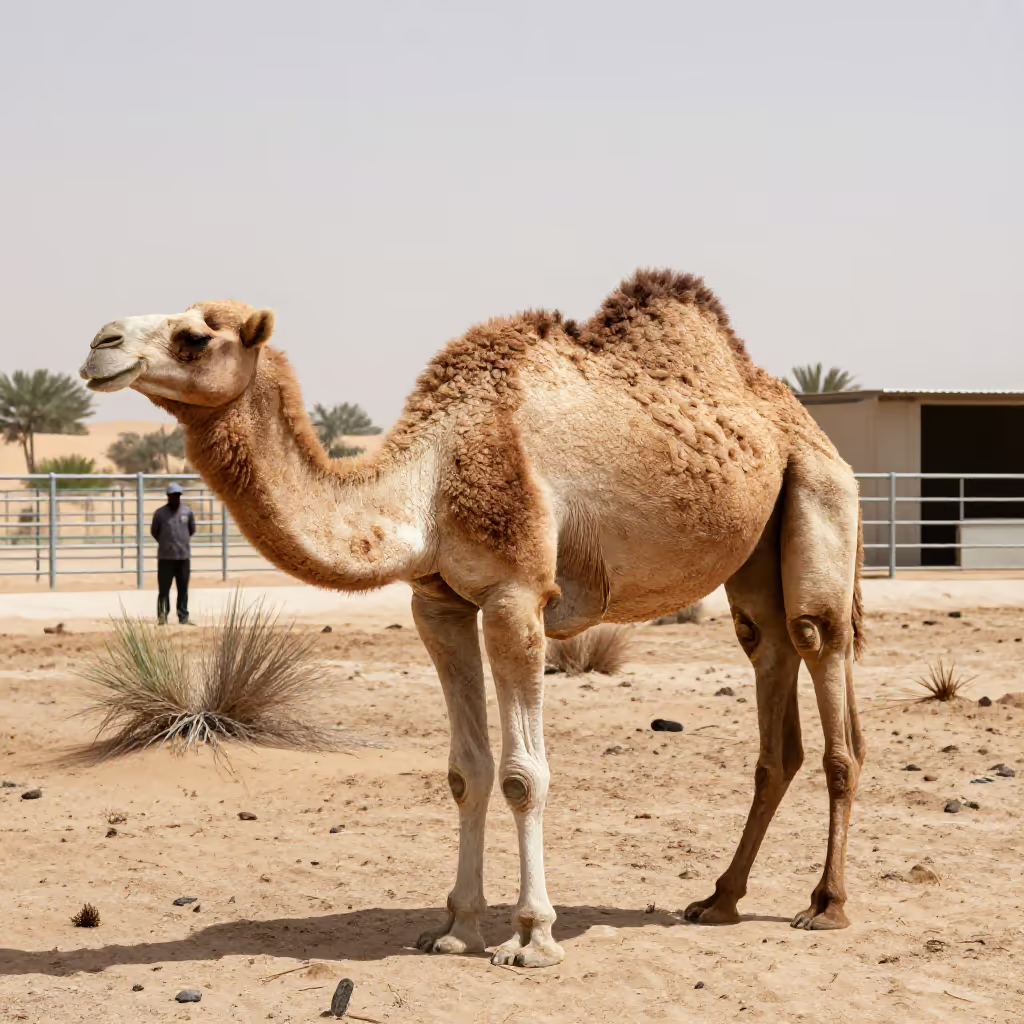
Das Kamel trägt einen deutlich ausgeprägten Höcker auf dem Rücken.
The camel has a clearly pronounced hump on its back.
Der Bison trägt einen breiten Buckel auf dem Rücken.
The bison has a broad hump on its back.