

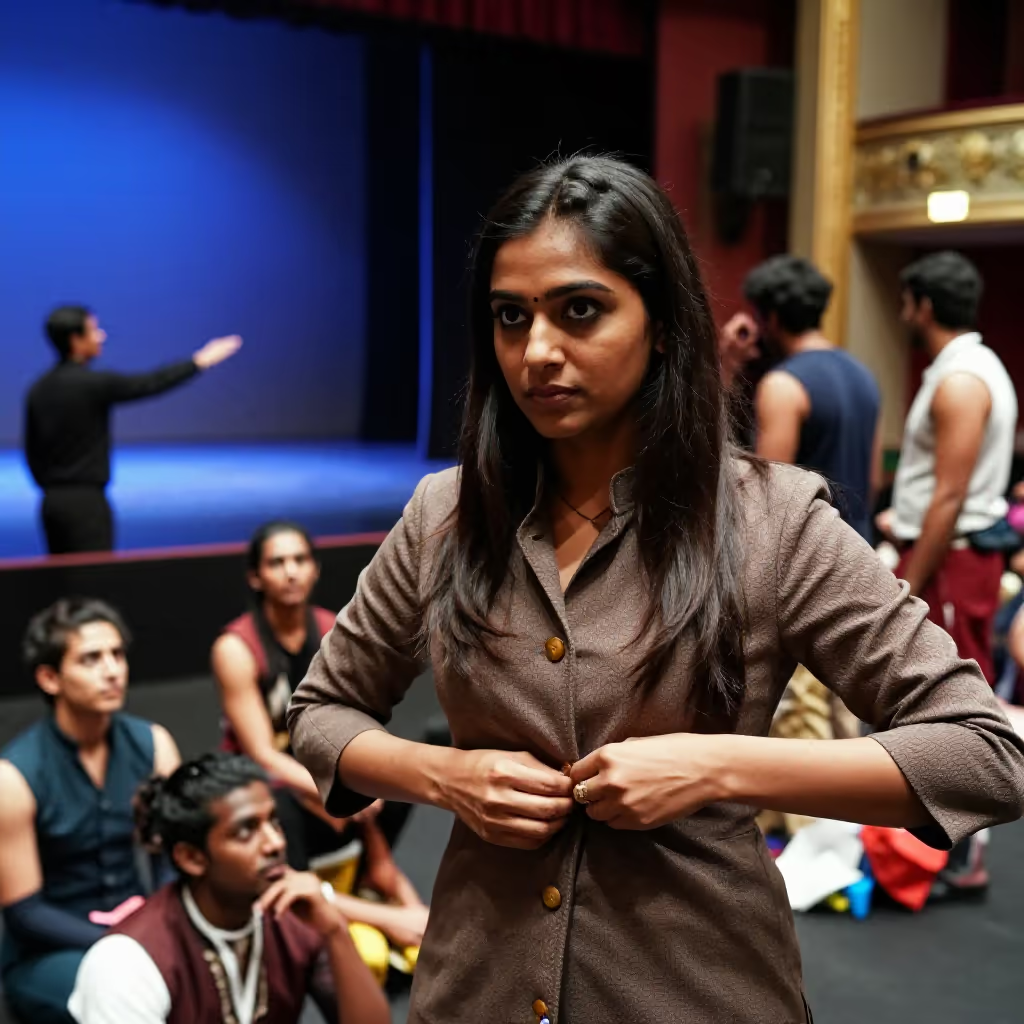
bevorstehend
upcoming
Describes an event, task, or situation that will take place in the near future; imminent.
EXAMPLE
Wegen der bevorstehenden Prüfung ist sie sehr nervös.
Because of the upcoming exam, she is very nervous.
upcoming
Loading your saved state.
upcoming
Describes an event, task, or situation that will take place in the near future; imminent.
Wegen der bevorstehenden Prüfung ist sie sehr nervös.
Because of the upcoming exam, she is very nervous.
'Bevorstehend' (upcoming) is the present participle of the verb 'bevorstehen' (to be imminent). This verb literally means 'to stand before something.' An upcoming event is therefore one that is directly ahead of you in time.
Das bevorstehende Wochenende wird sonnig.
The upcoming weekend will be sunny.
This adjective is almost always used attributively, meaning directly before a noun. The predicative form ('Das Ereignis ist bevorstehend.' — The event is upcoming.) is grammatically correct but uncommon. You would more likely say: 'Das Ereignis steht bevor.' (The event is imminent/upcoming.)
Alle Mitarbeiter wurden über die bevorstehenden Änderungen informiert.
All employees were informed about the upcoming changes.
'Bevorstehend' (upcoming) is typically combined with nouns that describe events, appointments, or periods of time. Common combinations include 'bevorstehende Reise' (upcoming trip), 'bevorstehende Geburt' (upcoming birth), or 'bevorstehendes Treffen' (upcoming meeting).
Wegen seines bevorstehenden Umzugs hat er viel zu organisieren.
Because of his upcoming move, he has a lot to organize.
near / close
Nahe and bevorstehend can indicate that something will happen soon. Nahe describes the short distance in time and is often used with time expressions such as nahe Zukunft. Bevorstehend, on the other hand, directly describes the event, task, or situation that will occur soon.
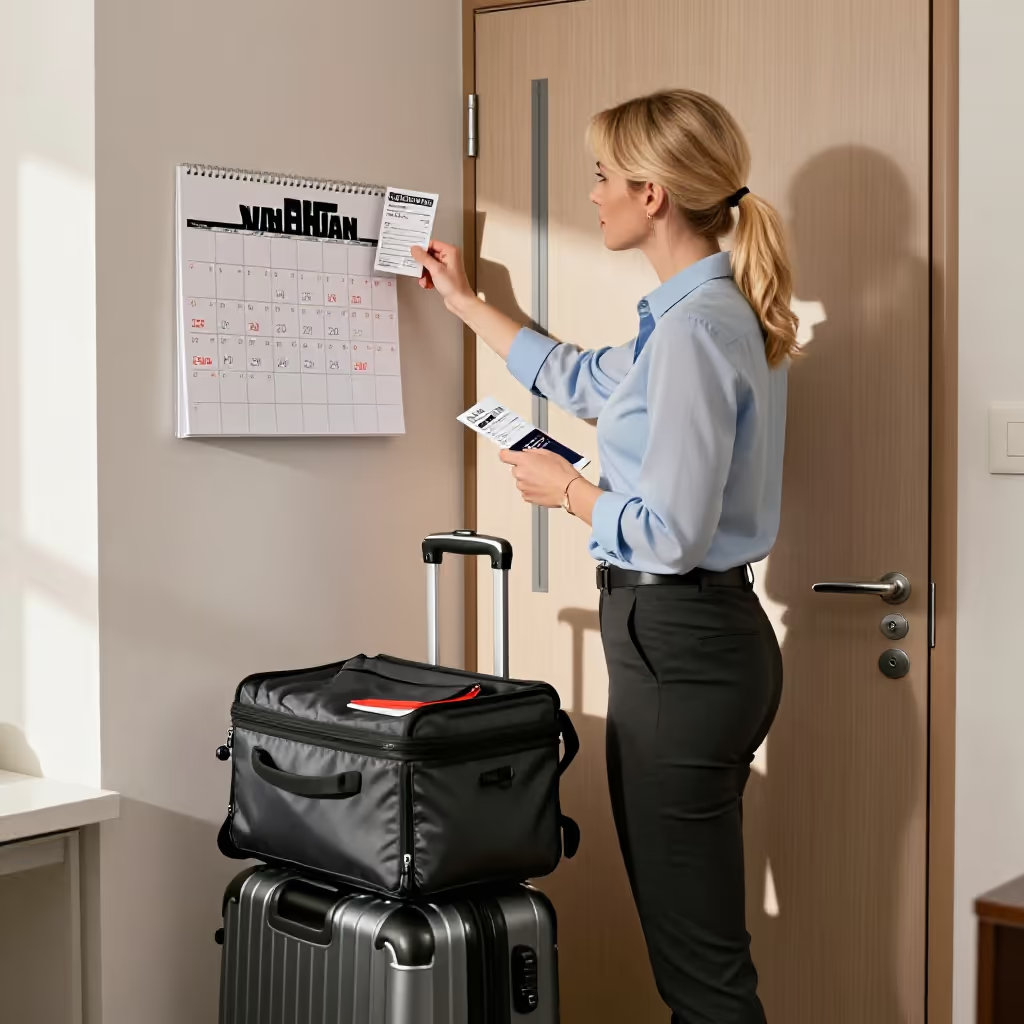
Wir bereiten uns auf die bevorstehende Prüfung vor.
We are preparing for the upcoming exam.
Die Prüfung ist für die nahe Zukunft geplant.
The exam is planned for the near future.