

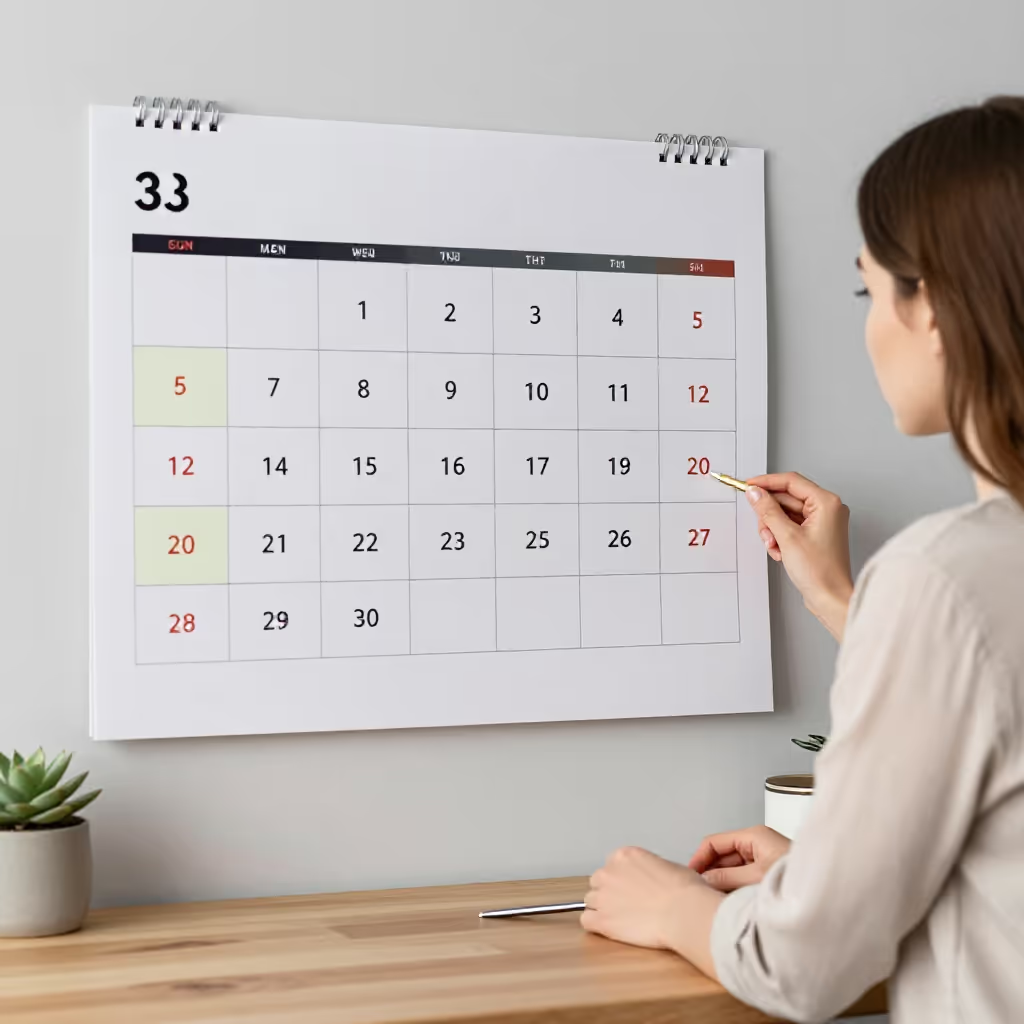
kommend
coming / next
Describes the next item in a chronological sequence, especially with days, weeks, months, or years.
EXAMPLE
Kommende Woche habe ich leider keine Zeit für ein Treffen.
Next week, unfortunately, I don't have time for a meeting.
coming / next
Loading your saved state.
coming / next
Describes the next item in a chronological sequence, especially with days, weeks, months, or years.
Kommende Woche habe ich leider keine Zeit für ein Treffen.
Next week, unfortunately, I don't have time for a meeting.
'Kommend' (coming/next) is the present participle of the verb 'kommen' (to come). It functions like an adjective and describes something that lies in the future—so something that is 'just coming'.
Für das kommende Jahr habe ich mir viel vorgenommen.
I have a lot planned for the coming year.
The word 'kommend' (coming/next) always stands as an adjective directly before a noun and is declined accordingly. It cannot stand alone at the end of a sentence.
Am kommenden Freitag findet die Präsentation statt.
The presentation will take place this coming Friday.
'Kommend' (coming/next) is used almost exclusively with time expressions. Typical combinations are 'kommende Woche' (next week), 'kommender Monat' (next month), 'kommendes Jahr' (next year), or with weekdays such as 'kommenden Montag' (next Monday).
Ich werde mich kommende Woche bei Ihnen melden.
I will get in touch with you next week.
next / nearest
Nächst and kommend both refer to an upcoming time. Nächst usually highlights the immediately following unit in a sequence, while kommend refers more generally to something that is approaching. Use nächst for the next unit and kommend for an upcoming period or occasion.

Im kommenden Jahr wollen wir den Kurs erweitern.
We want to expand the course next year.
In der nächsten Woche beginnt unser neuer Kurs.
Our new course starts next week.